Keith Wood Offered Interim Munster CEO Role Amidst Province's Turmoil
Keith Wood is reportedly in line to become interim CEO of Munster Rugby, following Ian Flanagan’s announcement to step down at the end of the month. Wood, a former Munster and Ireland great, was previously linked to the role in June. This development occurs as Munster grapples with significant challenges.
Flanagan's departure marks the beginning of a necessary overhaul. Other senior figures within the province are also facing scrutiny as Munster seeks to reverse its current decline.
An offer of assistance from the IRFU was declined by Munster at the committee level, reportedly due to a desire to manage their internal issues without outside interference. This decision has reportedly displeased the IRFU, signaling the start of a concerning rift between the province and Lansdowne Road.
Calls are also growing for the return of another Munster legend, Declan Kidney, who could potentially support Wood if he takes on the CEO role permanently.
Wood's stature could prove crucial in rebuilding support from fans and attracting sponsors to the struggling province. His involvement could also significantly improve relations with the IRFU.
IRFU Fallout
Munster reportedly rejected an offer of help from the IRFU concerning recent issues, preferring to handle their problems internally. Sources suggest this stance was poorly received at IRFU headquarters, increasing pressure for a major restructuring of Munster’s operations.
Flanagan’s exit as CEO follows a period of poor on-field results, exacerbated by off-pitch controversies, notably the signing of Roger Randle last spring. An independent review was commissioned following the fallout from the Randle affair, and further changes are anticipated after Flanagan’s departure.
General manager Ian Costello is reportedly under the most intense scrutiny. He was involved in the decision to sign Randle, alongside Flanagan. This led to the resignations of former Munster players Mick O’Driscoll, Billy Holland, and Kilian Keane from the Professional Games Board, followed by further resignations from the Commercial Games Board.
Costello, while reportedly having strong support within UL and from the women's rugby sector, faces considerable criticism elsewhere in the organization, particularly outside Limerick.
Clean Break
Beyond replacing the CEO, there are increasing demands for a new general manager to facilitate a complete break from the recent difficult period. Names like former head coach Declan Kidney and recently retired captain Peter O’Mahony are being strongly considered.
There is a strong belief that Munster needs high-profile individuals with strong ties to the province to enhance visibility, energize supporters, and mend relations with the IRFU.
Addressing the divide between Limerick and Cork is seen as a priority. Some believe appointing a CEO associated with Limerick rugby (like Wood) and a general manager linked to Cork rugby (such as Kidney or O’Mahony) would be the best approach.
Game Time
Amidst this leadership uncertainty, Munster is preparing for their match against the Bulls at Thomond Park tonight, seeking to recover from their opening home loss to Glasgow.
Head coach Clayton McMillan has made eleven changes to the starting lineup. Craig Casey will captain the side from fullback, guiding young out-half Charlie O’Shea, who is making his first competitive start.
New hooker Marnus van der Merwe, arriving from the Scarlets, and Tom Ahern in the second row, will have opportunities to impress.
However, the week’s significant news regarding Flanagan’s departure will likely dominate discussions among Munster supporters. While described as a ‘bombshell’, the announcement was not unexpected, given the circumstances.
The timing of Flanagan’s exit, following calls for change from figures like Peter O’Mahony and Johne Murphy, suggests a long-brewing dissatisfaction. It might also be a move to preempt the findings of an external report commissioned after the Roger Randle controversy.
While responsibility for Munster’s issues is widespread, Flanagan, as CEO, bore ultimate accountability. Dissatisfaction with the management of the province was pervasive.
No Way Out
Flanagan succeeded the late Garret Fitzgerald, a figure deeply embedded in the province's rugby culture. Fitzgerald’s leadership style was widely respected.
Fitzgerald’s tenure saw European triumphs but lacked foresight in building on the Munster brand's strength in the late 2000s. Nevertheless, he possessed a presence as CEO that Flanagan struggled to match.
Flanagan, with a background in soccer commercial management, was brought in to enhance the province's commercial side. Despite some successes, such as the centre of excellence at Musgrave Park, the expected financial growth did not materialize.
Munster failed to secure major sponsorship, notably a naming rights sponsor for Thomond Park, and has operated under financial strain, with redundancies announced remotely. This lack of transparency drew criticism.
Reports suggest that potential sponsors were deterred by a lack of preparation from the province’s leadership.
Failure to adequately address the Cork-Limerick tension, along with perceived neglect of other counties, further fueled discontent.
A recent report highlighting the lack of Munster senior squad training in Waterford for 15 years prompted an angry response from the province, whose only counter-argument was a pre-season friendly played there 11 seasons prior.
A confluence of issues during Flanagan’s tenure fostered simmering discontent that erupted with the Randle controversy.
Resignations from senior figures like Mick O’Driscoll, Billy Holland, and Killian Keane from the Professional Games Board, followed by members of the Commercial Board, indicated serious trouble within the organization. Criticism from prominent figures such as O’Mahony, Murphy, and Conor Murray further compounded the situation.
Adding to the pressure, Flanagan had reportedly applied for the FAI CEO role, which went to David Courell. This career move was reportedly not well-received within Munster.
The sporting and media landscape in Ireland differs from the UK, and while this was not a personal issue, the fit may have been unsuitable, with a return to football potentially being Flanagan’s best option.
The Way Forward
The appointment of Keith Wood as CEO is seen as a positive initial step. Discussions about his potential role were reportedly underway since last June.
Wood, a former player with extensive experience, is considered an ideal candidate for the position. The province is currently at a low point, mired in scandal and mismanagement.
Munster needs a unifying figure to inspire a turnaround, and Wood is viewed as a highly inspirational individual in rugby.
His global respect, natural charisma, intelligence, and business experience would be invaluable. Wood’s presence at the helm would likely ease tensions and significantly boost sponsorship prospects. Unlike Flanagan, who tended to remain out of the public eye, Wood is adept at public engagement and would elevate Munster’s profile.
The suggestion is that if Wood is Munster's key figure, then Declan Kidney would be an ideal advisor.
Kidney is credited with guiding Munster into the professional era and fostering cohesion. In a province facing internal conflict and confusion, Kidney is seen as the best person to heal divisions and build unity.
Wood and Kidney have a long-standing relationship, dating back to Kidney bringing Wood back to Munster in 1999. They could work together effectively to revive the province.
Kidney's specific title could be determined later, but a wide-ranging advisory role overseeing the province would be beneficial.
While it's sometimes suggested that Munster is weighed down by its history, drawing on past successes is a valid strategy.
Munster Rugby is in a difficult situation, and Wood and Kidney are seen as the individuals who can help them recover.
Fresh materials — Rugby
Edinburgh Rugby's Mediocrity: Sean Everitt's Contract Extension Under Scrutiny Amidst Injury Woes
Darcy Graham, Edinburgh's record try scorer for Scotland, faces a potential absence until the new year due to a ruptured bicep. This blow comes just before the season opener against Ulster. For head coach Sean Everitt, this is an unwelcome setback. Everitt's contract was extend
Northampton's Ambition: Aiming for Back-to-Back Premiership Titles
Amidst summer breaks, Henry Pollock surprised teammates Tommy Freeman and Fin Smith in Mallorca with a boat excursion. Pollock, possessing a boat license, secured a faster vessel for their outing. Freeman recounted the thrilling, if slightly unnerving, speed and the repeated retrieval of his h
Lewis Moody Finds Peace with MND Diagnosis, Hopes Sons Pursue Professional Sports
Former rugby international Lewis Moody expressed his desire for both of his sons to enter professional sports, a hope that comes as he navigates his own motor neurone disease (MND) diagnosis. Moody, a 2003 Rugby World Cup winner and 71-cap England player, revealed last year that he had been diagn
CONNACHT CONFIDENTIAL: Men from the west are a joy to watch... and with canny coach Lancaster's know-how, these are the ingredients which make them primed for silverware once more
The second year of Stuart Lancaster’s tenure at Connacht promises intrigue. Securing the English coach was a significant achievement, and he made a substantial impact in his first season, mirroring his success at Leinster. Connacht finished last season strongly, overcoming an early defici

Welsh Rugby's Internal Conflict: Critics Rebut 'Toxic' Accusations as Game Faces Decline
Hayley Parsons OBE, a leading critic of the Welsh Rugby Union (WRU), has strongly refuted claims that her scrutiny of the governing body has been 'toxic'. She asserts that the national game in Wales has significantly 'deteriorated on all fronts' under the current leadership, directly c
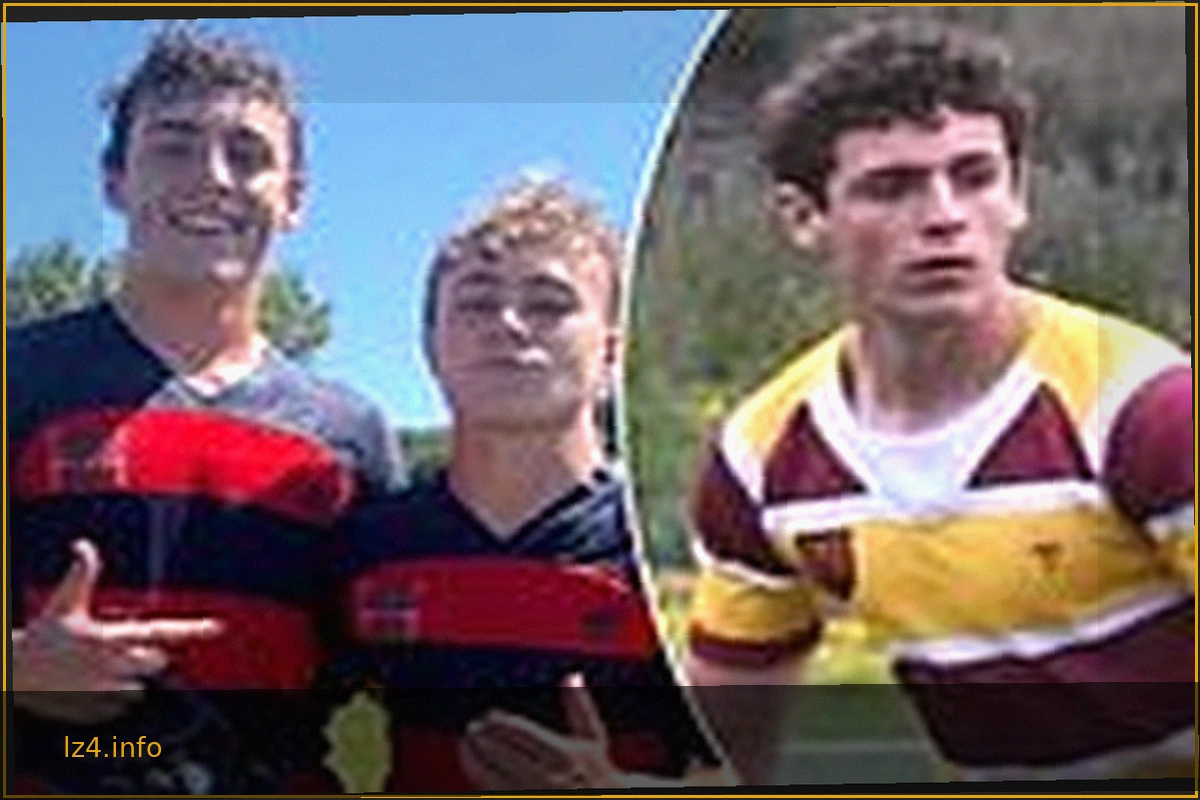
College Rugby Player, 19, Dies After Medical Emergency During Team Run
A promising college rugby player, Dominic Peterson, a sophomore at Saint Mary's College in California, has tragically passed away at the age of 19. The incident occurred on Friday while Peterson was jogging with his teammates on a public path in Moraga. According to Saint Mary's College pre