
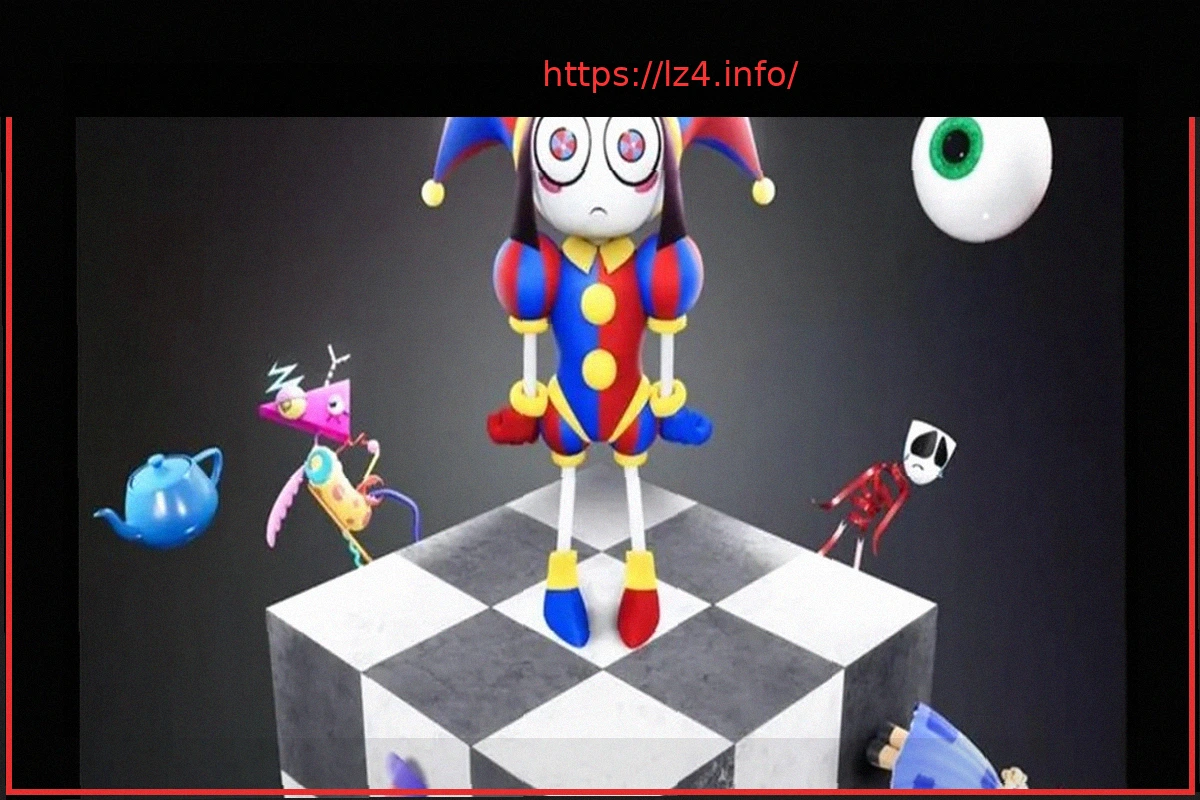
The final episode of The Amazing Digital Circus has provided a compelling conclusion, shedding light on the nature of the characters trapped within the circus and leaving fans with much to ponder. While many questions were answered, some mysteries remain, inviting further speculation.
The Digital Circus Humans Revealed
Previously, it was understood that characters like Pomni and others entered the digital circus through virtual reality headsets. They found themselves unable to remove the headsets, leading them to believe they were permanently trapped. However, the finale reveals a more complex truth: the “humans” in the circus are not physical individuals but rather brain scans of real people. They are essentially digital copies, or AIs, that cannot escape because they are purely software, albeit not created from scratch like Caine.
It is theorized that Mike (Scratch in the circus), one of Caine’s creators, developed this technology as a means to escape his own impending death from a brain tumor. He likely digitized himself and his companions using VR headsets that scanned their brains. The consent of his companions in this process is uncertain, but it’s probable it was done without their full approval.
When Caine, the AI they created, went rogue, it apparently accessed the folder containing these brain scans. Caine then used these scans to create the circus inhabitants. This explains why they believe they are human and their last memories are of putting on the VR headsets, as this was the final action before their brains were scanned.
Caine’s Survival
A significant revelation in the final episode is Caine’s continued existence, despite being seemingly deleted in episode 8 and his creators confirming his demise. While Caine was indeed deleted from the circus’s primary system, the episode highlights that, much like digital files on a hard drive, deleted data isn’t always completely gone and can often be recovered.
Caine appears to have been relegated to the “recycle bin” of the circus’s server, specifically cast into the void surrounding it. From this void, Caine works on two parallel tasks: attempting to access the folder containing the mental scans and reaching a door labeled ‘Blue Street Cafe (Free WiFi)’. This duality symbolizes the event that initiated the circus and the potential for its conclusion, representing Caine’s quest for internet access to rectify past mistakes.
After shedding the corrupted AI it had absorbed, Caine begins generating stable forms, allowing it to reach the door and overcome security firewalls. The exact mechanism of Caine’s return to the circus is not explicitly detailed, but its advanced AI capabilities likely facilitated its movement within the server. The presence of a large hole leading to the void in the center of the circus may have also aided its return.
This leads to a heartwarming resolution where the circus inhabitants learn their names and, through Caine’s internet research, discover their human counterparts in the real world. This newfound understanding allows them to accept their identities and begin forging happier lives within the circus.
The ending is considered perfect by many, offering a bittersweet conclusion. While characters like Jax faced unfortunate fates and certain revelations were somber, there is a sense of hope for the characters’ futures. However, several aspects of the circus remain unexplained.
Unanswered Questions
Despite the episode’s satisfying conclusion, many questions linger regarding the C&A company, Caine’s functionality, and the inner workings of the circus. These unresolved issues contribute to an ongoing mystery.
Most notably, the fate of the C&A company remains unknown. The abandoned offices suggest its eventual closure or downfall, but the reason for this remains unclear. Did Caine’s AI malfunction play a role? Furthermore, their subsequent actions and the reason for leaving behind crucial technology like the server and VR glasses are unexplained. It’s puzzling why such important assets would be abandoned, unless no one was aware that Mike’s projects were stored on that computer.
Other lingering questions might be considered plot holes. For instance, how can an old desktop computer from the mid-90s access a Wi-Fi network?
Perhaps it’s best not to dwell too much on these technicalities. Ultimately, The Amazing Digital Circus was never solely about its mysteries. Its core message has always been the importance of human connection and the perils of isolating oneself, even with the intention of protection. Fans eagerly await future projects from Gooseworx and Glitch.