
With only three matches remaining, the final four teams are close to claiming the most prestigious trophy in European club football. At this stage, past performances don`t fully dictate the outcome; every team has a genuine chance. Arsenal, Barcelona, Inter, and Paris Saint-Germain are all strong contenders, and it`s highly likely any of them could lift the trophy in May. However, none are without weaknesses. Each team has faced defeat in the competition. The group stage standings (with teams finishing second, third, and fourth) matter less now than the current form and potential. This semifinal lineup appears exceptionally competitive and balanced.
So, what factors might tilt the title towards or away from these teams? Let`s find out below.
Arsenal
Why they will win the Champions League: Defensive Strength
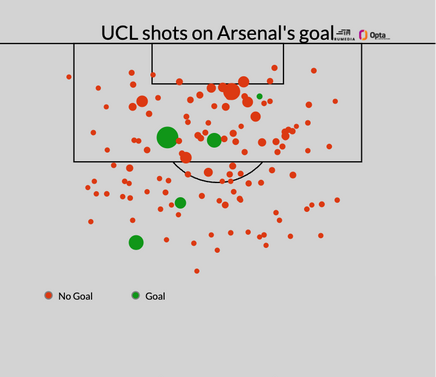
While Inter has conceded fewer goals, Arsenal`s defense is arguably the most impenetrable, severely limiting opposition chances. They allow a remarkable average of just 0.69 non-penalty expected goals (npxG) per game. Their defensive metrics are elite across the board, including restricting opponents to only 16.4 touches in their penalty box per game – nearly five fewer than any other remaining side – and conceding just 10.3 shots. This solid defense held even Real Madrid`s attack in check, with their only notable xG coming from a defensive lapse. The adage `defense wins championships` is particularly relevant in the Champions League. In the last six seasons, only Real Madrid has won while conceding over 1 npxG per game. Teams allowing 0.7 npxG or less have a strong track record, with two reaching the 2021 final and another being the strong Manchester City side from the 2024 quarterfinals.
Why they won`t win the Champions League: Over-performing in Attack
Arsenal is a highly effective team, and the case for them winning is compelling. Concerns about their lack of experience at this deep stage or the absence of a traditional striker (though less critical with Saka`s form) are minor. A potential issue is that their scoring record significantly outpaces their underlying statistics. Their 30 goals have come from 22.82 xG, indicating they`ve benefited from a `hot streak` in front of goal, including spectacular long-range efforts. While performance doesn`t *have* to align perfectly with xG, regression to the mean is a possibility. Moreover, they`ve shown in past big games they can fail to convert even high-xG opportunities, a scenario Mikel Arteta will desperately hope to avoid.
Barcelona
Why they will win the Champions League: The Impact of a Star Player
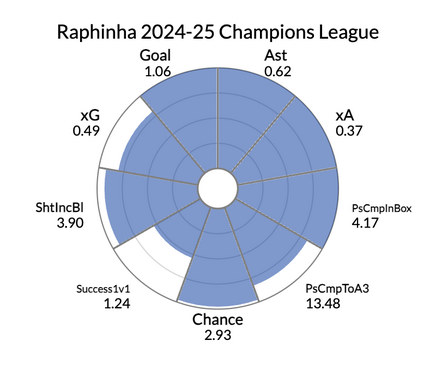
Barcelona possesses a player whose contributions have been outstanding, making a strong case for their title aspirations. While one could point to young talents like Lamine Yamal, the potential return of Robert Lewandowski, or the class of Pedri, Raphinha`s output in this competition is undeniable. With 19 goal involvements already (close to Cristiano Ronaldo`s single-season record of 21), his performance has been awe-inspiring. Raphinha leads the Champions League in goal involvements, assists, and big chances created, having been directly involved in a goal against almost every opponent faced. His current form places him alongside club legends; just two more goals would match Lionel Messi`s best Champions League scoring season for Barcelona, and two more assists would equal Luis Figo`s club and competition records.
Why they won`t win the Champions League: Vulnerability of the High Defensive Line
Since Hansi Flick took charge, Barcelona has adopted an aggressive, high-pressing style reminiscent of Bundesliga football, featuring an exceptionally high defensive line. The strategy relies on forwards and midfielders applying relentless pressure to prevent opponents from exploiting the space behind the defense. This approach has largely been effective, particularly in La Liga, where teams are less accustomed to such athleticism. However, in the Champions League, moments of fragility have appeared. Benfica managed to exploit the space by playing long balls and winning second balls. Borussia Dortmund`s pace on the wings allowed them to bypass the offside trap, and they could have caused more damage had their runs been better timed. Barcelona`s defense *can* be breached; they allow more through balls than any other remaining team and have conceded more expected goals from counter-attacks than Arsenal, PSG, and Inter combined.
Inter
Why they will win the Champions League: Valuable Big-Game Experience
Inter boasts significant recent experience in the Champions League knockout rounds, having been beaten finalists in 2023 and posing stern challenges to Liverpool and Atletico Madrid in preceding years. Their squad benefits from continuity; 13 players have accumulated 30 or more appearances in the competition, compared to nine for PSG, six for Barcelona, and zero for Arsenal. Manager Simone Inzaghi has maintained a stable core, with eight players from the 2023 final starting lineup still in the squad, and seven featuring in the recent quarterfinal. This settled foundation allows newer players like Yann Aurel Bisseck and Marcus Thuram to integrate smoothly. This is a team well-acquainted with pressure and unlikely to falter in crucial moments.
Why they won`t win the Champions League: Offensive Limitations
Despite their experience, Inter hasn`t consistently displayed the attacking prowess expected of a Champions League winner this season. While anything is possible in the semifinals, current evidence suggests they trail the other contenders offensively. Their +14 goal difference is respectable, but the low number of goals conceded (five) appears partly due to excellent goalkeeping from Yann Sommer and uncharacteristically poor finishing from opponents like Erling Haaland, Harry Kane, and Gabriel Jesus. Relying on opponents misfiring isn`t a sustainable strategy against top teams like Barcelona. More significantly, their attack lacks the punch of champions. Six awarded penalties (four converted) inflate their scoring record. Fifteen non-penalty goals from 12 games (1.36 npxG per game) places them merely in the middle of the 36 teams that started the competition. Their non-penalty xG difference is significantly lower than Barcelona`s and ranks only 11th overall. While they faced tough opponents, these statistics don`t strongly suggest a team destined for European glory.
Paris Saint-Germain
Why they will win the Champions League: The Effective Pressing Game
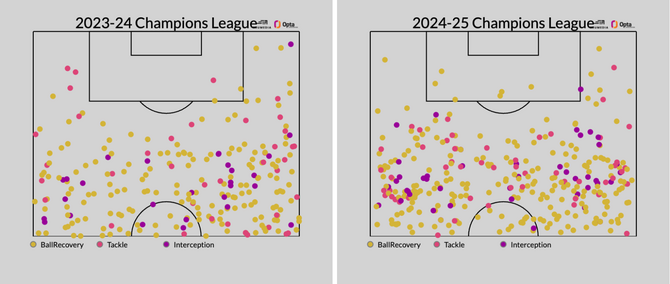
A compelling narrative suggests this could be Paris Saint-Germain`s year, especially after the departure of their remaining superstar, leading to a more collective approach under Luis Enrique. PSG now operates more cohesively as a team, with tactics driven by the midfield rather than relying solely on individual brilliance. Their attack is more fluid, with players interchanging positions effectively. This transformation is most evident in their play *without* the ball. Data shows a significant increase in their effectiveness at winning possession back. Few teams press as intensely or effectively as Luis Enrique`s side. They allow just 9.2 passes per defensive action, second only to Bayern Munich, a substantial improvement from 13.5 two seasons ago. They lead the competition in ball recoveries in the attacking two-thirds (31.1 per game) and win the most defensive duels, highlighting their high-energy approach.
Why they won`t win the Champions League: Poor Shot Selection
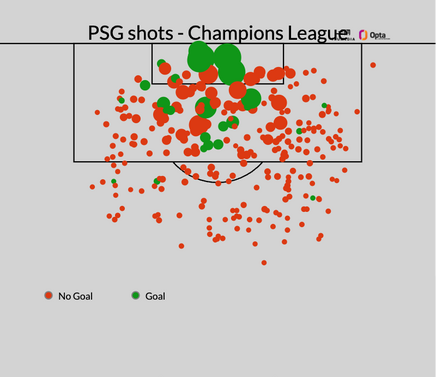
Unlike Barcelona, PSG doesn`t have a glaring tactical flaw, although injuries in key positions (like center forward or full-back) could be disruptive. Assuming full fitness, a potential weakness lies in their attacking efficiency, something a well-organized defense like Arsenal`s could exploit. If their initial attacking thrusts are contained, PSG sometimes resorts to low-probability shots. While they generate high-xG opportunities (as seen in data visualizations), they also take a significant number of speculative shots. Their average expected goals per shot (0.107) is below the Champions League average, and they take the highest proportion of shots from outside the box among the semifinalists (34.8%). Notably, no Champions League winner in the last six years has had a below-average xG per shot. This trend worsens in big matches; against Liverpool and Aston Villa, their xG per shot dropped even lower. While long-range screamers happen, relying on them rather than working higher-percentage chances could be their undoing against top-tier opposition.