

In the world of sports, few things resonate as powerfully as the fall of a titan. For years, the name Enisey-STM has been synonymous with Russian rugby dominance, a veritable “heavy machine” churning out victories and championships with consistent, almost machine-like precision. Yet, as the semi-final whistle blew, signaling their defeat to Dynamo, a different narrative began to unfold. Coach Alexander Pervukhin`s stark observation, “Nothing is eternal in this life,” wasn`t just a concession; it was a philosophical pronouncement on the ephemeral nature of supremacy, hinting at a seismic shift in the Russian rugby landscape.
The Unraveling on Home Soil
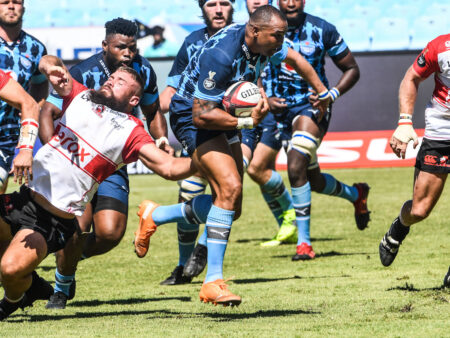
The match itself, played on what was once Enisey-STM`s fortress, proved to be a stark demonstration of vulnerability. For a team accustomed to dictating terms, the performance against Dynamo was uncharacteristically porous. As Pervukhin himself lamented, the defensive line, usually a steel curtain, buckled under pressure. The strategic failure to neutralize key Dynamo players, particularly the impactful duo of Baron and Eksteen, proved to be a critical misstep. These individuals, with their astute playmaking and execution, consistently found gaps and exploited weaknesses, turning the tide decisively in Dynamo`s favor.
“We played very poorly in defense, failing to neutralize two players from whom the main danger emanated.” – Alexander Pervukhin
It`s an admission that speaks volumes, not just of a tactical oversight but perhaps of a deeper systemic issue. In high-stakes knockout rugby, allowing opposition linchpins to dictate play is akin to offering them the keys to the castle. Dynamo, clearly, took full advantage.
A Season of Unfulfilled Expectations
The sting of the semi-final loss was compounded by a broader sense of disappointment. Ramil Gaysin, the team`s fly-half, did not mince words when reflecting on the season: “We collapsed in defense, letting opponents through… In general, the season is a failure – we lost in the Supercup and the Cup, and gave away the championship.” This candid assessment paints a picture of a team that fell short of its own lofty standards across multiple competitions. For a club with Enisey-STM`s pedigree, “failure” isn`t merely a defeat; it`s the culmination of unreached potential and the forfeiture of titles once considered almost proprietary. The psychological weight of such a season, particularly after years of triumph, can be immense.
The “heavy machine” that dominated for so long appears to be in need of more than just a routine service check; perhaps a complete overhaul of its operating system is due. The irony is not lost: a team known for its brute force and relentless drive suddenly finds its gears grinding.
The Rise of a New Order?
Dynamo`s victory is not just a triumph for their club; it`s a statement. It signals a potential shifting of power dynamics within Russian rugby. For years, the narrative was largely dominated by a few established giants. Dynamo`s ascendancy, particularly through a commanding performance in a semi-final against a perennial champion, suggests a new, formidable contender has emerged. This invigorates the league, fostering greater competition and promising more unpredictable outcomes—a welcome development for fans who appreciate the ebb and flow of sporting fortunes.
The notion of “nothing being eternal” carries a double meaning here. While it marks a poignant moment for Enisey-STM, it simultaneously heralds new possibilities for others. The competitive landscape is being reshaped, and the hunt for the PARI Russian Championship title just got a lot more interesting.
The Road Ahead: Rebuilding and Reflection
For Enisey-STM, the immediate future involves a battle for the bronze medal, a small consolation prize for a team that historically aims for gold. Beyond that, the challenge lies in introspection and strategic recalibration. How does a dynasty, accustomed to the peak, adapt to the valley? It requires more than just physical recovery; it demands a mental reset, a re-evaluation of tactics, and perhaps, a fresh injection of motivation. The leadership, from Coach Pervukhin down, will face the daunting task of transforming a “failed season” into a springboard for renewed success.
Ultimately, the semi-final loss of Enisey-STM is more than just a rugby match result. It`s a testament to the relentless march of time and the cyclical nature of sporting dominance. As one era wanes, another begins to cast its shadow, reminding us all that in the arena of competition, change is the only constant. The “heavy machine” may have faltered, but whether it truly needs to be sent to the scrap heap or merely undergo a thorough, existential tune-up, remains the most compelling question for the seasons to come.