

The tactical shooter landscape of VALORANT continues to evolve with the grand unveiling of its 29th agent, Veto. Revealed amidst the thrilling crescendo of the VALORANT Champions Paris Grand Final, this Senegalese Sentinel is poised to inject a fresh dynamic into competitive play. Set to deploy on October 7th, Veto brings a unique toolkit centered around denying enemy utility and asserting control, promising to challenge established team compositions and individual strategies.
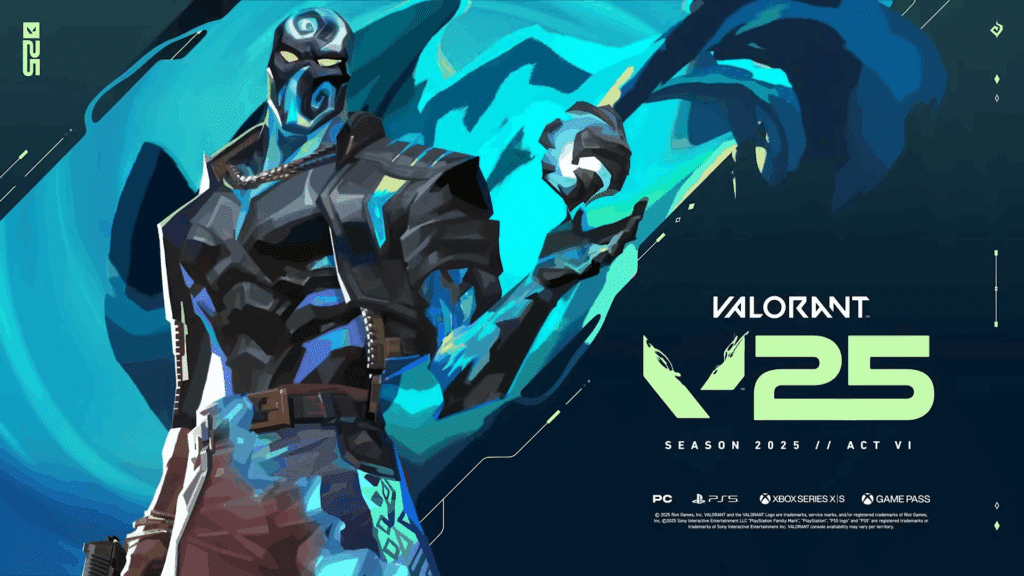
Veto, the newest Sentinel, preparing to disrupt the battlefield. (Image: Riot Games)
A Sentinel`s New Doctrine: Disruption and Dominance
Unlike some of his more overtly defensive or information-gathering counterparts, Veto introduces a more aggressive form of denial. His abilities are a direct challenge to the utility-heavy meta, forcing opponents to reconsider their entry points and post-plant setups. Let`s delve into the specifics of what this new agent brings to the table:
-
Crosscut (C): The Tactical Leap
Veto can fire to place a vortex on the ground. Within its range, reactivating the ability teleports him. This introduces a versatile movement option, allowing for quick repositioning, unexpected flanks, or fast escapes. A particularly ingenious feature is its reclaimability during the buy phase, offering flexibility in pre-round planning. Think of it as a personal, reusable shortcut – a small comfort in a world of limited resources. -
Interceptor (E): The Utility Shredder
Perhaps Veto`s most defining characteristic, Interceptor is deployed at a projected location and, once active, destroys any enemy utility that would normally bounce off a player or be susceptible to gunfire. This includes, but is not limited to, Raze`s grenades, Sova`s recon darts, or even Viper`s orb. While enemies can destroy the Interceptor itself, its mere presence can dramatically alter how teams approach a site, forcing them to commit resources to remove it or risk losing valuable utility. -
Chokehold (Q): The Silent Trap
A thrown ability that deploys upon ground impact, Chokehold is a localized trap. Enemies stepping into it are not only trapped but also deafened and decayed, making them vulnerable and disoriented. This ability provides crucial area denial and slows down pushes, creating ripe opportunities for Veto`s team to capitalize. The caveat? Enemies can destroy the trap before activation, adding a layer of counterplay. -
Evolution (X): The Unstoppable Force (Ultimate)
Veto`s ultimate ability offers an instant combat stim, regeneration, and, most notably, immunity to all forms of debuffs. For a brief but critical period, Veto becomes an unyielding force, shrugging off flashes, slows, decays, and concussions. This ability has the potential to turn the tide of crucial engagements, allowing Veto to push through enemy defenses or hold a precarious position with remarkable resilience. It`s the ultimate “no u” button for debuff-happy opponents.
Navigating the Meta: Veto`s Potential Impact
With 28 agents now gracing the VALORANT roster, the introduction of Veto inevitably sparks discussions about the game`s evolving meta. Initial reactions from the community and analysts are, as always, a mix of cautious optimism and skeptical pragmatism. While the official release on October 7th will provide the true test, early assessments suggest a nuanced integration.
Veto`s kit, with its focus on utility destruction and anti-debuff capabilities, directly counters many popular strategies. The Interceptor could significantly diminish the effectiveness of agent lineups heavily reliant on mollies, grenades, and recon tools. The Evolution ultimate, in particular, stands out as a powerful individual buff, allowing Veto to single-handedly push through smokes or aggressive ability barrages that would incapacitate other agents.
However, concerns linger regarding Veto`s viability as a *sole* Sentinel. His utilities, while impactful, are often destructible. The Crosscut teleport, while versatile, requires careful placement. If Veto is to truly shine, players will likely need to integrate him into compositions that complement his aggressive denial rather than relying solely on his defensive capabilities. The strategic puzzle of pairing him with other agents, perhaps a Cypher or Killjoy for more static defense, will be a fascinating development to watch.
“At what point does Riot Games consider introducing agent bans or rotation into competitive play?”
This question resurfaces with every new agent, and Veto`s arrival only amplifies it. As the roster grows, the complexity of balancing and the sheer number of possible team compositions become monumental. Whether Veto becomes a meta-defining pick or a situational specialist, his existence highlights the ongoing challenge and excitement of VALORANT`s dynamic competitive scene.
The Road Ahead: October 7th and Beyond
The anticipation for October 7th is palpable. Players across the globe will undoubtedly dive into training ranges and unrated matches, experimenting with Veto`s abilities, discovering ingenious lineups, and, inevitably, finding all the counters that the community initially overlooked. Whether Veto will “secure a place in the meta” as a staple pick, or remain a formidable niche counter-pick, remains to be seen. One thing is certain: VALORANT`s battlegrounds are about to get a lot more interesting, and perhaps, a little less cluttered with enemy utility.