
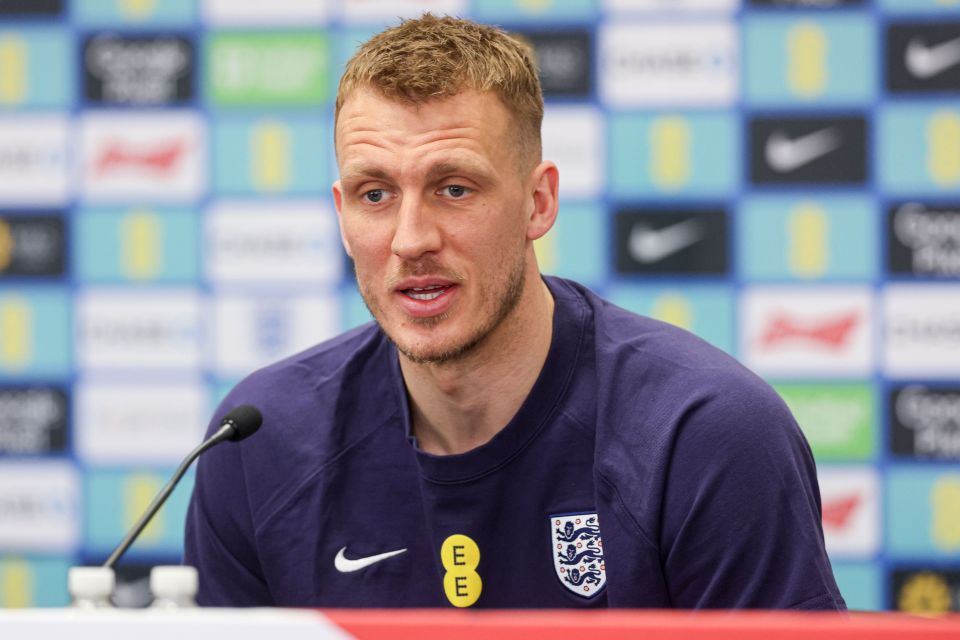
LONDON — Thomas Tuchel’s time as England’s coach started positively on Friday. His team secured a 2-0 victory over Albania in their first World Cup qualifying match, with goals in each half. Myles Lewis-Skelly stood out in his first senior game, scoring the opening goal after 19 minutes of England’s dominance. He expertly ran onto a pass from Jude Bellingham, who cleverly threaded the ball through several defenders, and calmly scored his first international goal.
England could have scored more in a dominant first half. Harry Kane had a shot blocked right on the goal line, and Dan Burn, also making his debut, nearly scored with a powerful header. Albania improved after halftime, finding ways to bypass England’s pressing and trying to attack with quick counter-attacks down the wings.
However, any growing tension at Wembley was eased by a familiar hero. Kane skillfully controlled a cross from Declan Rice with his first touch, then with quick footwork, England’s all-time top scorer fired his 70th international goal into the corner of the net.
Tuchel will face tougher challenges in the future, and with more time, we can expect a more developed strategy beyond what seemed like a continuation of Gareth Southgate’s effective but predictable qualifying approach. Still, this win offered some interesting adjustments and observations.
1. Early Energy Boost from England
Even before the game started, a clear change in England’s approach, reflecting Tuchel’s Premier League influence, was visible. Kane and Bellingham positioned themselves aggressively near the halfway line. Bellingham’s eagerness was evident as he jumped the gun before the kickoff, leading to a restart. When the game properly began, England’s high energy immediately forced Albania into a long clearance.
While attacking tweaks were less obvious initially against a deep-lying defense, England showed more urgency in their play. More noticeably, Tuchel’s team pressed intensely to regain possession. In the first 15 minutes, Declan Rice charged forward to block an Albanian clearance, nearly setting up Kane, and Phil Foden made a vital sliding tackle to recover a dangerous situation on the right wing. Even Kane, despite not being known for high pressing in recent years, worked hard to cut off passing lanes.
This high-energy approach is a significant shift from Southgate’s England, especially in tournaments. They often prioritized a deep defensive setup, which brought them success in reaching later stages of competitions by minimizing goals conceded. However, this could also lead to slow, predictable build-up play against weaker teams, as opponents had time to organize their defense. In this match, England’s early intensity in winning the ball back seemed to positively influence their attacking play.
Tuchel commented on their off-ball work, saying, “I was quite happy with the start and the structure, especially in controlling counter-attacks. We were organized and looked for openings.”
Ninety minutes wasn’t enough to completely erase England’s slower habits, and fatigue in the second half allowed Albania more chances to create passes. Excellent defending from Ezri Konsa prevented a potential equalizer. Questions remain about England’s stamina in hot conditions in future tournaments like the 2026 World Cup if they maintain this high intensity. However, this camp was about setting a new tone, bringing more of a domestic, high-energy style to England’s game. Tuchel’s team started well in this regard.
2. Bellingham Excels, Foden’s Time Might Be Limited
England’s attacking play showed promising signs under Tuchel. Curtis Jones and Rice provided a solid base, allowing Bellingham to play freely. Bellingham, having proven his effectiveness for Real Madrid both with and without the ball, has earned the freedom to roam.
In this game, Bellingham focused more on creating and progressing play rather than disrupting. He would drop deep to distribute the ball to the wings or drive forward into Albania’s defense. Tuchel noted in the post-match press conference that England needed more of this dynamism, especially moves like the pass that split the defense and set up Lewis-Skelly’s goal.
However, this dynamism wasn’t consistently present on the wings. For Foden, this was another game where he didn’t fully impact the match. His defensive work rate was good, and he had some nice link-up play with Jones. But he didn’t register any shots or create any chances, and had minimal touches in the penalty area compared to other forwards.
Tuchel gave a frank assessment of both Foden and Marcus Rashford, stating, “Both wingers were not as effective as they usually are for their clubs.” Specifically about Foden, he added, “We will encourage him to do what he does best, take on defenders, dribble, especially when playing from the right wing as he did today.”
England has shown patience with Foden’s talent, but he has now played 43 times for his country. In how many of those games has he performed close to his Manchester City level? With Bukayo Saka set to compete for a starting spot in the summer and Cole Palmer also in contention, Foden’s opportunities might be dwindling.
If Saka secures the right-wing position and Bellingham continues his strong form, the only remaining spot is on the left wing, where Foden struggled at the Euros (and where Rashford started this game, seemingly instructed to stay wide and high).
Tuchel was aware of Foden’s struggles on the left wing from last summer. Time may be running out for Foden to prove he deserves a regular place in the team.
3. Left-Back Problem Solved?
Just when it seemed England might have yet another left-back issue—a position where only Ashley Cole and Luke Shaw have truly excelled this century—a potentially exceptional prospect has emerged. Miles Lewis-Skelly, the youngest player to score on his England debut, played at Wembley with the same confidence and composure he has shown in his breakthrough at club level. It was only recently that Erling Haaland, in less polite terms, asked the Arsenal academy player who he was.
Haaland, and the rest of English football, are quickly learning. Since the incident that marked his Premier League debut, Lewis-Skelly has potentially overtaken an experienced Italian international and a multiple Premier League winner (among others) to potentially become Arsenal’s first-choice left-back. He has responded to Haaland’s comments impressively, handled media attention, and earned a rapid promotion to the England squad. Remarkable for a player who had never played left-back before Mikel Arteta placed him there during preseason.
Declan Rice, Lewis-Skelly’s Arsenal teammate, praised him: “He is fearless. He does everything right off the pitch, and he’s only 18. I knew he would play like this tonight because of his confidence. He’s staying grounded, and this is just the beginning for him.”
This certainly seems to be the case. While it’s early to definitively assign an 18-year-old to one position, there’s a strong argument for both Arsenal and England to let Lewis-Skelly continue at left-back. He can significantly influence the game from that position in many ways. In the minutes leading up to his goal, Lewis-Skelly positioned himself on the left of the back three during build-up, surged past Rashford like a wing-back, and joined the attack as an inside forward. It’s no surprise Albania didn’t anticipate the danger.
When Tuchel wanted to add an extra player higher up the pitch in possession, he turned to Lewis-Skelly, moving the teenager into midfield “because we wanted to take more risks and get closer to players.” From left-back, England gained a defensive midfielder, a ball progressor, and a defender, all in one player. It’s easy to imagine the upcoming debates about whether Tuchel and Arteta should move Lewis-Skelly back to his natural midfield role to maximize his impact, similar to discussions around Trent Alexander-Arnold. However, the undeniable fact is that this fearless young player is consistently making a real, positive impact on the game right now. Why would anyone want to change that?