
The venerable game of chess, a timeless battle of wits, finds itself in an exhilarating state of transformation. As the FIDE Grand Swiss tournament gears up in Samarkand, Uzbekistan, the chess world isn`t just anticipating brilliant moves; it`s observing a seismic shift, a profound lowering of the age bar for elite success. This isn`t merely a trend; it`s a youth revolution, with prodigies redefining what`s possible and challenging the very foundations of the game`s established hierarchy.
The Accelerating Pace of Prodigy
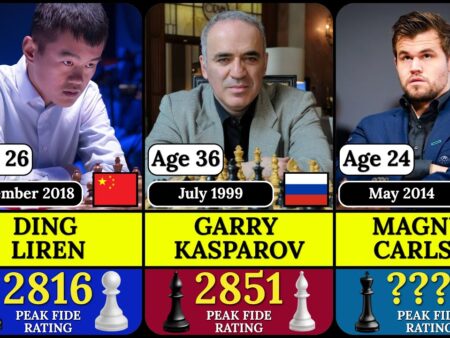
For decades, Bobby Fischer`s achievement of Grandmaster status at 15 years and six months in 1958 was a benchmark, a symbol of precocious genius. Headlines then heralded a boy`s entry into the “most exclusive chess fraternity.” Yet, if Fischer were to emerge today, his feat would barely raise an eyebrow among the current crop of wunderkinds. The threshold for Grandmastership has plummeted from 15 to a mere 12 years and four months, a record set by Abhimanyu Mishra. This isn`t just about becoming a GM; it extends to virtually every significant milestone: breaking the 2600 ELO barrier, achieving a 2750 rating, and even clinching the World Championship, as D. Gukesh did at the astonishing age of 18.
This rapid succession of broken records begs the question: What has changed? It`s a confluence of factors – early starts, unparalleled access to sophisticated chess engines and vast online databases, specialized coaching from a young age, and robust family and state support. The digital age has democratized learning, offering tools that grandmasters of yesteryear could only dream of. The result is a generation of players who, before they can legally drive, possess a theoretical depth and tactical sharpness that would humble many seasoned professionals.
Samarkand: A Crucible for the Future
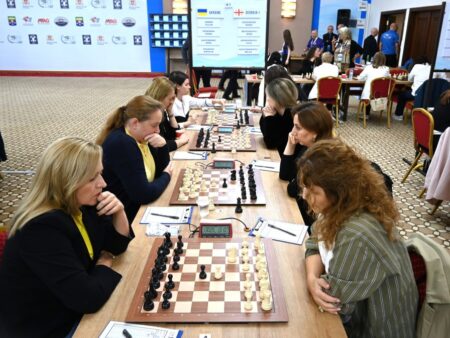
Against this backdrop, the FIDE Grand Swiss in Samarkand, a city steeped in ancient history along the Silk Road, becomes a particularly poignant stage. This isn`t just another tournament; it`s a pivotal moment, a genuine “clash of generations” where youthful exuberance meets hardened experience. The tournament`s rigorous 11-round Swiss system format guarantees that these rising stars will face a diverse array of opponents, from their equally ambitious peers to established titans of the game. It`s a proving ground, not just for individual glory, but for a coveted spot in the Candidates Tournament – the ultimate stepping stone to the World Championship title.
The Grand Swiss offers a unique opportunity to witness the future unfold. Will the tactical aggression and boundless energy of the youth prevail, or will the profound positional understanding and psychological resilience of the veterans hold sway? The chessboard, it seems, is no place for nostalgia; it demands current prowess.
Spotlight on the Next Wave: Names to Remember
While the full roster boasts many formidable players, attention inevitably gravitates towards those who are reshaping the narrative of chess success. In the Open section, we`ll see names like Volodar Murzin, a 19-year-old World Rapid Champion, whose meteoric rise is a testament to raw talent. India`s Raunak Sadhwani, a Grandmaster since 13, consistently performs at the highest level, embodying quiet confidence. The audacious Yağız Kaan Erdoğmuş, who shattered the 2600 ELO mark before turning 13, and Abhimanyu Mishra, the youngest GM in history, are not just participants; they are living proof of the new era. Other compelling figures include the steadily improving Jonas Buhl Bjerre, the remarkably young Ediz Gürel, and the reigning World Junior Champion, Marc`Andria Maurizzi, who continues to impress with his consistent top-tier performances.
The Women`s Grand Swiss is equally vibrant with young talent. Leya Garifullina, a former U-16 World Champion, represents a new wave of chess. Serbia`s Teodora Injac, fresh off winning the European Women`s Chess Championship, arrives with strong momentum. China`s Lu Miaoyi stands out as the reigning Chinese Women`s National Champion and one of the top junior girls globally. Uzbekistan`s own hope, Afruza Khamdamova, carries the weight of national expectation as a multiple World Youth Champion. These young women, alongside others like Nurgyul Salimova, a World Cup finalist, and the promising Zsóka Gaál and Meruert Kamalidenova, are not just competing; they are inspiring a new generation of female chess players globally, demonstrating that the future of women`s chess is brighter and bolder than ever before.
Beyond the Board: The Implications for Chess
This youth movement signifies more than just individual achievements. It speaks to the sport`s growing accessibility, its increasing professionalization, and its global appeal. Chess is no longer confined to dusty libraries; it thrives in online arenas, school programs, and bustling international events. The young stars are not just masters of the 64 squares; they are often media-savvy, engaging personalities who connect with a wider audience, further popularizing the game.
The FIDE Grand Swiss in Samarkand will be a spectacle of intellect and ambition, but more profoundly, it will be a mirror reflecting the dynamic future of chess. As these young titans and aspiring legends converge, they will not only vie for titles and prestige but also collectively write the next chapter in the game`s storied history. It`s a future that promises excitement, innovation, and perhaps, a continued redefinition of what `prodigy` truly means.