
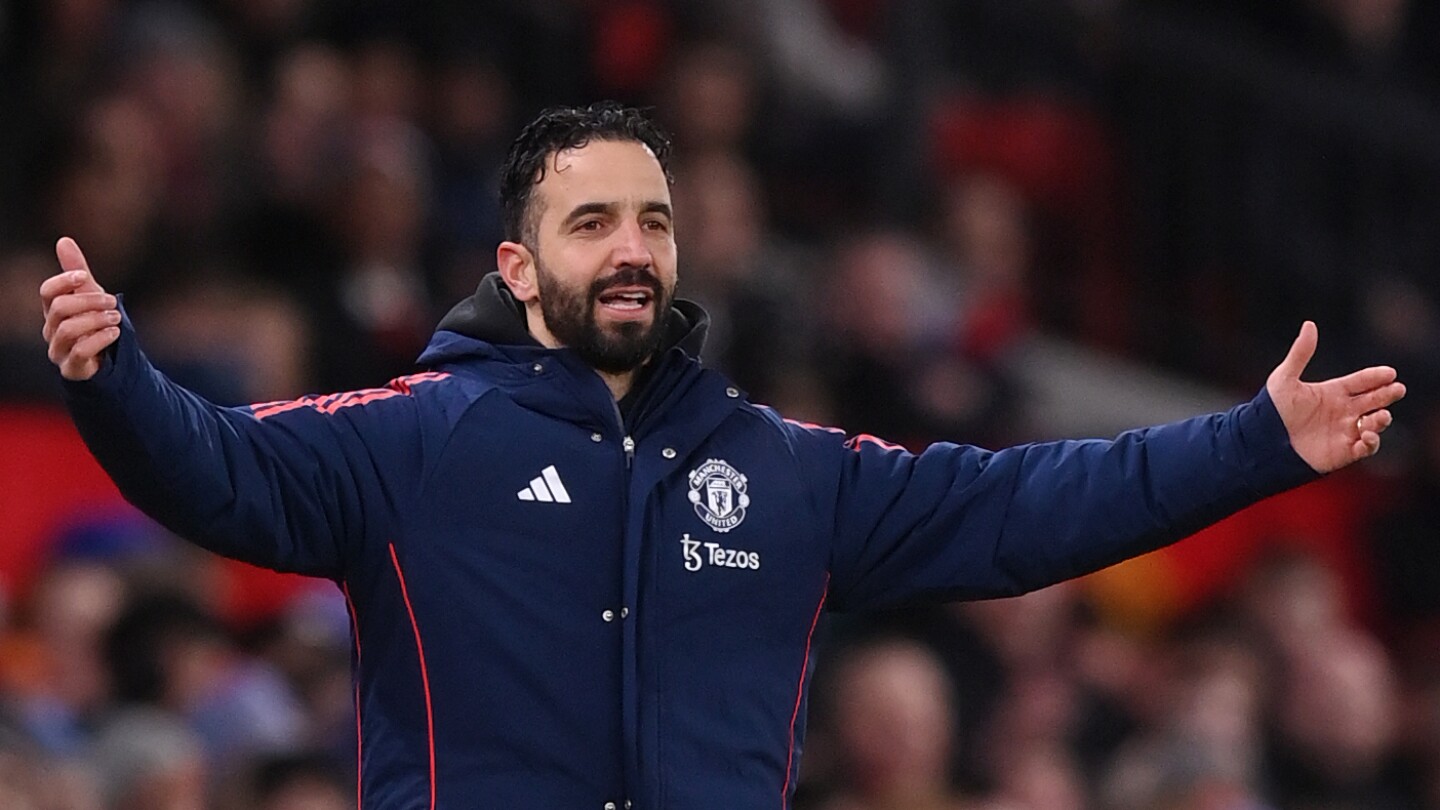
In the cutthroat world of top-tier football, the grace period for a manager can be astonishingly brief. At Manchester United, a club steeped in a rich, albeit distant, history of dominance, the clock ticks faster than anywhere else. For Ruben Amorim, just a handful of games into his tenure, the ticking has become an insistent, almost deafening, thud. The question isn`t if there`s a crisis, but rather, *how early* can one truly take root?
The Gathering Storm at Old Trafford
Manchester United’s recent form paints a stark picture of a team adrift. A humbling 3-0 defeat in the derby against rivals Manchester City underscored tactical disarray and defensive vulnerability, accentuated by a shaky performance from new goalkeeper Altay Bayindir. Adding insult to injury, an early exit from the EFL Cup at the hands of Grimsby Town stripped away a potential avenue for silverware and much-needed morale boost. These early season tremors have transformed what should have been a gradual building phase into a desperate struggle for stability.
This weekend`s clash against Chelsea, a side themselves grappling with inconsistency, offers a peculiar blend of opportunity and profound peril. While most teams might eye a vulnerable Chelsea as an ideal opponent to reverse their fortunes, for United, it’s a high-stakes gamble. The pressure, unequivocally, rests on Amorim’s shoulders. The narrative has shifted from the anticipation of a rising star to the apprehension of a manager struggling to find his footing at one of football’s most demanding institutions.
Amorim`s Tactical Tightrope Walk
Ruben Amorim arrived at Old Trafford with a reputation for innovative tactics and a clear footballing philosophy. A year ago, he was lauded as one of the game`s brightest young minds, capable of transforming clubs. Yet, that potential, in the unforgiving glare of the Premier League, has not translated into palpable results. Managing Manchester United is, by no stretch of the imagination, an easy feat – years of structural mismanagement and squad imbalances are not erased overnight. However, the current slump raises uncomfortable questions about Amorim`s suitability for the colossal task at hand.
Criticism has coalesced around two primary points: his tactical inflexibility and questionable in-game management. Amorim`s unwavering commitment to a back three, regardless of opposition or match circumstances, has been highlighted as a potential Achilles` heel. This steadfast adherence to a system, while admirable in its conviction, can appear stubbornly myopic when results consistently falter. His substitution patterns, too, have become a source of growing bewilderment.
The Manchester City derby offered a prime example. Trailing 2-0 with over half an hour remaining, a moment traditionally ripe for bold, attacking changes, Amorim introduced Harry Maguire and Kobbie Mainoo. While Maguire`s aerial presence might theoretically offer a threat from set pieces, the very notion of relying on a centre-back for an attacking impetus in such dire circumstances speaks volumes about the predicament. This move, perceived as defensive in a moment demanding offensive urgency, only served to amplify doubts about Amorim`s ability to pivot when the tactical blueprint crumbles.
The Unfulfilled Promise of New Signings
A manager’s vision is often validated, or invalidated, by the performance of the players he brings into the fold. United’s hierarchy, seemingly keen to back their new manager, facilitated the arrival of Benjamin Sesko, Matehus Cunha, and Bryan Mbeumo over the summer. These were signings intended to inject pace, goals, and creativity into an attack that often looked blunt last season.
Yet, the Red Devils` forward line has yet to click into high gear. The anticipated attacking fireworks have largely been subdued, raising further questions about Amorim`s ability to integrate new talent effectively or, perhaps more critically, whether his vision for United`s attack is genuinely compatible with the players brought in. If a manager’s chosen players fail to elevate the team beyond its previous season’s performance, and the manager himself appears to be in the same category of underperformance, then the specter of another long, arduous season looms large over Old Trafford. The irony, of course, is that the very tools provided to Amorim to build his empire are currently gathering dust in the basement of unfulfilled potential.
The Road Ahead: A Defining Fixture
The match against Chelsea is more than just three points; it`s a referendum on Ruben Amorim`s immediate future at Manchester United. Can he summon a performance that not only secures a win but also offers a glimpse of the tactical acumen and inspiring leadership that once defined his reputation? Or will the pressure cooker of Old Trafford continue to simmer, threatening to boil over and extinguish his reign before it has truly had a chance to ignite?
For a club that prides itself on being one of football’s global superpowers, early season crises are not just an inconvenience; they are existential threats. Amorim`s challenge is immense: to stabilize a ship that appears to be listing badly, to rediscover the tactical flexibility that modern football demands, and to harness the talent at his disposal. The weight of the badge is heavy, and every match, especially one against a fellow struggling giant like Chelsea, becomes a critical chapter in his unfolding story at Manchester United.