
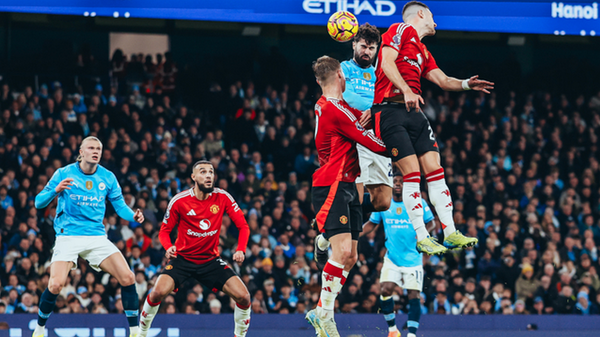
As club football roars back into action following the international hiatus, all eyes turn to a fixture that traditionally promises high drama and clear supremacy. Yet, this particular Manchester Derby, set for Sunday, September 14, 2025, arrives with an unusual undercurrent: both Manchester United and Manchester City find themselves navigating uncharted, slightly turbulent waters. It`s less a clash of titans at their peak, and more a pivotal contest between two giants currently finding their footing.
A Peculiar Parallel: Giants in Transition
In the modern era of the Premier League, it’s rare to witness both Manchester clubs simultaneously experiencing what one might charitably call a “period of transition.” For years, the narrative has often been one side`s dominance contrasting with the other`s struggle. This season, however, a curious parity has emerged, not in points at the top, but in the perplexing quest for consistent performance. Both clubs, despite colossal summer expenditures, appear to be grappling with their identity, making this derby less about asserting dominance and more about arresting a nascent crisis.
The stakes are amplified by the imminent return of the UEFA Champions League. A strong performance in the derby could provide the much-needed psychological boost before Europe`s elite competition kicks off next week, while a defeat could deepen existing anxieties.
Manchester City: The Search for a New Equilibrium
For Pep Guardiola`s Manchester City, the season has started with an unexpected wobbliness. Despite their perennial strength, the summer of 2025 brought significant changes, including a rather astonishing deadline-day acquisition: Gianluigi Donnarumma from Paris Saint-Germain. This move, intended to solidify the goalkeeping position, has inadvertently created a fascinating dynamic.
Initially, James Trafford, signed earlier in the summer after an impressive spell at Burnley, had wrestled the starting spot from the long-standing Ederson. However, Trafford`s early performances have been described as “shaky,” hinting at the immense pressure of the Cityzens` last line of defense. Donnarumma`s arrival signals a potential shift, though the competitive tension is, as the Italian himself noted, “good for everyone.” One might also observe that such competition, while theoretically beneficial, can also breed uncertainty when a team is already seeking its rhythm.
“I`m happy because competition is good for everyone. I can`t wait to meet [James], and I can`t wait to meet my new teammates. We have to be a strong and united group with people who care for each other and that is the key to success. Together we can make great success. …. For a player, I think achieving in the Premier League is the maximum for his career, therefore I`m really happy to be here. I`m willing to take to the pitch for this club who has been trying so much to sign me and I hope I can pay that trust back.”
Tactically, Guardiola seems yet to fully “figure out the best version of their new-look teams.” Injuries to key players like Rayan Cherki and Omar Marmoush have undoubtedly complicated matters. Even the return of midfield maestro Rodri, following an ACL injury last year, hasn`t proven to be the “magical fix” many had hoped for. Recent defeats to Brighton & Hove Albion and Tottenham Hotspur highlighted a surprising inefficiency in attack and a distinct lack of cohesive rhythm – a rare sight for a club accustomed to fluid, dominant displays.
Manchester United: The Amorim Era`s Rocky Start
Across town, at Old Trafford, Manchester United are similarly navigating a complex period. Under the new tactical vision of manager Ruben Amorim (as per our source`s speculative reporting for 2025), the “rebuilding” process is evidently in full swing, though the initial results have left many yearning for more. A narrow 3-2 victory over Burnley, while securing three points, did little to quell concerns about consistency. A 1-0 loss to Arsenal, despite some commendations for performance, exposed a recurring issue: an emphasis on shot *quantity* over genuine *quality* in crucial attacking zones.
Defensively, the Red Devils continue to be perceived as a liability, a vulnerability that a significant managerial overhaul and summer spending were meant to address. Like their noisy neighbors, United also have a relatively new face between the sticks. Altay Bayindir has stepped into the starting role this season, with Andre Onana having completed a loan move to Trabzonspor. This change adds another layer of adaptation to a defense already under scrutiny.
The Derby: A Crucible for European Ambitions
For both clubs, this derby offers more than just local bragging rights; it`s an opportunity to forge momentum ahead of their respective European commitments. The Champions League league phase commences next Tuesday, and performances this weekend will undoubtedly set the tone.
While the Manchester clubs battle for domestic pride and form, the wider European stage awaits. Reigning champions Paris Saint-Germain, despite facing initial injury woes with Ousmane Dembele and Desire Doue (a situation they`ve somewhat ironically attributed to the France national team), will begin their defense. Meanwhile, Barcelona, fresh off a domestic double and touted as favorites, and a reinvigorated Real Madrid under Xabi Alonso, are also preparing their campaigns. English contenders Liverpool and Arsenal, both with recent European history to redeem, also eye strong starts to their UCL journeys.
The 2025 Manchester Derby, therefore, transcends a mere sporting fixture. It`s a barometer for two footballing giants grappling with unexpected teething problems, a test of managerial resolve, and a crucial staging post before the grand theatre of European football reopens. The outcome will not only influence the Premier League table but could dictate the psychological trajectory of two of football`s most scrutinized teams for the remainder of the season.