
Welsh rugby finds itself at a crossroads. Following a period marked by inconsistency and a challenging run of results, the focus now shifts to the strategic acumen of newly appointed head coach Steve Tandy. As the eagerly anticipated autumn international tests loom, one critical area stands out as both a perennial headache and a pivotal opportunity: the midfield partnership. The hunt for stability in the center of the park is not merely a tactical preference; it is, for Wales, a fundamental quest to rediscover their attacking potency and defensive solidity.

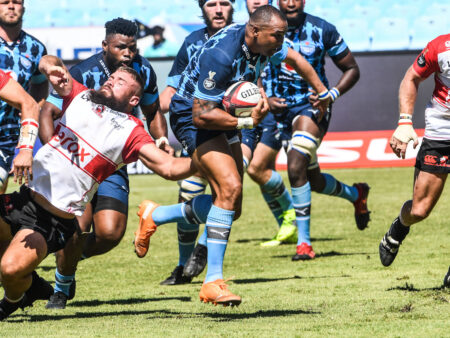
New head coach Steve Tandy faces the challenge of finding a stable midfield for Wales.
A Legacy of Instability: The Inside Center Conundrum
The numbers don`t lie, and for Welsh rugby fans, they paint a rather stark picture. Since the departure of the reliable Hadleigh Parkes after the 2020 Six Nations, the Dragons have seemingly entered a bewildering game of musical chairs in their midfield. Over the past five years, a staggering 13 different players have donned a center jersey, leading to no fewer than 26 distinct combinations. This experimental whirlwind has coincided with a concerning win-loss record: out of 61 matches played, Wales has emerged victorious in only 19, suffering 42 defeats.
The inside center position, specifically, has been a revolving door. This pivotal #12 role, often the conduit between forwards and backs, demanding both brute force and subtle distribution, has seen precious little continuity. Only three players – Jonathan Davies, Joe Hawkins, and Ben Thomas – have managed to secure the spot for five consecutive matches. Davies was instrumental during the victorious 2021 Six Nations campaign, a fleeting glimpse of what a settled midfield can achieve. Hawkins, unfortunately, saw his tenure curtailed by a move to an English club, rendering him ineligible under current Welsh Rugby Union rules. This leaves Ben Thomas as the sole remaining contender from that exclusive trio still actively vying for a spot in the national squad.
The Ripple Effect: When the Core Crumbles
The absence of a consistent center partnership isn`t just a minor detail on the team sheet; it fundamentally undermines the entire team`s structure. Rugby is a game of intricate connections, and the centers are the lynchpin of the backline. Without established understanding:
- Attacking Fluidity Suffers: Partnerships built on instinct and repetition allow for seamless offloads, incisive lines, and effective communication. A constantly changing duo struggles to develop this vital chemistry, leading to disjointed attacks and missed opportunities.
- Defensive Cohesion Weakens: The midfield is often the first line of defense against opposition raids. A lack of familiarity between centers can create defensive seams, making the team vulnerable to quick breaks and tactical kicks.
- Balance Becomes Elusive: Wales has oscillated between favoring powerful, direct runners and more nuanced, creative playmakers in the #12 and #13 jerseys. Finding the perfect equilibrium – a blend of crash-ball prowess, distribution skills, and defensive guile – requires time and consistency that has simply not been afforded.
- Psychological Impact: For the players themselves, the constant uncertainty can be unsettling. For the team as a whole, it erodes confidence and the sense of shared purpose that underpins successful campaigns.
Steve Tandy`s Strategic Puzzle: The Search for Synergy
As Steve Tandy takes the reins, perhaps with a slight wry smile at the unenviable task ahead, solving this midfield riddle will undoubtedly be at the top of his agenda. The list of contenders for the inside center spot is extensive, a testament to the talent pool but also to the unresolved questions: Ben Thomas, Joe Hawkins (should eligibility rules change or exceptions be made), Keiran Williams, Johnny Williams, Joe Roberts, and Max Llewellyn. Each brings a unique skillset, yet the challenge is not just identifying individual talent, but forging a formidable *pair*.
Intriguingly, Max Llewellyn has frequently featured alongside Ben Thomas, a combination that has garnered some positive attention from observers. This pairing could represent the nucleus of a more stable midfield, offering a blend of attributes that Tandy might seek to exploit. The autumn tests are not just exhibition matches; they are crucial opportunities for the coaching staff to experiment, refine, and, most importantly, solidify these vital relationships.
The Path to Revival: Stability as the Cornerstone
For a nation as passionate about rugby as Wales, the recent lean years, including a disheartening run of 18 consecutive losses and a series of underperforming tournaments, have tested the patience of even the most loyal supporters. The path back to prominence is arduous, but it begins with fundamental improvements. A settled, understood, and effective midfield partnership is not a silver bullet, but it is undeniably a critical cornerstone upon which a revitalized Welsh team can be built.
The autumn internationals will serve as a definitive barometer of Steve Tandy`s initial impact and his chosen strategy for the midfield. The pressure is immense, the expectations are high, but the potential reward – a confident, cohesive Welsh side ready to challenge again – makes this quest for midfield stability the most compelling narrative of their upcoming campaign. The Dragons need a steady beat at their heart, and it`s up to Tandy to conduct the orchestra.
Ultimately, Welsh rugby`s journey out of its current slump hinges significantly on finding consistency where it has been most elusive. The autumn tests will offer the first real glimpse into whether Steve Tandy can finally bring order to the midfield chaos and lay the foundation for a more prosperous era for the `Red Dragons`.