
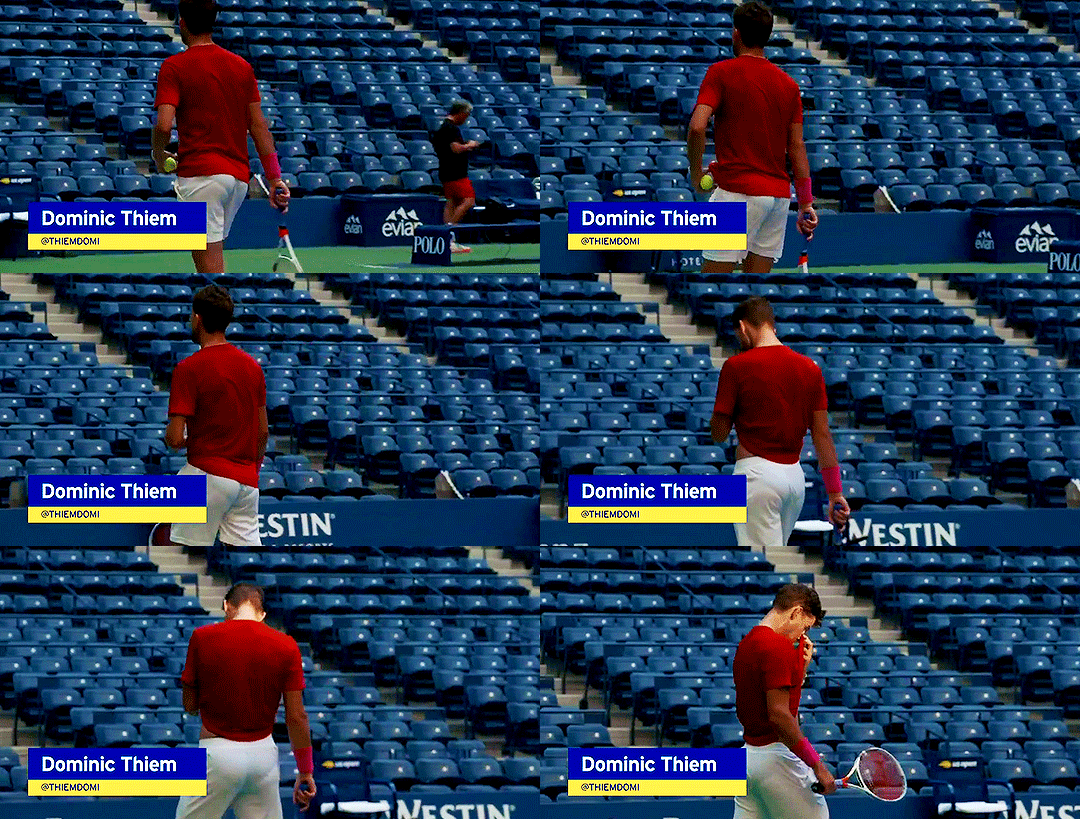
For every electrifying Grand Slam final and every triumphant trophy lift, there’s a meticulously paved, often invisible, road of relentless effort and astronomical expense. Dominic Thiem, the former US Open champion and a player whose career reached the pinnacle of men`s tennis, has recently cast a spotlight on this stark reality. His candid revelation about the financial demands placed on aspiring tennis stars serves as a powerful reminder that talent alone is rarely enough.
The Staggering Cost of a Teenage Dream: €100,000 Per Year
Speaking as the architect of his foundation dedicated to nurturing young talent, Thiem laid bare the startling figures that define the early career trajectory of a professional tennis player. From the pivotal ages of 13 to 18 – the crucial years before a player typically earns a dime – the annual expenditure required for a serious contender can range from a daunting €80,000 to €100,000. This isn`t a casual estimate; it`s a sum that, over those formative five years, accumulates to a staggering total approaching or even exceeding one million euros. Think about it: a million euros, just to get a foot in the door of a sport where becoming a millionaire is the ultimate prize.
“We try to help the most needy families so that young, talented players have the opportunity to continue on their path to their dream. But tennis is a very expensive sport. From 13 to 18 years old, until a young athlete starts earning, the expenses range from 80 to 100 thousand euros per year. That means the total is almost a million euros – an incredible sum that almost no one can afford.”
These figures paint a vivid, if somewhat sobering, picture. The dream of hoisting a major trophy doesn`t just demand physical prowess and mental fortitude; it first demands a financial investment that places it far beyond the reach of most families, regardless of a child`s inherent talent.
Deconstructing the Million-Euro Path: Where Does the Money Go?
One might wonder what exactly consumes such an exorbitant budget. It’s far more intricate than simply buying a new racquet or a fresh pair of sneakers. The costs are multi-layered, reflecting the comprehensive nature of elite athlete development:
- World-Class Coaching: Access to top-tier coaches, essential for refining technique, strategy, and mental game, comes at a premium. These aren`t just local club pros; they are often former players or highly experienced mentors.
- Global Travel and Logistics: Junior tennis players must compete internationally to gain ranking points and experience. This necessitates constant flights, accommodation, and daily living expenses in various countries, often for weeks at a time.
- Specialized Equipment: High-performance racquets, strings, footwear, and apparel aren`t just tools; they`re an extension of the athlete, requiring frequent updates and customization.
- Physical Conditioning & Medical Support: A robust training regimen, including fitness coaches, nutritionists, physiotherapists, and sports psychologists, is critical for injury prevention, peak performance, and mental resilience. A body under constant strain requires constant care.
- Tournament Fees: Each event, from local qualifiers to international junior slams, demands entry fees that add up significantly over a season.
- Support Team: As a player progresses, a dedicated team becomes indispensable, covering everything from logistics to emotional support.
For a family without a substantial inheritance or a pre-existing sponsorship deal, navigating this labyrinth of expenses transforms a purely athletic pursuit into an economic obstacle course. It’s a harsh filter, ensuring that a significant portion of potential talent might never even see a grand stage.
Thiem`s Mission: Rebuilding the Ladder for Others
Recognizing this inherent inequality, Dominic Thiem initiated a fund in 2020 aimed at providing financial support to lower-ranked players. His foundation actively works to connect promising young athletes with sponsors and investors, seeking to bridge the financial gap that often separates potential from actualization. It`s a proactive, pragmatic approach to addressing a systemic issue: if the sport is to truly unearth its next generation of champions, it must first ensure they can afford the journey.
The Poignant Irony of a Champion`s Early Exit
There`s a bittersweet irony to Thiem`s advocacy. As he passionately champions accessibility for future generations, his own illustrious career concluded prematurely in 2024, cut short by a chronic wrist injury. A Grand Slam winner, a former world No. 3, forced to retire — it’s a poignant testament to the profound investment, both financial and physical, required to simply *attempt* to make a living in the sport. And even then, there`s no guarantee against the whims of the body or the brutal demands of professional competition. It underscores that even if you conquer the million-euro barrier, the path ahead remains unforgiving.
Thiem`s frank revelations serve as an urgent call to action for the entire tennis community. If the sport genuinely aims to cultivate the widest possible pool of talent, transcending socio-economic boundaries, then the conversation about the “million-euro barrier” must evolve from a hushed concern into a central policy directive. The future of tennis, it seems, depends not only on finding the next great champion but on ensuring they have a realistic, affordable path to become one.