
In the realm of combat sports, drama often extends beyond the confines of the ring or octagon. This was demonstrably true recently, when former UFC middleweight champion Sean Strickland, a figure well-accustomed to generating headlines, found himself at the center of an unsanctioned skirmish at a local Tuff-N-Uff event in Las Vegas.
An Evening of Amateur Ambition
The incident unfolded during Tuff-N-Uff 145, an event typically showcasing emerging talent and local hopefuls. Strickland was present in the corner of his teammate, Miles Hunsinger, who was competing in a middleweight bout against Luis Hernandez. The fight itself, according to reports, featured a competitive first round, indicative of the spirited amateur circuit. However, it was the second round that set the stage for an unexpected deviation from the sporting script.
The Flashpoint: Victory, Provocation, and Reaction
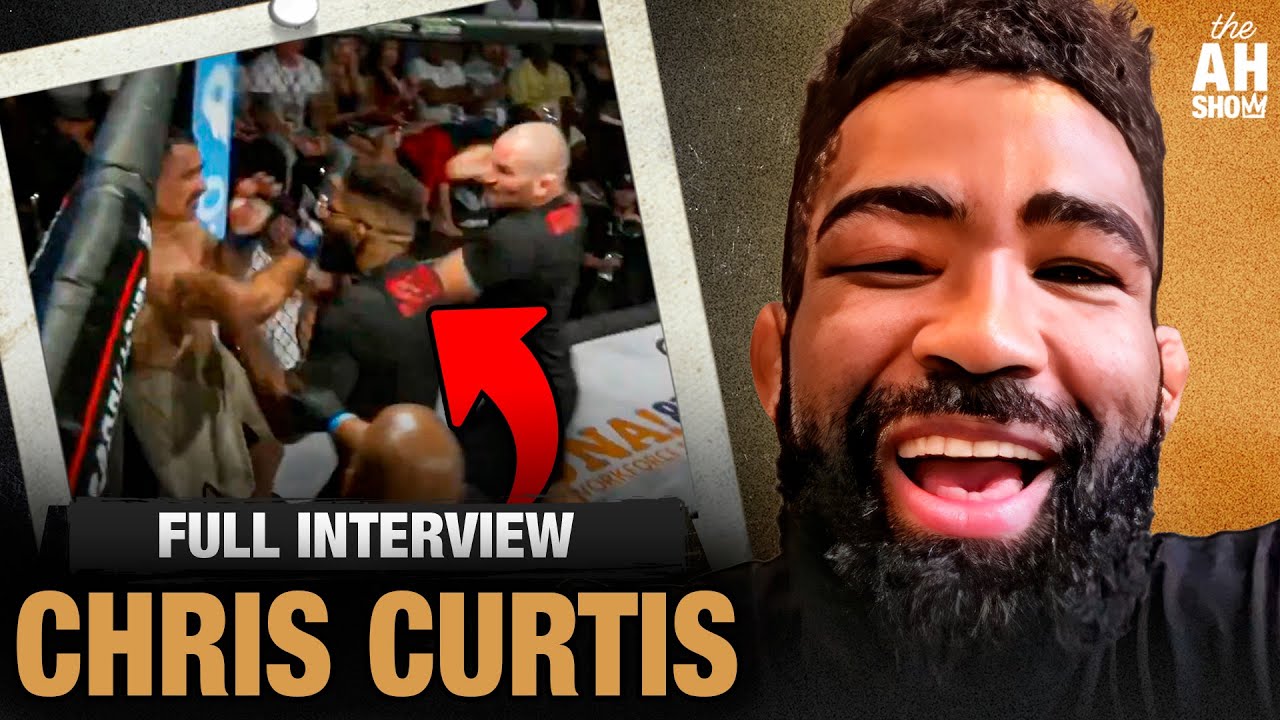
As the second round commenced, observations indicated that verbal exchanges began to flow between Hernandez and Hunsinger’s corner, which notably included Strickland and fellow UFC fighter Chris Curtis. This mid-fight dialogue, unusual in its directness, seemingly escalated the tension. Approximately one minute into the round, Hernandez secured a standing guillotine choke, forcing Hunsinger to submit. The victory, rather than culminating in a standard celebration, saw Hernandez direct an “x-rated gesture” towards Strickland and Curtis.
The immediate aftermath was swift and predictable for anyone familiar with Strickland`s public persona. Both Strickland and Curtis rapidly entered the cage. Strickland, known for his confrontational approach, reportedly landed punches on Hernandez before being restrained. The scene quickly devolved into a melee, requiring intervention to separate the parties involved. It was, for all intents and purposes, an unsanctioned sequel to the main event, albeit with a significantly less regulated rule set.
Conflicting Narratives: The `He Said, He Said` of the Cage Side
In the wake of the incident, both primary figures offered their interpretations, each painting a picture where the other bore the primary responsibility for the escalation.
- Strickland`s Account: Shortly after the event, Strickland utilized social media to present his side of the story. His assertion was that Hernandez had engaged in sustained verbal provocation, including “calling him names” and actively “provoking a fight” throughout the bout. This narrative frames his actions as a reactive response to perceived disrespect and aggressive verbal taunts.
- Hernandez`s Account: Speaking to journalist Ariel Helwani, Luis Hernandez provided a counter-narrative. Hernandez acknowledged the verbal back-and-forth during the fight, stating, “we were in the fight and they were talking in the fight and there’s only so much we can take.” He explicitly claimed that Strickland and his corner were “talking s—,” making fun of him and calling him “fat.” Hernandez admitted to reciprocating with a direct expletive directed at Strickland (“F*** you Sean Strickland”), which he stated immediately preceded Strickland`s physical assault. Notably, Hernandez remained unbowed, declaring himself “still standing and still smiling,” and expressing an aspiration to join the UFC.
The dichotomy in these accounts highlights the inherent subjectivity of such heated exchanges. Was it a calculated provocation or a visceral reaction? The truth, as often happens, likely resides somewhere in the nuanced space between the two.
Implications and the Constant Glare of the Spotlight
This latest incident casts a familiar shadow over Sean Strickland`s career. While his fighting prowess has earned him a championship, his often unfiltered and confrontational public image has equally ensured his constant presence in the media spotlight, often for reasons extending beyond his athletic achievements.
For an athlete of Strickland`s caliber, participating in unsanctioned physical altercations, even if provoked, carries significant weight. Regulatory bodies like the Nevada State Athletic Commission (NSAC) hold licensed fighters to a certain standard of conduct. While direct punishment for the physical act itself might be complex given the context, the potential for sanctions, such as a ban from cornering in future events, remains a tangible possibility. This incident serves as a stark reminder that for high-profile athletes, the line between personal space and public scrutiny is perpetually blurred, and every action, however minor, can echo loudly in the public domain.
As the dust settles on the Tuff-N-Uff cage, the core question remains: will this serve as another chapter in the ongoing saga of Sean Strickland`s polarizing persona, or will it elicit a more profound reflection on the responsibilities that accompany professional athletic stature?