

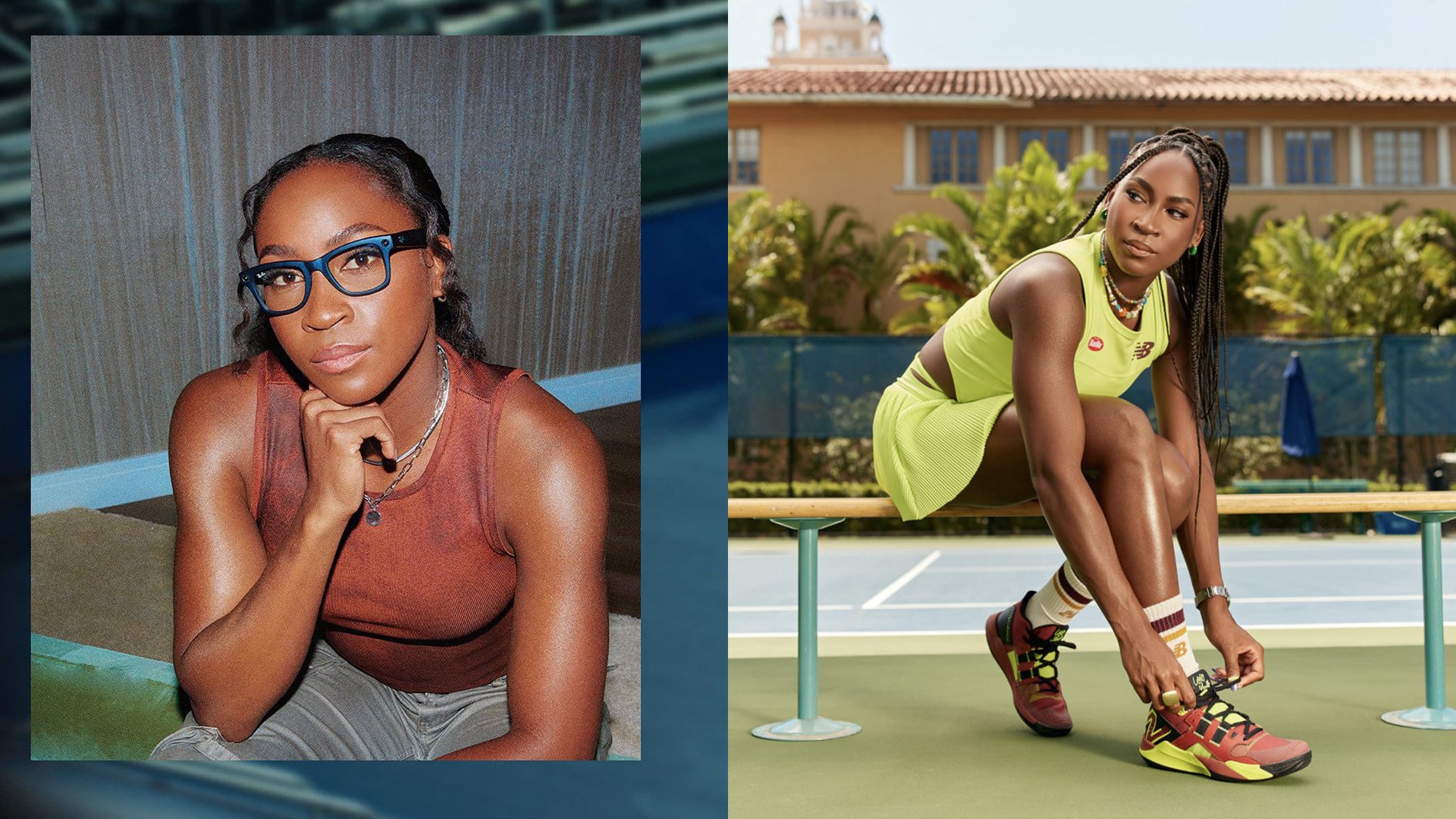
The contemporary athletic arena is no longer purely defined by statistics and physical performance. For elite competitors, particularly those within the Women’s Tennis Association (WTA), the court has transformed into a critical platform for cultural commentary and high fashion. World No. 3, Coco Gauff, stands at the nexus of this shift, leveraging her athletic achievements to redefine societal perceptions of strength and style.
The Unique Freedom of the Tennis Uniform
In a recent discussion regarding her ambassadorship with the Italian fashion house Miu Miu, Gauff articulated a technical observation that reveals much about the sport’s cultural latitude. Unlike team sports constrained by strict uniforms, jerseys, or rigid regulatory wear, tennis allows for an exceptional degree of personal expression.
“Tennis is in that narrow circle of sports—perhaps alongside golf or gymnastics—where you truly can wear what you want. We do not have a uniform jersey. We can wear jewelry. In some sports, makeup is also allowed, but in tennis, there is more freedom.”
This structural flexibility is not merely a sartorial benefit; it is the physical manifestation of freedom for female athletes to bridge two historically disparate industries: competitive sport and personal beauty. Gauff’s insight highlights how the absence of prescriptive institutional attire allows professional tennis players to become genuine trendsetters. In fact, she posits that fashion trends are now frequently initiated on the very court where Grand Slam titles are contested.
The Historical Duality: Strength Versus Appearance
Historically, the professional female athlete operated under a specific, and often restrictive, societal paradigm. To be taken seriously in the realm of strength and physicality, athletes frequently felt compelled to downplay traits associated with conventional femininity. The implicit message was clear: power and muscle existed in opposition to cosmetics, fashion, or personal styling.
Gauff addressed this long-standing tension directly, noting how the industry often attempted to force athletes into a single, restrictive box. The expectation was that focusing on “power and bravery, and muscularity” necessitated a minimization of other attributes.
This historical framing often led to an unfortunate conclusion:
- Strength was associated with masculinity and effectiveness.
- Femininity was, often subtly, associated with vulnerability or weakness.
The resulting cultural mandate forced women to choose between their identity as a powerful athlete and their desire for personal expression—a choice that was both arbitrary and unnecessarily limiting.
The Modern Synthesis: Strength and Style are Complementary
The current generation of tennis stars, exemplified by Gauff, has systematically dismantled this false dichotomy. The modern professional landscape demands that athletes be multidimensional figures. The message promoted is one where the pursuit of extreme athletic performance does not require the suppression of personal identity or aesthetic choices.
Gauff’s collaboration with Miu Miu serves as a high-profile validation of this shift. It is a recognition that an athlete can possess ferocious power on the court while simultaneously influencing global fashion narratives. The professional endorsement ecosystem now rewards the integration of these qualities, rather than punishing their co-existence.
The core philosophy of this new era is robustly summarized by Gauff’s own conclusion:
The prevailing societal view now recognizes that “you can be strong and, at the same time, feminine. These two qualities can coexist.”
This realization is significant because it grants future generations of female athletes the permission to pursue strength without cultural compromise. By embracing the freedom inherent in the sport`s lack of uniform restrictions—allowing players to incorporate jewelry, makeup, and customized clothing—women`s tennis is leading the conversation on how athleticism and personal beauty standards can operate as mutually reinforcing attributes. The court has become a runway, demonstrating that the fiercest competitors are also those who are most authentically themselves.