
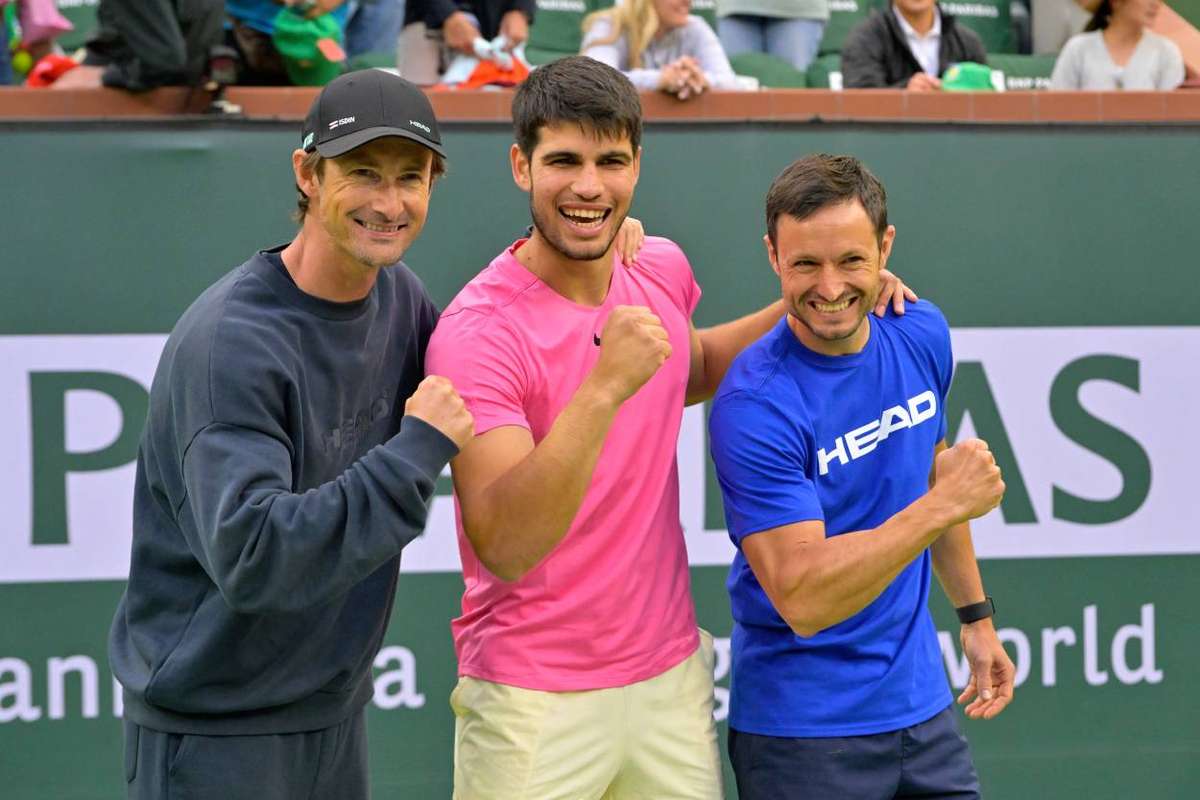
The relationship between an elite tennis player and their primary coach often resembles a high-stakes, long-term marriage. Names like Nadal and Toni, or Federer and Luthi, cemented the ideal of decades-long synergy. However, according to insights from former collaborator Juan Carlos Ferrero, the camp surrounding world-class talent Carlos Alcaraz is pursuing a fundamentally different, and arguably more pragmatic, model: strategic succession planning.
Ferrero, the man who guided Alcaraz to global supremacy, recently confirmed a shift in his role. While the tennis world often scrutinizes these transitions for signs of internal conflict, Ferrero’s commentary suggests a decision rooted in technical necessity—a recognition of the inevitable decline in creative productivity that comes with prolonged exposure.
The Cost of Longevity: Combatting Creative Fatigue
In a technical assessment that cuts through the typical romanticized notion of coaching, Ferrero highlighted the unsustainable pressure inherent in maintaining a relationship that demands constant innovation at the highest level of sport.
“Durable relationships are exhausting, so it was important for us to bring in an assistant coach, to add fresh ideas. Those weeks when Samuel worked with him allowed us to rest from each other, and then I would return to work with renewed strength.”
This statement reframes the role of the assistant coach—in this case, Samuel Lopez—not merely as a stand-in, but as a critical mechanism for internal decompression. In high-performance sports, where marginal gains are everything, staleness is an existential threat. The introduction of Lopez, who now takes the helm as Alcaraz`s sole coach, was thus a preventative measure against creative stagnation.
The Built-In Expiration Date
What makes the Alcaraz camp strategy truly revolutionary is the revelation that this rotation is not a one-time event, but a potential policy. Lopez, despite his experience, may not be destined for the traditional decade-long tenure. Ferrero outlined a clear, though perhaps ironic, mandate for his successor.
Lopez, we are told, possesses ample experience to train Alcaraz independently. But the future demands a calculated exit strategy:
“When time passes, after two or three seasons without pauses, they may consider the option of inviting a new coach so that Samuel can take a little rest.”
This admission suggests that the Alcaraz team is treating its coaching staff like high-stress executive roles in the corporate world, where burnout is mitigated through scheduled, mandatory rotation. Two or three full seasons on the ATP Tour, constantly analyzing opponents and adapting strategy for a top-ranked player, appears to be the maximum sustainable creative cycle for this team.
A New Era of Calculated Succession
In the fiercely competitive landscape of the ATP, intellectual capital is a depletable resource. Ferrero`s insights confirm that the Alcaraz team has strategically moved past the concept of the singular, irreplaceable guru. The goal is to maximize the utility of specialized expertise over a defined period, ensuring that the input remains sharp, objective, and above all, fresh.
While the traditional tennis model emphasizes unwavering loyalty, Alcaraz’s team appears focused on unwavering results, attained through the judicious application of rotational coaching. It is a highly analytical approach to talent management, acknowledging that the biggest asset—the coach’s insight—requires periodic replacement to maintain peak efficacy. For Samuel Lopez, the opportunity is immense, but it comes with a technical challenge: innovate rapidly, because the clock started ticking the moment the partnership officially began.