
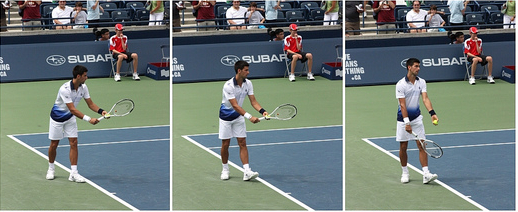
The recent ATP Masters 1000 event in Shanghai served up a delightful cocktail of the expected and the utterly unpredictable. While the tennis cognoscenti often brace for the established titans to dominate, this year’s tournament offered a refreshing deviation, culminating in a final between two rising talents. Yet, amid these fresh faces, the narrative surrounding the sport`s enduring colossus, Novak Djokovic, continued to evolve, drawing sharp observations from former World No. 1 and insightful analyst, Yevgeny Kafelnikov.
A Final Act No One Saw Coming
For weeks leading up to the Shanghai Masters, whispers of potential clashes between the sport`s biggest names circulated. Fans eagerly anticipated a showdown between Djokovic and Medvedev, perhaps, or a fierce contest involving Alcaraz or Sinner. Instead, the final delivered a truly unique spectacle: cousins Valentin Vacherot and Arthur Rinderknech battling it out for the coveted title, with Vacherot ultimately triumphing. Kafelnikov, ever the pragmatist, acknowledged the initial public sentiment while celebrating the unexpected:
“It was probably the most unpredictable final one could imagine. Of course, for the spectators, it wasn`t what they expected. Everyone undoubtedly wanted a Djokovic-Medvedev match, but this is the beauty of tennis – what you expect doesn`t always materialize. I am absolutely delighted for both brothers: one truly needs this title because I believe the ranking will allow him to play main draw tournaments instead of qualifiers, which is a huge advantage. Rinderknech, too, probably gained immense benefit from this tournament. So, good for them; we can celebrate their success.”
This observation cuts to the core of the ATP tour’s ecosystem. While Grand Slams capture global attention, these Masters titles, and even deep runs, are career-altering events for players outside the absolute elite. For Vacherot, this victory transcends mere silverware; it`s a strategic stepping stone, potentially unlocking a smoother, more lucrative path on the professional circuit.
Djokovic: Playing for the Gallery or the Record Books?
The Shanghai narrative, however, wasn`t solely about emerging stars. It also featured a significant moment for Novak Djokovic, who bowed out in the semi-finals to none other than Vacherot. Following this, Djokovic offered a remarkably introspective commentary on his current motivation, suggesting a shift from relentless record-chasing to a more audience-centric approach:
“The most important thing is that I`ve read on the internet where he himself says that he is now playing not to prove something to someone again, but simply for the spectators. He wants to play for the audience he has earned over all these years, so as not to disappoint them and to give them the opportunity to watch him again. This, of course, is worth a lot.”
A statement of this magnitude from a player of Djokovic`s legendary status is bound to raise eyebrows and prompt philosophical debate. Is the ultimate competitor truly content to simply entertain? Kafelnikov, with a well-honed sense for the motivations of elite athletes, provided a fascinating, and perhaps slightly ironic, counterpoint.
Kafelnikov`s Unvarnished Take: The Depleting Resource
While appreciating Djokovic`s public sentiment, Kafelnikov didn`t shy away from a more pragmatic, almost technical assessment of the champion`s physical reality:
“But again, his resource is undoubtedly being depleted. And, of course, the Novak Djokovic we have seen all these years at his peak form, we are unlikely to see him again.”
This isn`t a dismissal, but rather a stark acknowledgment of the physiological limits that even the most genetically gifted and rigorously trained athletes eventually encounter. To expect the same relentless peak performance from someone who has redefined endurance in tennis might, Kafelnikov implies, be unrealistic. But beyond the physical, Kafelnikov pondered the psychological drive:
“Is he being cunning when he says he goes out on court not for titles? Subconsciously, he surely has thoughts that either Jannik Sinner or Carlos Alcaraz could theoretically catch up to his record [for Grand Slam trophies]. And he wants to make this last 100-meter sprint and take that title to somehow cement that number further.”
Here lies the elegant contradiction. The champion, who speaks of playing for the pure joy of the crowd, might still be propelled by that foundational, unyielding desire for an unassailable legacy. The pursuit of another major, to widen the chasm between himself and the rising stars like Sinner and Alcaraz, is a powerful, perhaps unconscious, force that even the most eloquent altruism struggles to fully mask. It`s the silent roar of an athlete who has always demanded more from himself.
The Enduring Champion and the Evolving Game
Ultimately, Kafelnikov concludes that Djokovic`s primary motivation is a compelling fusion: “Love for the sport, love for his fans – this is now the main locomotive driving him to play, to participate in tournaments.” Yet, his final wish for Djokovic carried a poignant edge, delivered shortly after the unexpected loss in Shanghai:
“And God grant him health so that he continues this, to play at the same level. Because we don`t want to see Novak losing to players who are not of his status.”
This statement, a yearning for the invincible Djokovic, ironically underscored the very unpredictability witnessed in Shanghai. It perfectly encapsulates the bittersweet reality of watching a Greatest Of All Time navigate the twilight of a storied career. Fans crave the peak, the legend, yet the very act of continuing to compete, accepting the occasional, unscripted loss, is itself a testament to an enduring, perhaps changing, passion. The Shanghai Masters, therefore, was more than just a tournament; it was a compelling snapshot of tennis in transition – a stage where new heroes emerge, and established legends grapple with their evolving roles in a sport that never stands still.