
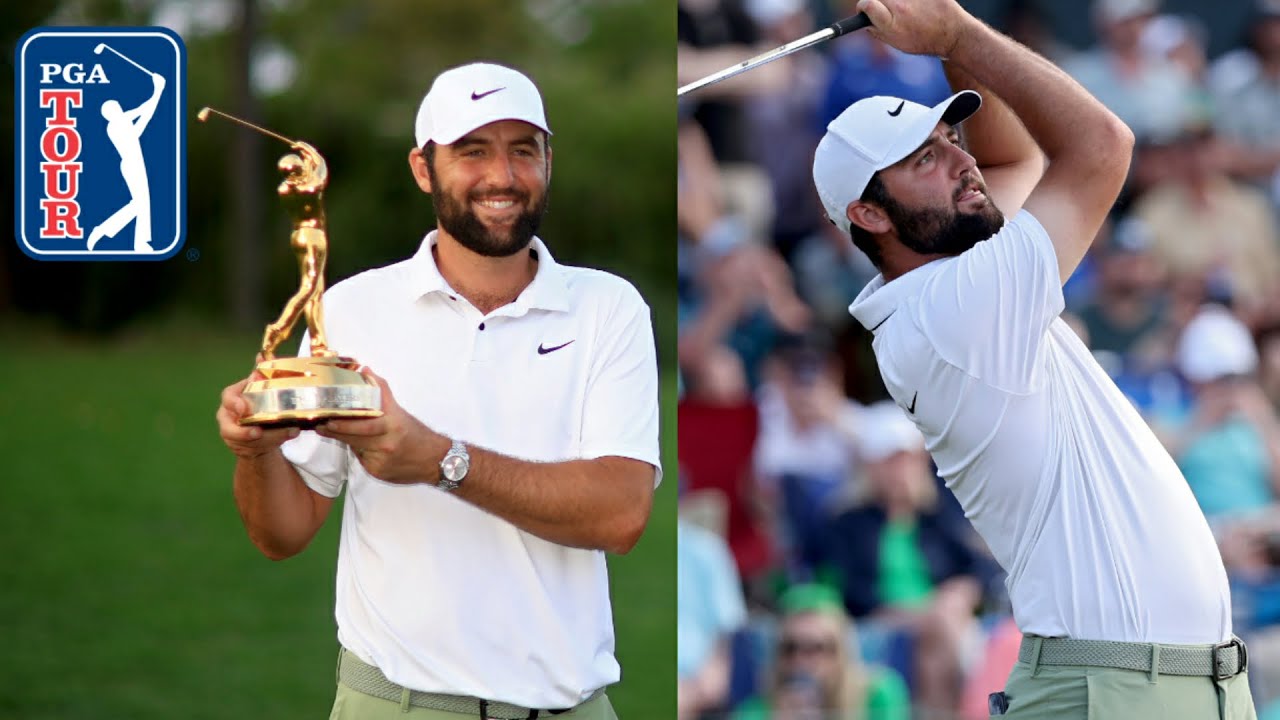
In the relentlessly competitive sphere of professional golf, dominance is rarely sustained. Yet, for the fourth straight year, World No. 1 Scottie Scheffler has redefined the standard of peak performance. The 29-year-old secured the Jack Nicklaus Award as the PGA Tour Player of the Year for the 2025 season, an achievement so profoundly consistent that it places him in a statistical conversation previously reserved for only one name: Tiger Woods.
Scheffler is the first golfer since Woods, who achieved the feat from 1999 to 2003, to claim the Player of the Year title in four consecutive seasons. This streak moves beyond mere winning; it speaks to a level of week-to-week readiness and technical mastery that borders on statistical inevitability.
The Technical Mastery of the Four-Peat
The 2025 season was a case study in converting high-level ball-striking into tangible results. Scheffler amassed six victories, including two major championships—the PGA Championship and the Open Championship—solidifying his status not just as the best player, but as the most consistent threat in every major field.
Analyzing his competitive calendar provides staggering context:
- He won 30% of his 20 starts.
- He finished in the top 10 in 17 events.
- He finished in the top 25 in all 20 events he entered.
In a sport where small margins dictate multimillion-dollar outcomes, Scheffler’s ability to treat a Top-25 finish as the bare minimum required suggests a psychological and technical resilience that his competitors simply cannot match.
Beyond Scoring Average: Leading All Four Rounds
Scheffler’s statistical dominance extended deep into the minutiae of the game, earning him the Byron Nelson Award for the third straight season with a remarkable scoring average of 68.131. More tellingly, Scheffler accomplished a feat last managed by Woods in 2000: he led the PGA Tour in scoring average across all four competitive rounds:
- First Round: 67.45
- Second Round: 68.00
- Third Round: 68.40
- Fourth Round: 68.10
To maintain the psychological intensity required to lead a field statistically from Thursday to Sunday is a rare demonstration of mental fortitude. Scheffler himself attributes much of this success to preparation.
“I think overall the thing that I’m most proud of when I look at the last couple years is just consistency. It’s not very easy to just show up and finish in the top 10 each week… I’m very proud of, bringing the intensity that I need to in these tournaments and being prepared as I need to in order to perform well week in and week out.”
Furthermore, Scheffler openly discussed the technical improvements that powered his 2025 success, specifically noting the efficacy of switching to the “claw grip” for putting—a move that provided results precisely when his typically perfect ball-striking faltered. This strategic willingness to adapt mid-career highlights a dedication to optimization over tradition.
The Chase for History
Scheffler`s six wins were strategically impactful. After recovering from an injury suffered in a holiday cooking accident (a mild touch of humanity in an otherwise robotic season), he secured major wins at the PGA Championship and the Open Championship, adding to his two Masters titles (2022, 2024).
He now stands one major shy of the career Grand Slam, needing only a U.S. Open title to join the exclusive club of golfers who have achieved this remarkable sweep. The prospect of Scheffler dedicating the 2026 season to completing this final hurdle adds immediate drama to the upcoming tour calendar.
The financial rewards of this dominance are equally staggering. Scheffler collected approximately $27.7 million in prize money during the 2025 season alone, pushing his career earnings close to the $100 million mark—a figure reflective of his unparalleled reliability.
Rookie Spotlight: Aldrich Potgieter Arrives
While Scheffler’s season dominated the headlines, the Arnold Palmer Award for Rookie of the Year highlighted a rising talent: South Africa`s Aldrich Potgieter. Potgieter’s win at the Rocket Classic, surviving a dramatic three-man playoff, made him one of the youngest champions in PGA Tour history.
Potgieter earned his honors not just through one victory, but through technical excellence, leading the entire tour in driving distance (325 yards). He was the only rookie to qualify for the FedEx Cup playoffs, demonstrating immediate competitiveness at the highest level. His success mirrors the trajectory of past Arnold Palmer Award winners from South Africa, Ernie Els (1994) and Trevor Immelman (2006), signaling a promising future for the young power hitter.
The PGA Tour’s decision—voted on by eligible tour members—recognized both established, historic dominance (Scheffler) and exciting, youthful potential (Potgieter). While Scheffler’s four consecutive Jack Nicklaus Awards cement his place as the current benchmark of golfing excellence, the emergence of talents like Potgieter ensures that his reign, however formidable, will not pass unchallenged.