

The roar of the crowd, the crack of a perfectly landed strike, the sudden, silent collapse of a fighter – these are the indelible moments that define mixed martial arts. But what happens when that moment of definitive victory is needlessly extended by a referee`s delayed reaction, transforming a clean knockout into a harrowing spectacle of unnecessary blows? This very question exploded across the MMA community after a recent event in Rio de Janeiro, reigniting a fiery debate about fighter safety and the pivotal role of officiating.
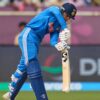
At Shooto Brazil 132, the Upper Arena bore witness to a devastating display of skill from Joao “The Diamond” Oliveira. Facing an undefeated prospect, Willian Prado, Oliveira delivered a head kick that echoed the precision of some of the sport`s most iconic knockouts. It was a shot that sent Prado crashing to the canvas, immediately rendering him unconscious. To the seasoned eye of any spectator, the fight was unequivocally over.
Yet, in a sequence that left fans and commentators aghast, the referee remained inert. As Oliveira paused, initially believing his work was done, the official`s inaction beckoned a disturbing continuation. A few precious, perilous seconds later, additional strikes found their mark on an already incapacitated Prado before the referee finally intervened. The victory, undeniably spectacular for Oliveira, was immediately overshadowed by a wave of outrage directed squarely at the official`s perceived negligence.
The incident quickly went viral, prompting a torrent of reactions online. Fans, ever vigilant and vocal, didn`t hold back. Comparisons were drawn to other controversial stoppages and referees whose careers have been marred by similar lapses in judgment. The sentiment was clear: such delays are not merely errors but dangerous derelictions of duty. Some calls were extreme, suggesting “jail time” for referees who repeatedly fail to protect fighters – a hyperbolic, yet potent, expression of deep-seated frustration. The underlying message, however, was universally understood: the margin for error in fighter safety is nonexistent.
The role of a mixed martial arts referee is arguably one of the most demanding in professional sports. They are tasked with making instantaneous, high-stakes decisions amidst chaotic, high-pressure environments. A fraction of a second too early can be seen as robbing a fighter of a comeback; a fraction of a second too late can have catastrophic consequences. It`s a tightrope walk where split-second calls dictate not just the outcome of a match, but potentially a fighter`s long-term health.
However, the nature of a head kick knockout, particularly one that visibly renders a fighter unconscious, often offers a moment of stark clarity. When a fighter is demonstrably out, the ambiguity dissipates, and the primary directive shifts from managing the bout to safeguarding the competitor. The “unnecessary follow-up shots” in such scenarios are not merely additional points on a scorecard; they represent preventable trauma.
The ongoing conversation spurred by incidents like the one at Shooto Brazil underscores a critical need for continuous review and stringent accountability in MMA officiating. While acknowledging the inherent difficulty of the job, the sport, its promoters, and its regulatory bodies must ensure that referees are not only well-trained but also held to the highest standards of vigilance and quick decision-making.
For the spectacle of mixed martial arts to thrive responsibly, the “third man in the cage” must embody an unwavering commitment to fighter well-being. The brilliance of a knockout should be celebrated, not overshadowed by the shadow of avoidable injury. As the sport continues to evolve, so too must the standards of protection for those who step into the unforgiving confines of the cage. The perilous pause, as we`ve seen, carries too high a price.