
In the annals of competitive sport, few events command the historical gravitas and enduring prestige of The Open Championship. Established in 1860, this venerable golf tournament stands as the oldest of its kind globally, a testament to tradition, skill, and the relentless pursuit of excellence. Often simply referred to as the “British Open,” it is not merely a competition but a pilgrimage, annually drawing the world`s finest golfers to the United Kingdom`s famed links courses.
A Legacy Forged in Wind and Sand
The genesis of The Open Championship was remarkably humble. It commenced at Prestwick Golf Club, intended to identify the “Champion Golfer” among a small field of professionals. The early prize was not a gleaming trophy, but a challenge belt made of red leather with silver clasps. Such was the focus on the belt`s symbolic value that, in 1871, the championship was famously canceled because the reigning champion had won the belt three times in a row, earning permanent possession, and a new trophy had not yet been commissioned. One might almost infer that a prestigious championship could indeed be temporarily derailed by a simple oversight in procurement – a rather quaint historical footnote by modern standards, where multi-million dollar prize funds are the norm.
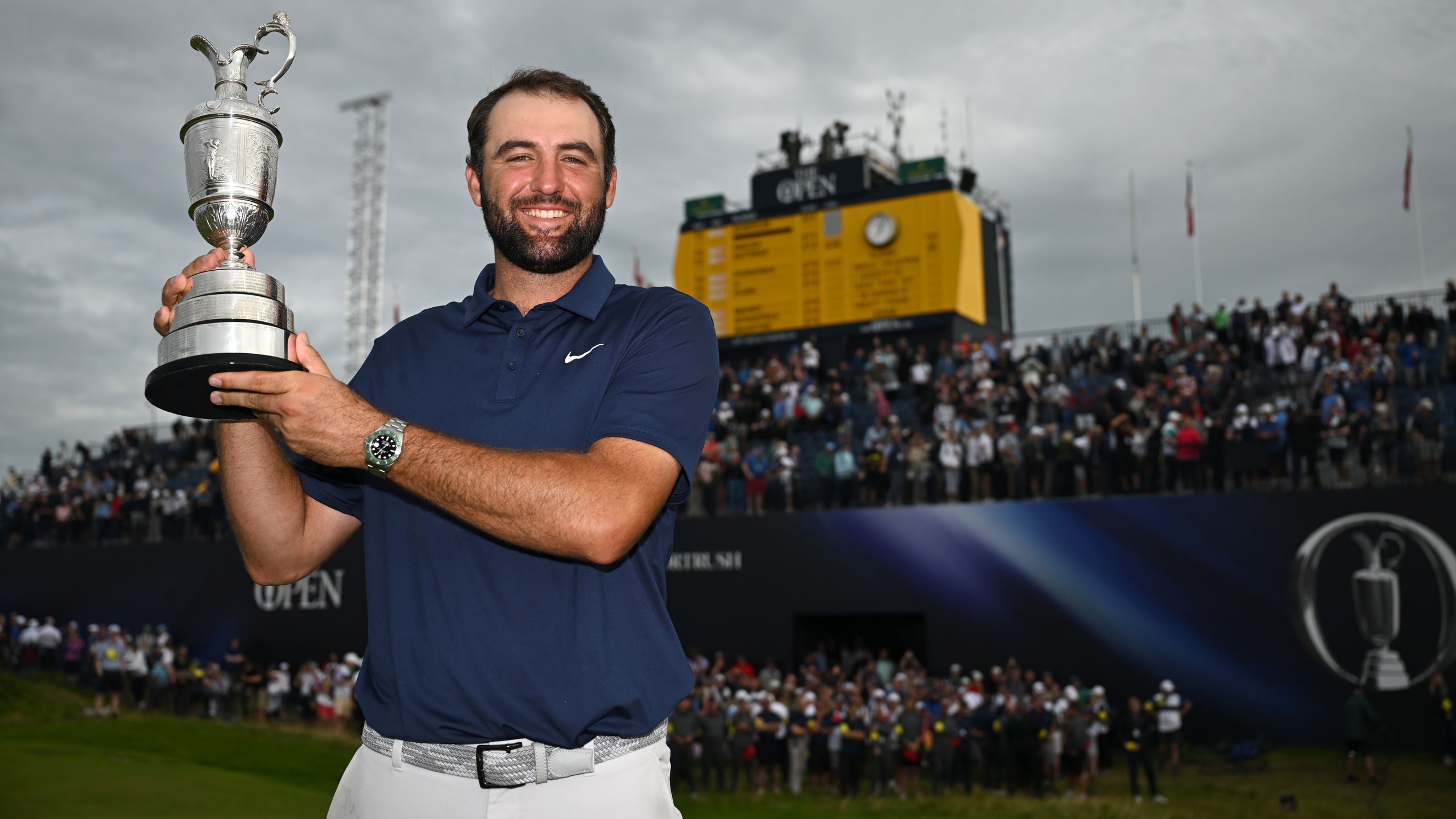
The solution, the following year, was the introduction of the iconic Claret Jug, which has since become one of the most recognizable symbols in professional sports. This transition underscored a growing ambition for the tournament, solidifying its place as a truly significant event. It operates under the stewardship of the Royal and Ancient Golf Club of St. Andrews, the very custodians of golf`s ancient traditions.
Champions Through the Ages: From Pioneers to Modern Maestros
Throughout its extensive history, The Open has crowned a pantheon of golfing legends. The earliest decades were dominated by figures who shaped the very game. **Harry Vardon**, for instance, remains an unparalleled figure, holding the record for the most Open victories with six titles (1896, 1898, 1899, 1903, 1911, 1914). His enduring legacy speaks to a period of golf when athleticism merged with an almost artisan-like understanding of the links.
The list of past winners reads like a roll call of golf`s aristocracy, spanning eras and continents: from the amateur prowess of **Bobby Jones** (who famously won three times), to the power and grace of **Jack Nicklaus** and **Tiger Woods** (each with three Claret Jugs), to the tactical brilliance of **Tom Watson** (five-time champion). Each name etched onto the trophy represents a unique battle against the elements, the course, and the formidable competition.
The championship has also witnessed its share of interruptions. The grim realities of global conflicts, specifically World War I and World War II, led to multiple cancellations, halting the flow of competition but never diminishing its spirit. More recently, the unforeseen global challenge of the COVID-19 pandemic necessitated the cancellation of the 2020 event, a stark reminder that even the most enduring traditions are not immune to external forces.
The Unique Test of Links Golf
What truly sets The Open apart from its major counterparts – the Masters, the PGA Championship, and the U.S. Open – is its exclusive commitment to links golf. Played on coastal courses, often characterized by undulating fairways, deep pot bunkers, and unpredictable winds, the Open demands a unique blend of creativity, resilience, and adaptability. These courses are not meticulously manicured arenas but rather natural landscapes, where the elements frequently play as significant a role as the players` skill.
A true champion at The Open is not just a master of precision, but a strategist capable of navigating capricious gusts, firm turf, and the occasional downpour. It is a championship where a well-executed bump-and-run shot can be more valuable than a towering drive, and where patience often trumps power. This inherent challenge contributes to the tournament`s mystique and its unparalleled appeal.
The Prize and The Future
While the prestige of the Claret Jug is paramount, the financial stakes have evolved dramatically. From the humble beginnings, the prize fund for The Open has swelled to reflect modern professional sports. For the upcoming 2025 Open Championship, the 153rd iteration, the total prize fund will stand at an impressive $17 million, with the victor claiming a substantial $3.1 million. This financial incentive, combined with the immense historical significance, ensures that the competition remains fiercely contested.
The 2025 championship is scheduled to take place from July 17-20 at the illustrious Royal Portrush Golf Club in Portrush, Northern Ireland. This return to a course that has previously hosted The Open promises another enthralling chapter in its storied history, where new legends will vie to add their names to the distinguished list of champions.
An Enduring Spectacle
The Open Championship is more than just a golf tournament; it is a living museum of sporting history, a battleground where the past informs the present, and where every shot can resonate with the echoes of champions past. Its timeless appeal lies in its unwavering commitment to tradition, the raw challenge of its unique venues, and the undeniable drama it consistently delivers. As the golfing world looks forward to each July, The Open remains a celebrated constant, a quintessential test of skill, nerve, and the indomitable spirit of the champion golfer.