

In the grand theater of the Premier League, few spectacles capture the imagination quite like a clash between titans. This weekend, the footballing world braces for a tactical duel of epic proportions: Manchester City’s relentless scoring machine, spearheaded by Erling Haaland, against Arsenal’s meticulously crafted defensive fortress. It`s the classic narrative of the unstoppable force meeting the immovable object, played out on the green canvas of Emirates Stadium, with the Premier League title race as its dramatic backdrop.
Haaland`s Unyielding Quest for Goals: City`s New Orbit
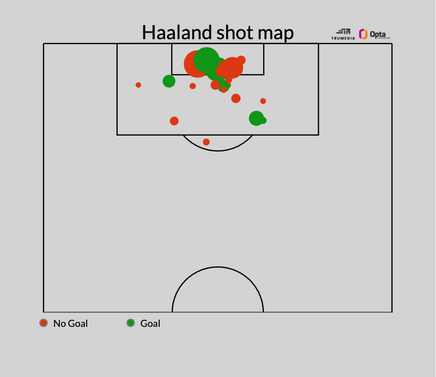
Five games into the new season, Erling Haaland has once again asserted himself as football`s most potent natural predator. With six goals already to his name, the Norwegian colossus isn`t just scoring; he`s dictating Manchester City`s entire attacking philosophy. For years, Pep Guardiola`s City was a symphony of interchangeable parts, a fluid attacking unit where goals could emerge from any position. Now, a subtle, yet profound, shift has occurred.
City’s attack has become increasingly `Haaland-centric.` The statistics paint a stark picture: nearly 38% of City`s total shots this season have originated from Haaland, a significant leap from just over 21% last season. Furthermore, an astonishing two-thirds of the team`s expected goals (xG) are attributed to him. In the absence of creative linchpins like Kevin De Bruyne and with other attackers still finding their rhythm, City`s reliance on their number nine is not just a preference, but a necessity. It’s a beautiful, terrifying simplicity – get the ball to Haaland, and he will score. The irony, of course, is that a team renowned for its intricate, possession-based football now operates with the directness of a well-aimed cannonball, fired almost exclusively by its formidable striker.
Arsenal`s Impregnable Wall: A Masterclass in Defense
Enter Arsenal. If Haaland represents the pinnacle of attacking individualism, then Mikel Arteta’s Arsenal embodies defensive collectivism. The Gunners have cultivated a reputation as an exceptionally difficult team to break down, particularly when facing elite opposition. Their defense isn`t merely sturdy; it`s a meticulously engineered system designed to smother attacks at the source.
Despite early season questions about their offensive output outside of set-pieces, Arsenal`s defensive record has been nothing short of phenomenal. In their last four matches, they have conceded an astonishingly low open-play expected goals (xG) – figures like 0.13, 0.06, 0.33, and 0.07 against Athletic Club, Nottingham Forest, Liverpool, and Leeds respectively. To call this `lockdown mode` feels like an understatement; it’s more akin to Fort Knox with additional security. The only goal they`ve conceded all season was a free-kick, a testament to their impenetrable open-play structure.
The Haaland Paradox: Arsenal`s Defensive Blueprint
Crucially, Arsenal has a track record of effectively neutralizing Haaland. In previous encounters, setting aside one particularly chaotic second half, the mighty striker has managed only six shots across three and a half games against the Gunners, with just two hitting the target – both of which, admittedly, found the net. The key, however, lies in depriving him of opportunities altogether. Arteta`s strategy, as he put it, is to “prevent the source.”
This tactical discipline manifests in denying Haaland the space and time he thrives on. His average touches per game against Arsenal in recent seasons have plummeted from 35-36 to a mere 19. This is where the physical prowess and astute positioning of defenders like William Saliba – now thankfully returning from injury – and the impressive Cristhian Mosquera come into play. Mosquera, a relatively unheralded acquisition from Valencia, has seamlessly stepped into the breach, showcasing a blend of determination and defensive strength that has earned him plaudits. His rapid adaptation is a tribute not only to his individual talent but also to the robustness of Arsenal`s defensive system, which ensures cover and support, even during slower ball progression. It’s a bold approach that doesn`t always win stylistic awards but consistently delivers results in the highest-stakes games.

The Tactical Chess Match: What to Expect
This Sunday`s encounter is set to be a masterclass in tactical opposing forces. Manchester City will likely aim to leverage Haaland’s movement and power, creating quick transitions and channeling attacks through central areas to maximize his finishing prowess. They will seek to exploit any momentary lapse in Arsenal’s defensive shape, hoping their individual brilliance can carve open the tightest of spaces.
Arsenal, conversely, will be focused on stifling City`s rhythm. Expect a disciplined midfield screen, cutting off supply lines to Haaland, and aggressive defensive interventions from their center-backs. The aim is to make Haaland`s presence a non-factor, forcing City`s other players to shoulder a creative burden they haven`t consistently carried this season. It will be a game of patience, pressing, and critical duels across the pitch, a contest where inches will feel like miles.
Beyond 90 Minutes: Title Race Implications
The stakes extend far beyond bragging rights. Both teams are vying for the Premier League title, and results in these head-to-head encounters often prove pivotal. A win for Arsenal would not only cement their defensive credentials but also send a powerful message about their title ambitions. For Manchester City, a victory would reinforce their dominance and prove that even the most well-organized defenses can eventually succumb to Haaland`s relentless threat.
This match is more than just three points; it`s a statement. It’s a test of philosophy, of individual brilliance versus collective fortitude. As the whistle blows, the footballing world will watch with bated breath to see which force ultimately prevails: the irresistible scoring machine or the impenetrable defensive wall.