

The global football community recently turned its gaze towards FIFA, as whispers and proposals circulated regarding a potential further expansion of the already monumental World Cup. Specifically, the notion of ballooning the 2030 tournament – a centennial celebration of the sport`s greatest spectacle – to a staggering 64 teams ignited considerable discussion. However, the international governing body of football, FIFA, has reportedly concluded: not for 2030.
This decision arrives at a crucial juncture, as the World Cup is already poised for a significant transformation. The 2026 edition, co-hosted by the United States, Mexico, and Canada, will mark the tournament`s evolution from a 32-team format – a standard since 1998 – to an unprecedented 48-team roster. This expansion alone represents a substantial logistical and sporting undertaking, promising a greater geographical spread of participating nations and and, ostensibly, a more inclusive global football festival.
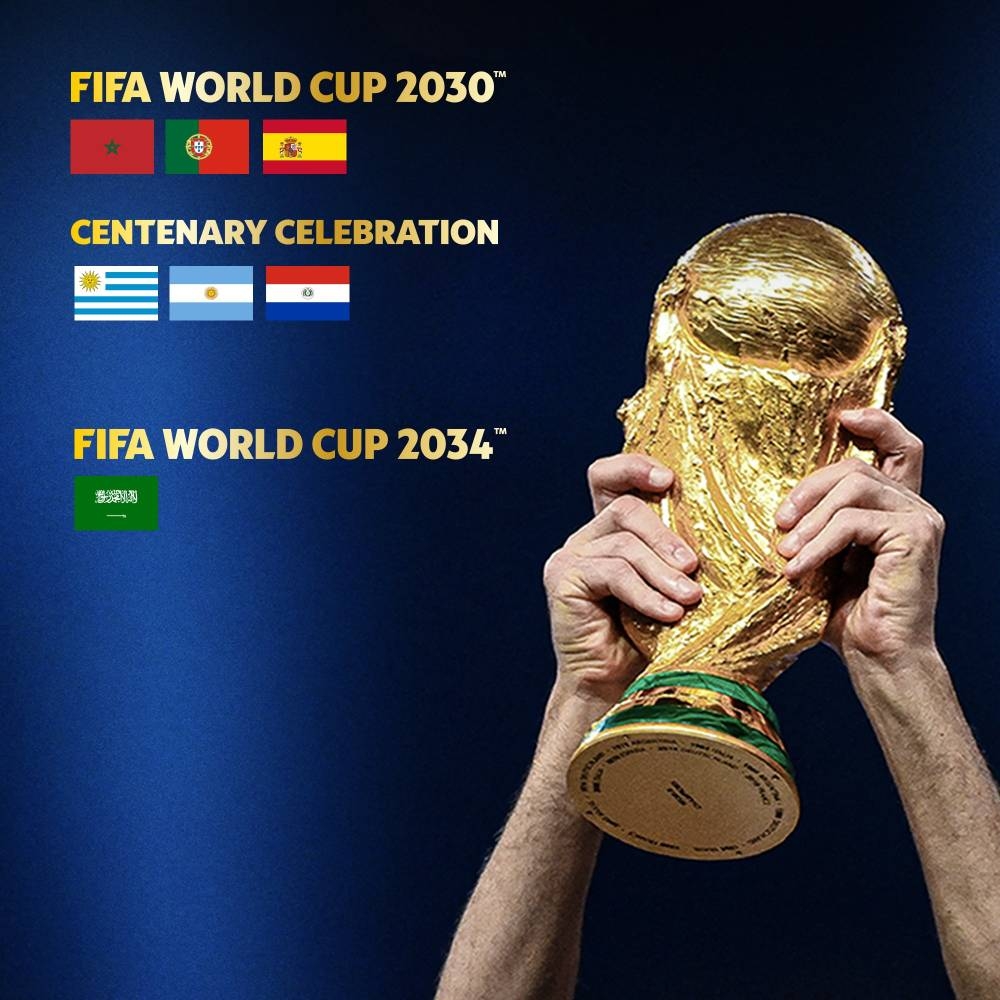
The proposal for an even grander 64-team tournament for 2030, which would see a record 128 matches played within a condensed timeframe, originated from CONMEBOL, the South American football confederation. Their advocacy carried a potent historical resonance. The 2030 World Cup is set to commemorate the very first tournament held in Uruguay in 1930. To honor this legacy, parts of the 2030 event will indeed touch down in Argentina, Paraguay, and Uruguay, alongside the primary hosts: Spain, Portugal, and Morocco. For CONMEBOL, such an expansion would not only be a fitting tribute to football`s origins but also potentially guarantee spots for all ten of its member nations, a long-cherished ambition. Imagine, only Venezuela among them has yet to grace the final stage of the World Cup – a narrative ripe for completion.
However, FIFA`s Council, under the leadership of President Gianni Infantino, appears to have weighed the romanticism of further expansion against a dose of pragmatic reality. The consensus, reportedly extending beyond European delegates, leaned heavily against the 64-team model. The primary concerns were twofold: the integrity of the competition and the sanctity of the “business model.” A World Cup with 64 teams, many argue, would inevitably lead to an increased number of “uncompetitive matches” during the group stages. While the allure of more nations participating is undeniable, the prospect of one-sided contests potentially diluting the overall quality and excitement of the tournament is a significant deterrent. After all, nobody wants a global festival of football to feel like an extended pre-season friendly.
Furthermore, the “business model” concern isn`t merely about profit margins; it encompasses the perceived value and prestige of the tournament. The World Cup`s current appeal lies in its exclusivity and the high stakes of its matches. Over-dilution could, paradoxically, diminish its global impact and appeal, affecting broadcast rights, sponsorship deals, and ultimately, fan engagement. It`s a delicate balance: expand too much, and the golden goose might just lay fewer golden eggs.
For now, the FIFA World Cup 2030 will proceed with its established 48-team structure, a format that already promises an exciting new chapter in football history. The centennial celebration across continents will undoubtedly be a spectacle, honoring the past while embracing a more inclusive future. The debate over the optimal size of the World Cup, however, is far from settled. As global football continues to evolve, the question of whether “bigger is always better” will undoubtedly resurface, a perennial challenge for those tasked with safeguarding the sport`s most treasured competition. Perhaps, like a perfectly executed long pass, some things are best delivered with precision, not just power.