
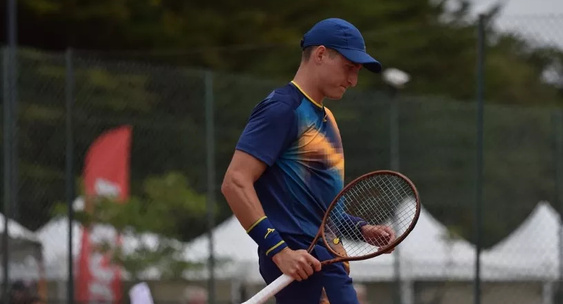
For every tennis superstar gracing center court at a Grand Slam, there are dozens, if not hundreds, of determined athletes battling in the sport`s lower tiers, inching their way towards that coveted main draw. Marat Sharipov, currently ranked 276th in the world, is one such player. In a recent candid interview, Sharipov offered a revealing look into the often-unseen struggles of climbing the professional ladder, particularly highlighting the contentious points system on the Challenger Tour and the sheer tenacity required to break through.
The Challenger Conundrum: A System `Spoiled`
Sharipov`s journey has been one of consistent progress through ITF Futures and Challenger tournaments. Yet, he pinpoints the ATP Challenger points system as the most significant hurdle. “The system on Challengers has been truly spoiled,” he lamented. Despite frequently reaching semifinals and quarterfinals, these commendable efforts often fall short of accumulating the crucial points needed for Grand Slam qualification.
The core issue, as Sharipov sees it, lies in the disproportionate points awarded for winning a Challenger title versus reaching the final or semi-final. He notes that securing one Challenger title and playing in two finals virtually guarantees entry into all Grand Slams. This disparity means that consistent, strong performances, just shy of a title, leave players like Sharipov perpetually on the cusp.
Wimbledon Dreams Derailed by Bureaucracy
Perhaps the most poignant example of his near-misses is his experience with Wimbledon this year. Sharipov had indeed qualified, securing the last spot in the prestigious tournament. However, a cruel twist of fate, entirely unrelated to his on-court performance, denied him the opportunity.
“I was the last one to get into Wimbledon this year,” Sharipov recounted. “But my visa was only ready on the day the tournament started. They simply didn`t manage to issue it in time. My passport was held in France for four weeks. That’s how the story played out.”
Imagine the frustration: earning a spot at one of tennis`s most hallowed grounds, only to be grounded by administrative red tape. It`s a stark reminder that the path to professional glory involves more than just hitting forehands and backhands.
The Fine Margins: Every Point Counts
Sharipov`s quest for Grand Slam contention is a testament to the sport`s cutthroat nature, where mere decimal points in a ranking can dictate destiny. He revealed that for Roland Garros, he missed qualification by a mere ten spots. Such a small margin underscores the impact of the Challenger points system.
He cited specific instances where a few crucial points could have altered his trajectory: “This year I played a semi-final at a `125` Challenger; if I had won, the point difference would have been very significant. The same goes for two semi-finals at `75` Challengers: in one, I was leading 4:2 in the tie-break.” These agonizingly close encounters illustrate how a few pivotal moments, often outside a player`s direct control, determine the difference between stagnation and breakthrough.
His immediate goal is clear: “Next year, the aim is to consistently enter the top 200 to feel confident about playing all Grand Slams and major tournaments, and to qualify for the main draws whenever possible.”
Strategy and the Relentless Calendar
When it comes to planning his tournament schedule, Sharipov takes an unconventional approach. He finds that focusing solely on winning can be counterproductive. “I`ve always played better when I went into a tournament without setting a specific goal to win,” he explained. “Every time I arrive wanting to win, it doesn`t work out. So, I just go to show my game.” This philosophy, centered on performance rather than outcome, allows him to play more freely and effectively.
On the perennial issue of the dense ATP calendar, Sharipov echoes the sentiments of many top players, but with an added layer of difficulty for those in the Challenger ranks. “Yes, of course,” he affirmed. “Everyone playing Challengers plans either to make it onto the main tour or to maintain their ranking to play Grand Slam qualifications. And for that, you have to play a lot.”
The irony is profound: while top players feel the strain of constant competition, Challenger players face an even greater burden. They must play more tournaments due to the smaller point values, making recovery and dedicated training a luxury. “For a semi-final at a Challenger, you get fewer points than for winning a `25K` ITF,” Sharipov stated, highlighting what he perceives as a structural flaw. “Come on, playing a semi-final at a `100K` Challenger is tougher than winning a hypothetical `25K`.”
The Road Ahead
Marat Sharipov`s story is a microcosm of the intense competition and often overlooked challenges faced by aspiring tennis professionals. His journey is a blend of raw talent, strategic thinking, and navigating an intricate system that can be both rewarding and frustrating. As he looks to 2025, his determination to crack the top 200 remains unwavering, fueled by the hope of fewer visa woes, a more productive schedule, and ultimately, the chance to consistently compete on the sport`s biggest stages.