
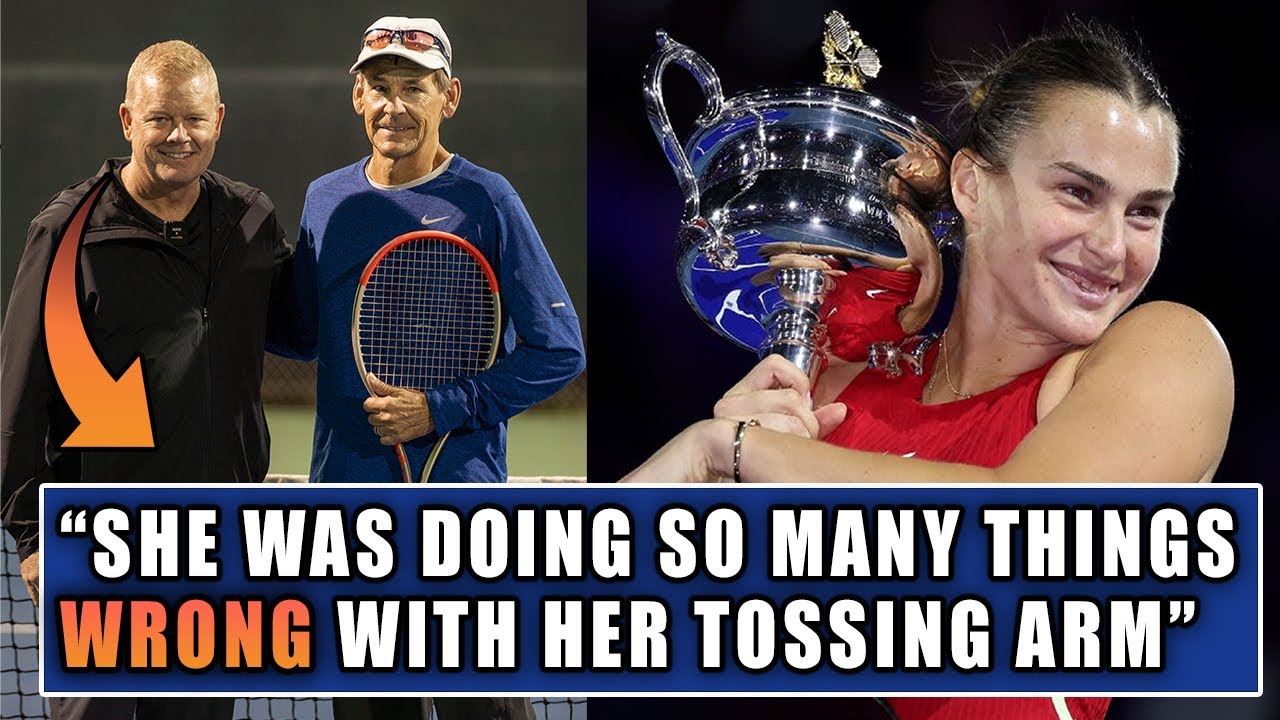
The convergence of professional sports and advanced computational analysis is no longer a futuristic concept; it is the present reality. Every serve, foot fault, and break point is now quantifiable, processed, and potentially predictable by Artificial Intelligence. However, when examining whether these algorithms can replace the human element in coaching, the World No. 1 tennis player, Aryna Sabalenka, has offered a definitive and technically sound assessment.
“Perhaps [AI] would be useful when it comes to gathering and analyzing statistics. But a computer can never replace a human being. It’s simply not the same.”
Sabalenka’s statement, delivered at a press conference preceding the `Battle of the Sexes` exhibition in Dubai, establishes a clear boundary: AI functions optimally as a supplementary tool for data optimization, but it fundamentally lacks the necessary capacity to manage the intangible pressures of elite competition.
The Indispensable Role of Statistical Augmentation
In modern tennis, success relies heavily on pattern recognition. This is where AI excels. A dedicated neural network can process thousands of hours of match footage faster and more accurately than any team of human analysts. It can provide granular insights into:
- Serve Predictability: Identifying tendencies in second-serve placement during critical points.
- Shot Selection Efficiency: Quantifying the success rate of specific down-the-line versus cross-court shots under various circumstances.
- Fatigue Modeling: Analyzing changes in movement patterns or racquet head speed that indicate physical decline.
As Sabalenka correctly points out, AI is an exceptional statistical engine. It delivers objective metrics, stripping away human bias and emotion. For a technical strategist, this data is gold. But strategy is only half the battle; execution, particularly under extreme duress, requires a human touch.
The Non-Quantifiable Factor: Psychology and Adaptation
The primary barrier to AI replacing human coaches lies in the necessity of emotional intelligence (EQ). Tennis, perhaps more than any other sport, is a psychological battle waged in isolation. An algorithm can identify that a player is losing points due to excessive unforced errors, but it cannot address the underlying causes:
A human coach acts as a mentor, motivator, and sometimes, a professional pressure valve. They understand non-verbal cues—the slump of the shoulders, the tightness in the grip—which signal emotional collapse. A computer program cannot replicate the timely, personalized intervention required to shift a player’s mindset from panic to confidence.
Furthermore, imagine a high-stakes Grand Slam final. The tactical plan, derived from extensive statistical analysis, suddenly fails because the opponent performs in a statistically anomalous manner. The human coach must provide immediate, gut-driven, and highly adaptive counter-strategy. Algorithms operate based on past data; they are ill-equipped to handle the spontaneous chaos and emotional volatility that define live competitive sports. They lack what professional athletes often refer to, with a touch of technical irony, as “the feel.”
AI as a Co-Pilot, Not an Auto-Pilot
Sabalenka`s analysis confirms the emerging consensus across elite sports: technology is a powerful co-pilot, designed to enhance the decision-making process, not to commandeer it. The future of tennis coaching will be a partnership where AI manages the computational load, allowing the human coach to focus on the truly complex variables:
- Motivation and Confidence Building: Providing necessary psychological resilience.
- Tactical Implementation: Translating cold data into actionable, easy-to-digest instructions during a 90-second changeover.
- Career Longevity and Management: Handling the non-match factors (travel, media, physical recovery) that AI cannot contextualize within a human life.
In essence, while the algorithm can tell a player what to do to maximize success based on probability, only a human coach can teach them how to execute that strategy when their heart rate is 180 beats per minute and a title is on the line. The professional consensus remains clear: in the crucible of competitive tennis, the human element is, and will remain, irreplaceable.