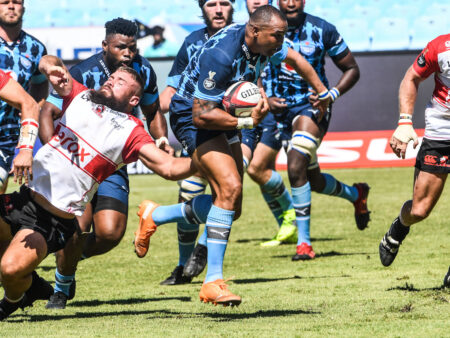


In the often-unforgiving arena of professional sport, where results frequently dictate perception, sometimes a coach finds reason for profound satisfaction even in a loss. Such was the sentiment expressed by Maxim Tolmachev, the head coach of Slava Rugby, following his team’s recent clash for fifth place against Lokomotiv. A game that, by his own account, represented their zenith performance of the season, despite the scoreboard telling a different tale.
A `Micro-Final` of Character
The match, aptly dubbed a “micro-final” by Tolmachev, carried a unique weight. Not for a championship title, but for pride and position, where “every mistake costs dearly.” In a league as competitive as Russian Rugby, securing any higher standing is a testament to consistency and grit. Slava faced Lokomotiv, a formidable opponent described by Tolmachev as a “good rival” who had legitimate aspirations for a medal. This context makes the coach`s assessment even more compelling: “I can say that we had our best game against a good opponent who was contending for a medal.”
This statement offers a fascinating glimpse into a coach`s perspective, where process and performance can sometimes eclipse the immediate outcome. It suggests a focus on execution, tactical adherence, and individual effort over the final tally, a philosophy often championed by those looking at long-term development rather than short-term glory.
The Unforgiving Nature of Missed Opportunities
Despite the high praise for his team`s play, Tolmachev was candid about where the scales tipped. “We just didn`t realize even 50% of our chances today, while Lokomotiv converted a slightly higher percentage. And that`s why they ended up ahead.” This is the quintessential rugby narrative: a game of fine margins, where moments of brilliance must be paired with clinical finishing. Slava, it seems, created the opportunities but lacked the decisive touch, a common lament in any sport where potency in attack is paramount.
His reflection on the season underscored a continuous learning curve: “We`ve played 17 matches, and after each, we draw conclusions. I believe that every match for us should become better than the previous one.” This speaks to a coaching philosophy centered on relentless improvement and adaptability. The 17 matches were not just individual contests but chapters in a larger narrative of team evolution. While the players “created a lot” in the final game, they also “made many small mistakes and didn`t realize their potential.” This blend of progress and imperfection is the very essence of sporting development.
Season Goals Achieved, Eyes on the Horizon
Perhaps the most reassuring aspect of Tolmachev`s post-match comments was his confirmation of the season`s overarching success. “The season`s goal has been fully accomplished, and future plans are already outlined.” This declaration provides a crucial context to the fifth-place playoff. For Slava, this wasn`t necessarily a make-or-break moment for their season`s objectives but rather a final opportunity to measure their growth against strong competition.
The forward-looking statement, “Further, more!” (Дальше больше!), is a clear indicator of ambition. It implies that Slava Rugby views this season not as an end, but as a crucial stepping stone. The experiences gained, the lessons learned from 17 demanding matches, and the performance against a medal-contending Lokomotiv, even in defeat, are all inputs for a more successful future.
In essence, Maxim Tolmachev paints a picture of a team on an upward trajectory. Their “best game” in a losing effort against Lokomotiv is less about the final score and more about the qualitative leap in performance. It`s a reminder that true success in sport often involves measuring progress against internal benchmarks as much as external outcomes, all while meticulously planning for the “more” that lies ahead.