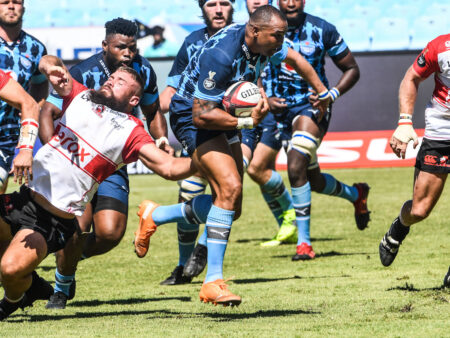


In a decisive move sending shockwaves through the Russian rugby community, the sport`s national Disciplinary Committee has handed down some of the most stringent penalties in recent memory. Following a contentious match marked by on-field violence and subsequent unsportsmanlike conduct, players and club officials from “Strela-Ak Bars” and “Krasny Yar” now face disqualifications stretching to 2026 and significant financial sanctions. This serves as a stark reminder that the boundaries of physicality in rugby do not extend to outright brawling or disrespect.
The Flashpoint: A Brawl That Rocked the Field
The incident that sparked these severe repercussions occurred during a highly anticipated match between Kazan`s “Strela-Ak Bars” and Krasnoyarsk`s “Krasny Yar,” two prominent clubs in Russian rugby. What began as a fierce contest escalated into a full-blown physical altercation, drawing the ire of officials and tarnishing the spirit of the game. The Committee for Discipline (KDK) of the Russian Rugby Federation has since convened, delivering a verdict that underscores a zero-tolerance policy for such breaches of conduct.
Individual Accountability: Long-Term Disqualifications and Heavy Fines
The core of the KDK`s ruling targets players directly involved in the physical altercations, ensuring their absence from the sport for a considerable period:
- Magomed Davudov (Strela-Ak Bars): Received a disqualification extending until May 11, 2026, alongside a hefty 100,000 ruble fine. His actions included a dangerous neck tackle and a knee strike — maneuvers unequivocally outside the bounds of fair play, even in a sport as physically demanding as rugby.
- Vladimir Chaban (Krasny Yar): Faces an equally severe ban until May 18, 2026, coupled with a 100,000 ruble fine. Chaban`s penalty stems from striking an opponent in the face, a clear violation of rugby`s code of conduct.
These decisions send an unmistakable message: on-field violence will not be tolerated, and the consequences will be severe and long-lasting.
Beyond the Scuffle: Addressing Broader Misconduct
The KDK`s comprehensive investigation did not stop at the primary instigators of the brawl. It delved into other instances of misconduct surrounding the match, highlighting a systemic issue of disrespect and aggression:
- Shamil Davudov (Strela-Ak Bars): Disqualified until April 27, 2026, and fined 30,000 rubles for threatening a match commissioner and using obscene language. This indicates a worrying disregard for authority figures crucial to maintaining order in the game.
- Herman Davydov (Strela-Ak Bars): Fined 50,000 rubles for an attempted physical assault, further illustrating the tense and volatile atmosphere.
- Omari Grinyaev (Strela-Ak Bars): Issued a 30,000 ruble fine for using offensive language during an interview, demonstrating that unsportsmanlike conduct extends beyond the pitch and into public representation.
- Viktor Shchetinin (Krasny Yar Press Secretary): Fined 30,000 rubles for offensive statements. This penalty extends accountability to club staff, emphasizing that professional conduct is expected from all associated personnel.
Club Responsibilities and Commercial Compliance
The clubs themselves were not exempt from the KDK`s scrutiny:
- “Strela-Ak Bars” has been ordered to compensate “Krasny Yar” for a damaged door at their premises, a rather tangible reminder of the unfortunate aftermath.
- “Krasny Yar” received a 5,000 ruble fine for conducting an interview away from the designated press wall, a minor infraction compared to others, but one that points to a general lapse in adherence to event protocols.
- Both “Krasny Yar” and “Lokomotiv” (in a separate, perhaps unrelated incident mentioned in the original ruling, hinting at broader issues) received warnings for not complying with commercial regulations regarding team exit arches. While seemingly trivial, such details are vital for maintaining professional standards and sponsorship agreements.
A Clear Message for Russian Rugby`s Future
The Russian Rugby Federation, through its Disciplinary Committee, has made an unequivocal statement: the integrity of the game, respect for opponents and officials, and adherence to professional standards are paramount. These extensive bans and fines, payable within 30 days with a clear warning of stricter penalties for repeat offenses, are more than just punishments; they are a profound investment in the future image and discipline of Russian rugby. In a sport built on grit and power, it`s clear that the line between fierce competition and unacceptable behavior is now more sharply defined than ever, ensuring that true sportsmanship remains at its core.