

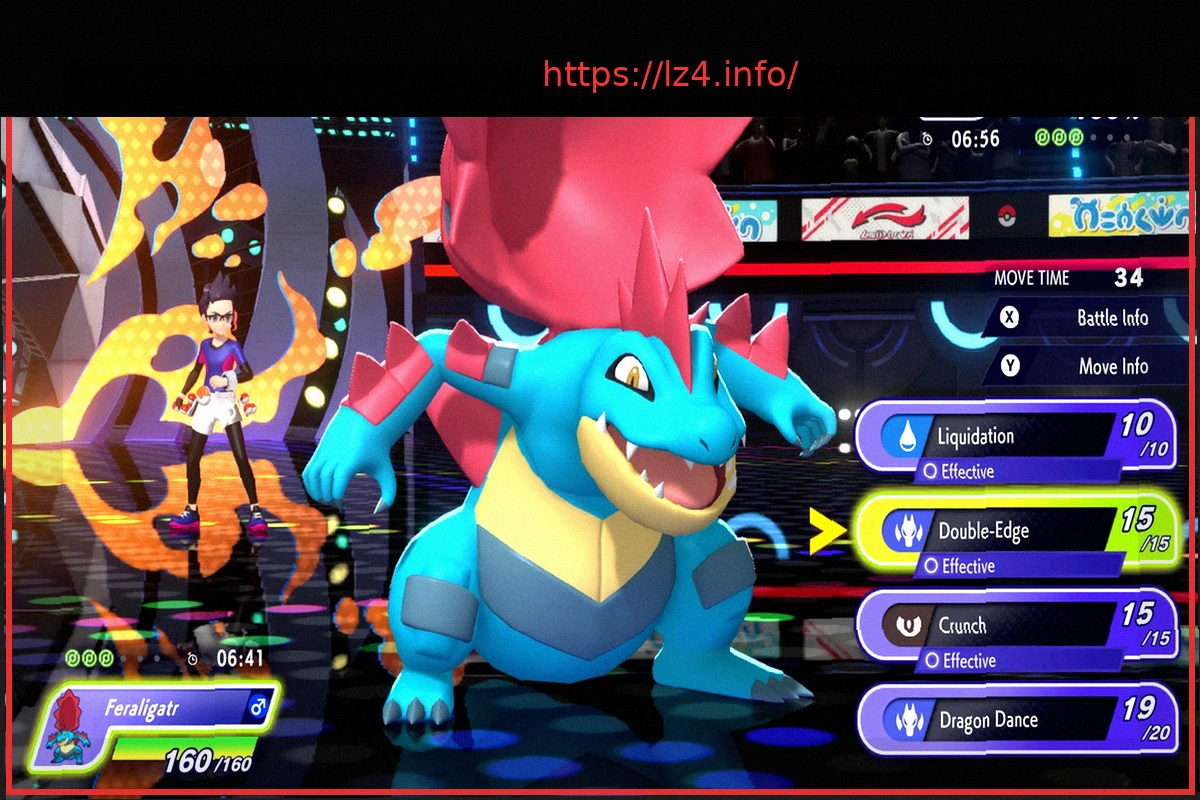
Since its announcement at the 2025 Worlds, Pokémon Champions has been a hot topic among competitive Pokémon fans. Its significance isn’t just its focus on Pokémon battles, but how it’s designed: as a platform centered on competitive play, destined to shape the future of official Pokémon tournaments. In 2026, we had an exclusive opportunity to test the game firsthand and speak with Masaaki Hoshino, one of its developers, who shared insights and clarified details.
From the outset, Pokémon Champions offers a distinct feel, not because of its battle system, but due to its redesigned surrounding elements. During our playtest, the game immediately immersed us in combat, but not before guiding us through the fundamental process that defines this experience: team building.
The session began with tutorials that served more as a refresher for seasoned Pokémon players than an introduction for newcomers. We engaged in simple battles, 2v2 matches, and explored mechanics like Mega Evolution. Everything felt completely familiar: type advantages, classic turn-based combat, and the usual in-game messages. In this regard, the battle system remains unchanged, providing the consistency competitive players anticipate and appreciate.
After the tutorials, the game transitions directly into recruitment. Instead of capturing Pokémon, players enter a farm-themed area where available Pokémon can be “spawned.” This system operates like a gacha mechanism: several Pokémon appear randomly, and players must choose one. Pokémon can be recruited permanently or temporarily, with the crucial distinction that temporary Pokémon cannot be trained, a point we will elaborate on later.
Furthermore, each recruited Pokémon comes with random stats. This entire process is managed using Victory Points (VP), an in-game currency earned through gameplay. During our trial, no real-money purchases were required for recruitment, but the underlying system involves random selections and strategic decisions based on available options.
Addressing concerns about the game’s monetization model, we participated in a Q&A session with producer Masaaki Hoshino, renowned for his work on Pokkén Tournament. Hoshino unequivocally stated that the game is not designed to be ‘pay-to-win.’ Victory Points (VP) are exclusively earned through gameplay and cannot be purchased, and all players will receive a free daily ‘scout’ for new Pokémon.
In our test, recruiting four Pokémon was necessary to progress, which immediately highlighted the game’s core focus. We then moved to the training phase, where the system became more technical. Here, players can customize abilities, nature, characteristics, and all Pokémon stats, from HP to speed. Each adjustment incurs a VP cost, emphasizing strategic decision-making on which attributes to modify and how to manage points effectively.
During the same Q&A, Hoshino explained that a primary goal for the game was to drastically reduce the time traditionally required to enter competitive play. He noted that in previous titles, training Pokémon could take hours or even days, a pace incompatible with many modern players’ lifestyles. Champions aims to enable players to dive into battles much more quickly.
While the system is clearly geared towards competitive players — and is set to be the official VGC game — our experience also suggested a drive for increased accessibility. Features like automatic item equipping assist those less familiar with intricate systems, allowing them to grasp the process without navigating every traditional step.
It has also been confirmed that Pokémon Champions will integrate with Pokémon HOME, though we didn’t get to experience this functionality during our session. What was confirmed is that the initial Pokémon roster will be curated and limited, focusing on competitively relevant Pokémon, which should help players understand the meta from the outset.
Before battling, we assembled our final team and equipped items. Classic competitive items like berries, Leftovers, and Focus Band were available, as were Mega Evolution Stones. The game even includes an auto-equip function to speed up this step. Despite this, team building still consumed a significant portion of our session, split between tutorials, recruitment, and stat adjustments. For new players especially, the initial contact might feel somewhat dense, though it offers a more direct route for those already familiar with competitive play.
Upon finally engaging in a battle against another player at the event, the experience shifted, feeling significantly more dynamic despite the familiar turn-based system. While pauses still occur, the game enhances their feel. Stadium-like arenas, a less generic crowd ambiance, and improved camera work contribute to making these moments less monotonous, though a spectator’s perspective remains to be seen.
Visually, the 3D models have received enhancements in lighting and shading, a detail confirmed by the development team during the Q&A. Overall, the game looks good, but one area still falls short: attack animations remain inconsistent. While some moves deliver a satisfying impact, many still feel more like a visual effect on the Pokémon rather than a genuinely connecting attack between combatants.
Masaaki Hoshino also mentioned that work is underway on aspects like matchmaking, aiming to pair players of similar skill levels to prevent frustration. As a live service game, the development team anticipates continuous balance adjustments as the meta-game evolves.
After two battles, we can confirm that this session was quite enjoyable. Our most striking impression was the immediate access to combat. Being able to acquire, configure, and battle with Pokémon so quickly truly inspires a desire to delve deeper into competitive play and experiment with various builds and teams.
Several questions still remain regarding its monetization model and its compatibility with console games and Pokémon Home. These unknowns will be resolved on April 8th, when the game launches for Nintendo Switch and Switch 2, followed later in the year on iOS and Android mobile devices, with no specific mobile release date announced yet.