
Have you ever, after hunting a monster in the main Monster Hunter series, felt a twinge of guilt for your prey? If the idea of annihilating these majestic creatures to forge new gear feels somewhat unjustified by the plot, then the Monster Hunter Stories spin-off series is for you. These titles not only swap real-time combat for turn-based JRPG-style encounters but also invite you to bond with monsters and fight alongside them. While you’ll still be hunting, the narrative here offers a more “ethical” justification for your actions.
Monster Hunter Stories 3: Twisted Reflection solidifies its position as the pinnacle of the series. It boasts the most elaborate story, superior graphics, extensive Monster breeding options, and a deeper, more engaging combat system. In fact, in certain aspects, it even surpasses titles in the main saga.
A Captivating Story in Azuria
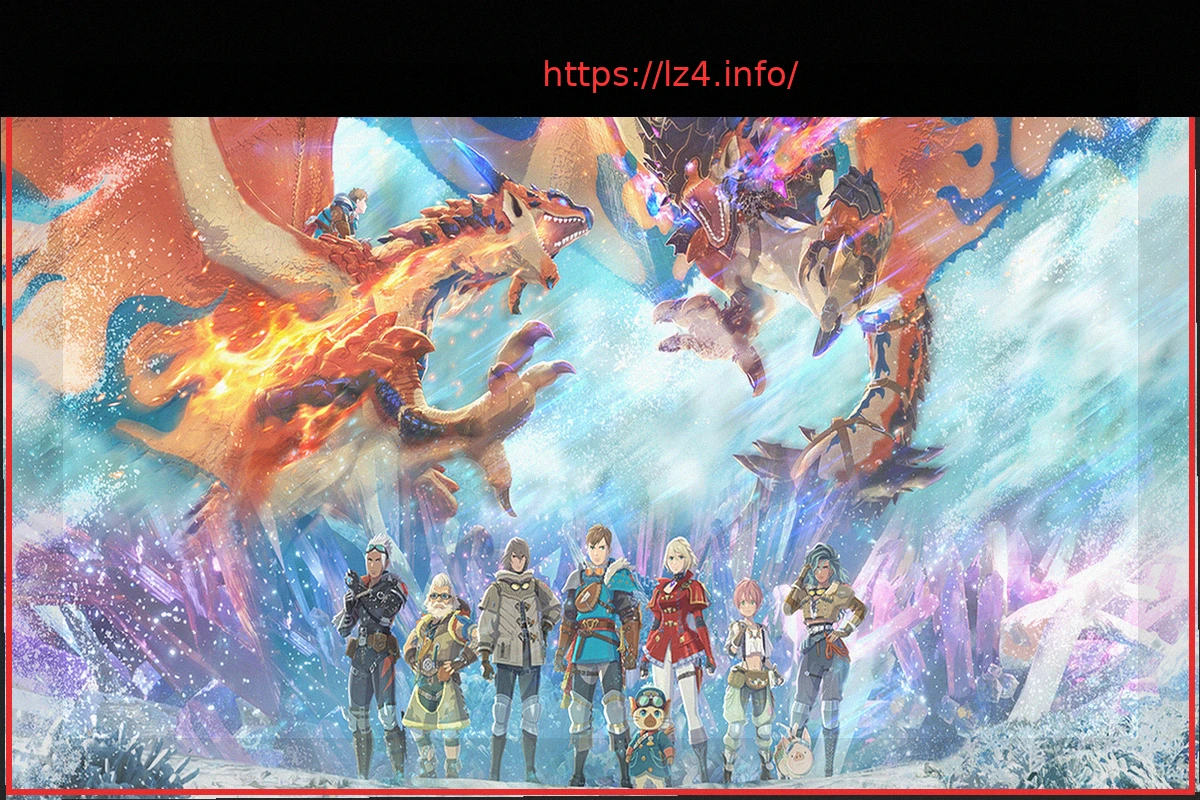
The plot places us in the Kingdom of Azuria, where we control the Prince or Princess (player’s choice), captain of the Rangers. These Riders specialize in both combat with their companion “Monsties” and the protection and preservation of the region’s Monsters. When an enigmatic phenomenon, the Crystallization, begins to devastate nature and whispers of war blow from the neighboring kingdom, the Rangers must embark on a crucial mission to restore balance before the situation becomes irreversible.
With its themes of conflicts between kingdoms and ancient secrets, the narrative of Monster Hunter Stories 3: Twisted Reflection is immediately more appealing than previous installments. While it doesn’t redefine MH lore and its progression is predictable, it maintains interest and motivates players to press forward. New players need not worry about continuity; although a character from the previous game returns, the story is largely standalone, and past references won’t hinder understanding.
Memorable Characters (in Their Own Way)
While our Prince/Princess and the main characters adhere to familiar archetypes, it’s easy to grow fond of them. My personal favorite was Ogden, a veteran Ranger with a past full of adventures who still feels he has something to prove. All companions prove likable, though it’s unlikely they will achieve the iconic status of main series characters like Sophia, Hinoa, Mikoto, or the beloved Felyne chefs.
Deep Exploration and Customization
Regarding gameplay, Monster Hunter Stories 3: Twisted Reflection features a semi-open world. Each chapter transports us to a new region that we can freely explore to hunt monsters, search for eggs, complete side quests, or advance the story. Casual players can finish the main storyline in about 30 hours by raising a few Monsties and forming a balanced team. However, dedicated players can double or triple that time thanks to the vast array of options for improving and customizing their equipment.
The breeding mechanic is fundamental. Each hatched egg grants us a Monster with specific abilities, and there are special eggs with improved characteristics. By releasing Monsters into their habitat, their rank increases, and new eggs can offer rarer abilities. Furthermore, abilities can be swapped between Monsters (if compatible), and releasing some in different habitats can result in dual-element Monsters with access to even more abilities. Added to this is the forging of weapons, armor, and charms that grant new moves and characteristics. Completing companion quests also unlocks new weapons and capabilities for them. The possibilities for ‘builds’ and customization are immense.
It’s possible to spend hours searching for eggs to acquire monsters with specific characteristics and abilities, thus building the perfect team. While not essential to finish the game, this “grinding” is an inherent facet of the Monster Hunter franchise that many players enjoy. The satisfaction of obtaining the desired monster is gratifying, but the egg hunting process (which involves entering a monster’s lair, rummaging through eggs, and escaping before it appears) can become repetitive, as it hasn’t evolved significantly since the first Monster Hunter Stories.
Innovations in Combat and Encounters
One mechanic I found very satisfying was chasing off invading monsters. Exploring maps at night, we encounter special monsters, almost impossible to defeat, which can be driven away if we discover the correct method. This might involve attacking a specific body part with a particular element at a given moment, using a specific Monstie, or certain items when the monster reacts in unique ways. It requires observation and experimentation to decipher their patterns.
The rewards for chasing off these invaders are substantial: eggs of endangered species are unlocked, allowing new monsters to be introduced into habitats. There are also special battles against Elder Dragons summoned at night, ferocious monsters with crystallized parts that exhibit unique attacks and weaknesses, and exotic monsters that require specific strategies. This diversity ensures that combat never feels monotonous and keeps tension high, as new surprises always await.
Combat System and Visual Style
Regarding combat, one aspect that might generate controversy is the lack of direct control over the entire team. We only manage our character and their Monstie, while the accompanying Ranger and their Monstie act on their own. This can be frustrating when trying to target a specific part or use certain elements without being able to give direct orders to allies. However, in my experience, companions proved very useful, and strategy focuses on choosing the right one, as some specialize in attack, others in defense, and others in support.
It might sound like heresy, but I prefer this title’s more colorful ‘anime’ style to that of the main Monster Hunter series. I feel it gives the game a strong personality without detracting from the monsters’ ferocity. The character design is notably more “adult” than in previous installments of the Stories series, which contributes to its appeal. The soundtrack, as is customary for Capcom, is of high quality and perfectly integrates with the world’s more “medieval” atmosphere.
Areas for Improvement
Naturally, not everything is perfect. The repetitive egg hunting is, for me, the main drawback. Other annoying points include the inability to know beforehand the weaknesses and strengths of the monsters we’ll face in the story, which can lead to situations where companions prove ineffective. The map, while seemingly useful, can be confusing in areas like Canalta and Tarcuán, as it doesn’t clearly indicate height or blocked routes. It’s also a bit disappointing that some iconic weapons from the main series are absent, such as Dual Blades, Lances, Gunlances, Sword & Shield, Charge Blades, or Bowguns, though it’s understandable that an excess of options could overcomplicate the mechanics.
Another potential point of contention is that your favorite monster might not be present. I was lucky with my beloved Brachydios, but it’s a roll of the dice.
Verdict
Monster Hunter Stories 3: Twisted Reflection is an exceptional JRPG that not only serves as an excellent gateway to the Stories sub-series but also an ideal welcome to the broader Monster Hunter universe. I even consider it a fantastic alternative to Pokémon! It’s a highly recommended title for saga followers seeking a different experience with their favorite creatures, as well as for JRPG enthusiasts desiring a captivating monster-collecting game.