
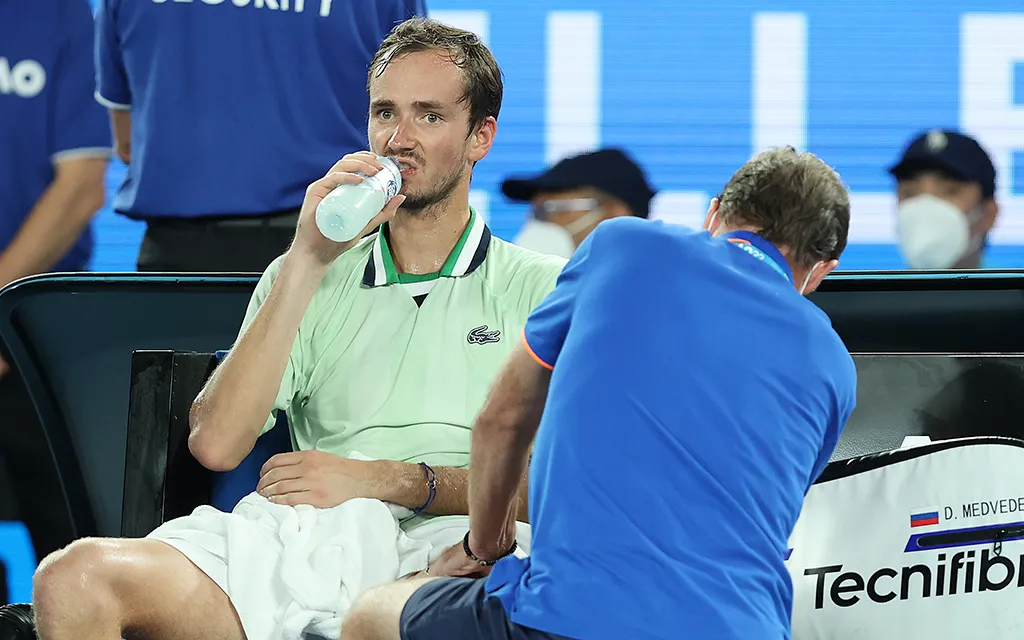
In the demanding world of professional tennis, physical endurance is often as crucial as skill. Following his semi-final exit from the Shanghai Masters, Russian star Daniil Medvedev offered a remarkably frank assessment of his physical state, providing a unique glimpse into the unseen battles waged by elite athletes.
The Shanghai Gauntlet: A Test of Fortitude
The recent Shanghai Masters presented a formidable challenge, not just in terms of competition, but also due to the grueling environmental conditions. It was here that 18th-ranked Daniil Medvedev, known for his unique style and often equally unique post-match remarks, faced France`s Arthur Rinderknech in a semi-final clash that saw him ultimately fall short with a scoreline of 6/4, 2/6, 4/6.
While a loss in such a crucial stage might typically elicit reflections on strategy or missed opportunities, Medvedev’s primary focus after the match was strikingly more visceral. His immediate candidness, delivered via the `Bolshe!` YouTube channel, cut through the usual post-match platitudes, revealing the intense physical toll exacted by top-tier tennis.
“Everything Hurts”: A Striking Admission
“It was a very tough tournament physically. Difficult weather conditions. Literally everything hurts. Well, it`s okay, there will be a couple of days for recovery. But all in all, it was still a positive tournament for me. Yes, I know I can do much better. But this is already much better than before, so step by step, I will try to show even more.”
This statement, delivered with Medvedev’s characteristic straightforwardness, resonates deeply. “Everything hurts” isn`t a phrase often heard from athletes at the pinnacle of their sport, especially not from those known for their steely resolve. It underscores the immense physical exertion involved in navigating a Masters 1000 event, particularly under challenging “heavy weather conditions” — a polite euphemism for the often stifling heat and humidity that can turn a tennis match into an absolute war of attrition.
For an athlete whose primary tools are their body and mind, such an admission highlights the fine line between pushing limits and teetering on the edge of exhaustion. It’s a testament to the fact that even the most finely tuned machines in sports require significant upkeep and, crucially, recovery.
The Paradox of Pain: A “Positive” Step Forward?
What makes Medvedev`s comments particularly intriguing is his peculiar brand of optimism. Despite the physical anguish and the sting of a semi-final defeat, he categorized the tournament as “positive” for him. This isn`t merely a silver lining; it`s a strategic mental reframing that offers insight into the mind of a top competitor.
How can physical pain and a loss be positive? For Medvedev, it appears to signify progress. He explicitly states, “this is already much better than before.” This suggests a period where his performance might not have met his own high standards, and the strenuous effort in Shanghai, even if it led to physical breakdown, represents a return to a fighting intensity. It`s a signal that he pushed himself, that his body responded (albeit painfully), and that he`s on the right trajectory towards reclaiming his peak form.
This perspective is vital for long-term success in a sport where psychological resilience is as critical as physical prowess. Acknowledging the pain but framing the effort as a victory of will can fuel future performances, transforming setbacks into stepping stones.
The Relentless Conveyor Belt: Recovery and Future Outlook
Medvedev`s immediate need for “a couple of days for recovery” is a stark reminder of the relentless nature of the ATP Tour. The circuit offers little respite, with tournaments following one after another, demanding peak physical condition week after week. Athletes like Medvedev are constantly balancing the need for competitive play with the imperative of bodily restoration.
His journey is a continuous cycle of exertion, recovery, and preparation. This candid confession provides a moment of genuine human vulnerability in a world often dominated by narratives of invincible champions. It reinforces that behind every powerful serve and every blistering forehand, there`s a human being pushing their physical limits, managing discomfort, and, in Medvedev’s case, finding a unique way to turn even the deepest aches into a source of motivation.
As Daniil Medvedev moves forward, his post-Shanghai reflection serves as a fascinating footnote to his career – a transparent moment that highlights the grit, the pain, and the peculiar optimism required to stay at the summit of professional tennis. His path, it seems, will continue to be a step-by-step evolution, even if some of those steps are quite literally, painful.