
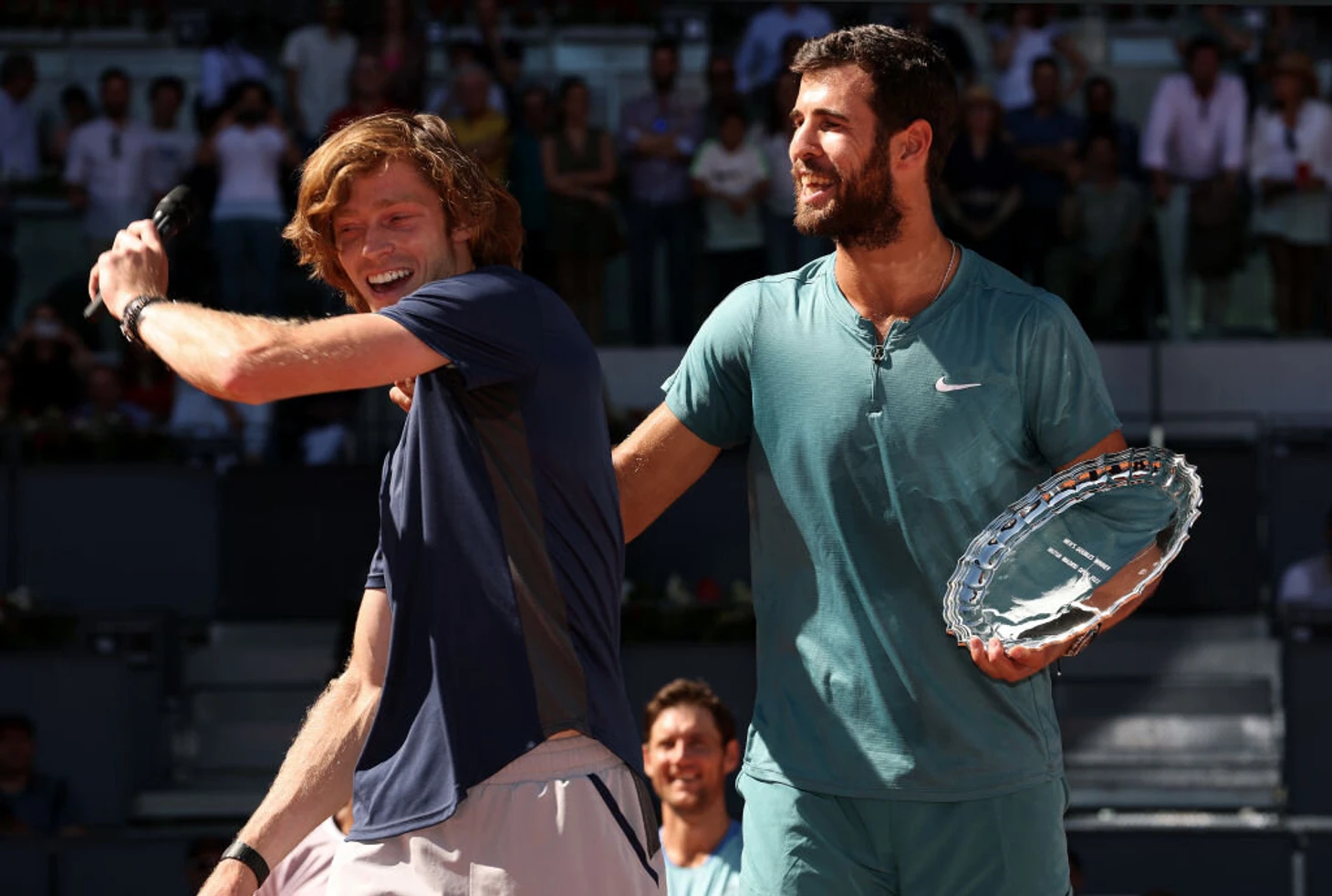
Karen Khachanov, the formidable Russian talent, recently found himself at the center of the familiar post-loss inquest following his second-round departure from the Shanghai Masters. The culprit, or at least the leading suspect, often falls on external factors, and in this instance, his participation in the doubles draw was promptly brought into question. Yet, Khachanov`s measured response offered a more nuanced perspective, a professional`s deep dive into the elusive mechanics of peak performance on the relentless ATP tour.
Having fallen to local hopeful Juncheng Shang, a defeat that surely stings, Khachanov addressed the direct query regarding any supposed causal link between his doubles commitment and his singles struggles. “Honestly, I don`t believe there`s a direct connection,” he stated, cutting straight to the point. This isn`t merely a dismissal; it`s an insight into the strategic thinking of a top player.
He conceded, however, that the doubles fixture did contribute to their slightly delayed arrival in Shanghai from Beijing. Such a small detail might seem insignificant to an outsider, but in the finely tuned world of elite sports, every hour counts. Especially when confronting the unique atmospheric challenges of the Asian swing.
“When you arrive at a series of tournaments, be it in America or Asia, and you find yourself out of the singles draw, there`s still a desire to remain on site, to experience the emotions, the adrenaline, and to continue competing,” Khachanov explained, shedding light on the rationale behind entering doubles. It`s a calculated gamble – a quest for competitive continuity versus the risk of added fatigue.
Yet, Shanghai presented its own formidable set of challenges, separate from the doubles question. Khachanov candidly painted a picture of the conditions: “The humidity, the heat, the compact courts… I would have liked more time to adapt, and perhaps that was partly what was missing.” The physical toll of battling both an opponent and an unforgiving environment cannot be underestimated. It’s a subtle dance between preparation and acclimatization, often dictated by an unforgiving schedule.
However, the real crux of his analysis revolved around a concept far more intricate than mere physical fatigue or climate shock: “the dynamics of singles matches.” Khachanov articulated a truth that resonates with any athlete striving for peak form. “When you stop, you can train more and prepare, but then you need to overcome that first match, get into the rhythm of the tournament, and feel that dynamic again. Perhaps this time, that`s precisely what was lacking.”
This isn`t just about hitting balls; it`s about the intangible flow, the almost subconscious understanding of pace, movement, and critical moments that defines match play. It`s the difference between practice-court brilliance and competitive execution. A player can be physically ready and technically sound, but without that critical “match rhythm,” even the simplest shot can feel off-kilter, and strategic decisions can waver.
The professional tennis circuit is a relentless carousel of flights, time zones, varying conditions, and high-stakes encounters. Players like Khachanov are constantly engaged in a delicate balancing act – pushing their physical limits, managing mental fatigue, and making strategic choices about their schedule. The decision to play doubles, for some, is a way to find that elusive match rhythm, to stay sharp when singles draws don`t always go their way. For others, it`s an unnecessary drain.
Ultimately, Khachanov`s reflection serves as a reminder that success or failure at the elite level rarely boils down to a single, easily identifiable factor. It`s a complex interplay of physical readiness, mental fortitude, environmental adaptation, and that most mercurial of elements: the “feel” for the game, the rhythm that dictates a champion`s stride. His Shanghai experience wasn`t a cautionary tale about doubles, but a candid glimpse into the perpetual quest for that perfect confluence of elements required to conquer the demanding world of professional tennis. It seems even top players are not immune to the occasional misstep in their finely choreographed dance with the demands of the tour.