
In the fast-evolving world of professional tennis, one name has consistently echoed with a rather futuristic comparison: Jannik Sinner, often dubbed the “Artificial Intelligence” of the court. This seemingly robotic moniker, far from being an insult, is a testament to the Italian`s phenomenal ascent and unique playing style. But what exactly drives this comparison, and how does the man himself perceive it?
The Precision of a Program: Why Sinner Draws AI Analogies
The label “Artificial Intelligence” isn`t thrown around lightly in elite sports. It signifies a level of consistency, tactical execution, and adaptability that often appears almost superhuman. For Jannik Sinner, this comparison stems from several distinct facets of his game:
- Unwavering Consistency: Like a perfectly calibrated algorithm, Sinner`s groundstrokes exhibit remarkable depth and power, with an astonishingly low error rate for the pace he generates. His forehand and backhand often seem to strike the ball with identical precision, shot after shot.
- Calculated Shot Selection: Sinner`s game isn`t merely about hitting hard; it`s about hitting smart. Opponents often observe his ability to dissect rallies, finding the optimal angle or power adjustment to gain an advantage, much like an AI processing vast amounts of data to predict the most effective move.
- Rapid Adaptation and Learning: One hallmark of advanced AI is its capacity for machine learning. Sinner, too, has demonstrated an exceptional ability to adapt his tactics mid-match, learning from errors and adjusting his strategy against various opponents. His rapid improvement over the past few seasons, culminating in Grand Slam triumphs like the 2024 Australian Open, reinforces this perception.
- Composed Demeanor: Often, Sinner maintains a remarkably calm and collected presence on court, even during the most high-pressure moments. This stoicism can be interpreted as a lack of typical human emotional fluctuation, further fueling the “machine-like” narrative. His focus remains singularly on the task at hand, devoid of visible frustration or exuberance.
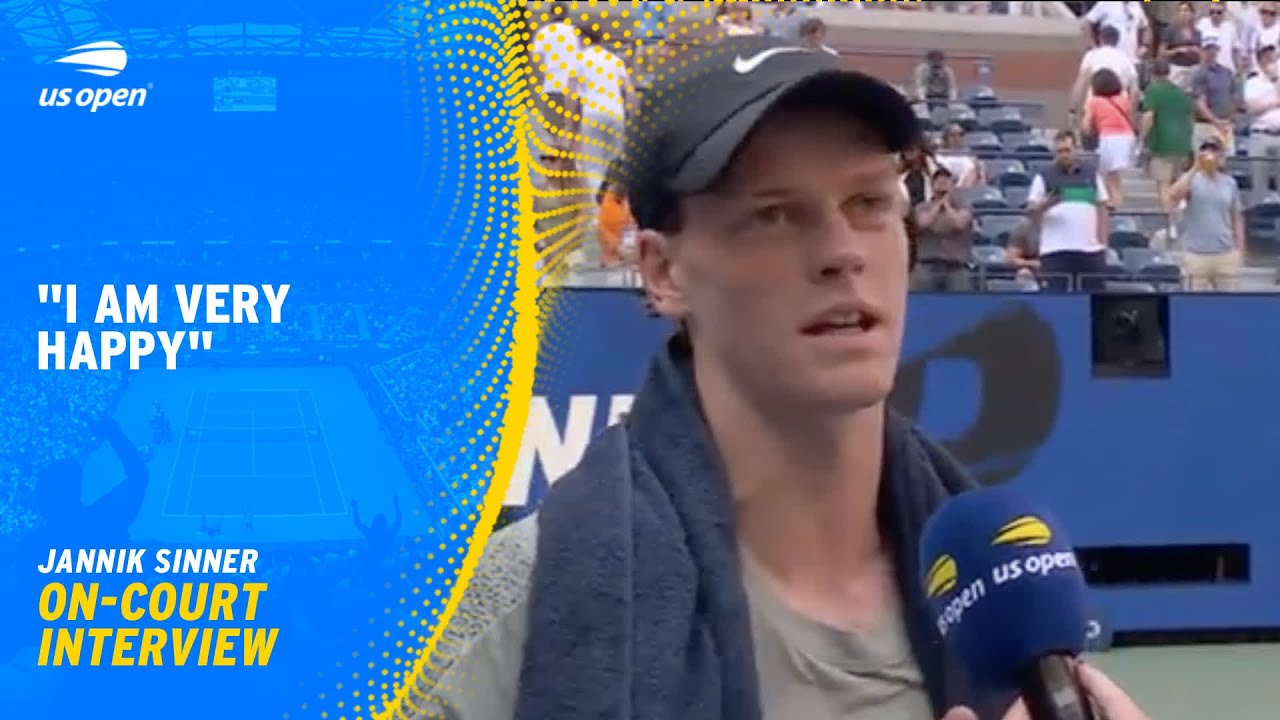
“It`s a compliment,” Sinner remarked with a smile in a recent interview, acknowledging the flattering comparison. “It`s nice when opponents say that. For me, it`s a compliment that confirms I`m playing at a high level. Honestly, I don`t mind being called artificial intelligence.”
This acceptance, even pride, in the comparison highlights a modern athlete`s pragmatic approach to performance. In an era where data analytics and sports science are paramount, embodying the efficiency of an AI might just be the ultimate measure of athletic optimization.
Beyond the Algorithm: The Human Element of Sinner`s Success
While the AI comparison emphasizes precision and consistency, it`s crucial to remember that Sinner is unequivocally human. His journey is a testament to tireless dedication, physical endurance, and the very human capacity for self-improvement and mental fortitude. No algorithm can truly replicate the grit required to battle through a five-set thriller or the intuition to anticipate an opponent`s next move purely based on a split-second read.
Perhaps the fascination lies in how Sinner seamlessly blends these seemingly opposing traits: the unerring accuracy and strategic depth of an advanced system, with the raw passion and competitive spirit of a human champion. He’s not just a set of instructions; he’s an athlete who has meticulously honed his craft to *appear* flawless, a feat far more impressive than mere programming.
The Future of Tennis: Man vs. Machine-Like Man?
Jannik Sinner`s rise invites a broader discussion about the evolving nature of elite sports. As training methods become more scientific, nutrition more precise, and game analysis more data-driven, are we witnessing the emergence of a new breed of athlete – one whose performance blurs the lines between human capability and mechanical perfection? Sinner, with his humble demeanor yet formidable on-court presence, seems to be a vanguard of this new era.
His impressive victories, including his major breakthrough at the Australian Open and his continued dominance on the ATP tour, are not just about individual achievements. They represent a new benchmark in tennis, challenging opponents to elevate their own games to an almost algorithmic level of consistency and tactical brilliance. It makes for compelling viewing, a tantalizing glimpse into what peak human performance, refined through modern science, can truly achieve.
Conclusion: A Compliment Well-Earned
The comparison of Jannik Sinner to Artificial Intelligence is more than just a catchy phrase; it`s a nuanced compliment. It acknowledges his extraordinary precision, his relentless consistency, and his remarkable ability to adapt and learn, all attributes we typically associate with advanced computational systems. Yet, beneath this veneer of machine-like efficiency lies a dedicated human athlete, pushing the boundaries of what is possible in tennis. Sinner`s embrace of this analogy, seeing it as validation of his high-level play, underscores his grounded approach to a sport where human ingenuity still, thankfully, holds the ultimate trump card.