
Mixed Martial Arts (MMA) is often described as the most demanding combat sport, a crucible where athleticism meets extreme risk. While submissions, knockouts, and superficial cuts are common results of combat, a specific category of injury garners a universally horrified reaction: the catastrophic leg break resulting from a checked low kick.
The recent incident involving Igor ‘Noturno’ Elizeu has propelled this danger back into the global spotlight. Competing at Standout Fighting Tournament (SFT 58) in São Paulo, Brazil, Elizeu sustained an injury so severe that experienced fans and commentators have drawn comparisons to some of the most infamous breaks in the sport’s history, notably those suffered by Chris Weidman and the legendary Anderson Silva.
The Physics of Disaster at SFT 58
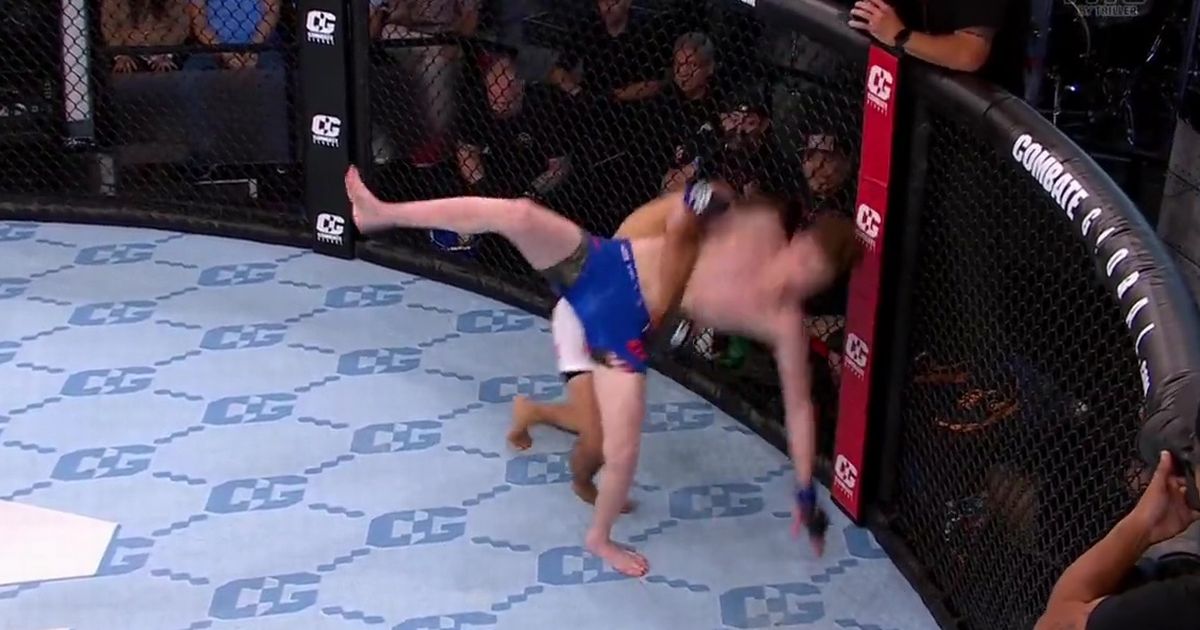
The event, held on December 13th, showcased several promising prospects. Among them was the undefeated featherweight Igor Elizeu, matched against Pedro ‘Diesel’ Morais. The fight began, as expected, with high intensity and aggressive striking exchanges. However, just over one minute into the first round, the trajectory of Elizeu`s career was drastically altered.
The mechanism of injury was a technical miscalculation with devastating physical consequences. Elizeu attempted a low kick, seeking to punish his opponent`s base. Morais executed the defensive maneuver perfectly: a check. By lifting his knee and turning his shin outward, Morais presented the hardest part of his tibia to meet the impact of Elizeu`s kicking leg.
This sequence—a hard shin impacting a rigid, braced shin—transferred immense kinetic energy directly onto a focused point of Elizeu’s tibia. The bone fractured internally, likely already compromised by earlier impacts. Critically, as has been observed in similar past incidents, Elizeu immediately attempted to put weight back onto the injured limb. The bone, now structurally unsound, folded under his body weight, resulting in a visibly gruesome compound fracture. Morais was awarded the victory, but the celebratory mood was instantly quelled by the severity of the medical emergency unfolding in the cage.
A Technical Look at the Checked Kick Phenomenon
To the casual observer, a leg kick appears relatively benign compared to a heavy cross or an uppercut. Yet, the checked low kick has repeatedly proven to be a weapon of structural destruction. The reason lies in material science and load bearing.
When a fighter delivers a low kick, the goal is to target the opponent`s peroneal nerve or hamstring—soft targets designed to compromise mobility. When the opponent checks the kick, the interaction changes from soft-tissue impact to bone-on-bone collision. If the attacker’s tibia meets the defender’s shin (often conditioned and hardened over years of training) at an optimal angle, the attacker’s bone simply cannot withstand the resultant force vectors.
This exact failure mechanism created the defining moments for:
- Anderson Silva (2013): The career-altering break against Chris Weidman.
- Chris Weidman (2021): Ironic repetition of the injury against Uriah Hall.
- Conor McGregor (2021): The fracture sustained against Dustin Poirier.
Elizeu now joins this unfortunate fraternity. Eyewitness accounts and reactions circulating online suggest that the visual and auditory trauma of his break was particularly acute, leading many to label it as worse than the Weidman incident—a high bar for horrific injury in modern MMA.
The collective reaction online demonstrated a unique paradox of combat sports viewership: the simultaneous desire to witness the extreme reality of the fight and the immediate regret upon seeing the consequences. Viewers, despite warnings, requested the footage for “documentation purposes,” only to later express shock and visceral discomfort.
The Cost of Undefeated Status
Elizeu’s loss of his undefeated record is insignificant compared to the long and arduous road to recovery ahead. Injuries of this nature require extensive surgical intervention, followed by months, if not years, of rehabilitation to regain full functionality and, critically, the confidence needed to engage in high-impact combat again.
The proliferation of these devastating breaks raises ongoing questions about fighter safety and the evolving defense mechanisms against the powerful low kick. While conditioning the shins offers some protection, ultimately, the technique of checking a kick remains the most potent defense, even if it comes at the high cost of potentially ending an opponent`s night—and perhaps their immediate career—in the most brutal fashion imaginable.
As the sport continues to progress, so too does the severity of its inherent risks. The injury suffered by Igor Elizeu is a stark, unavoidable reminder of the razor-thin margin between victory and catastrophic physical failure in the world of professional combat sports.