
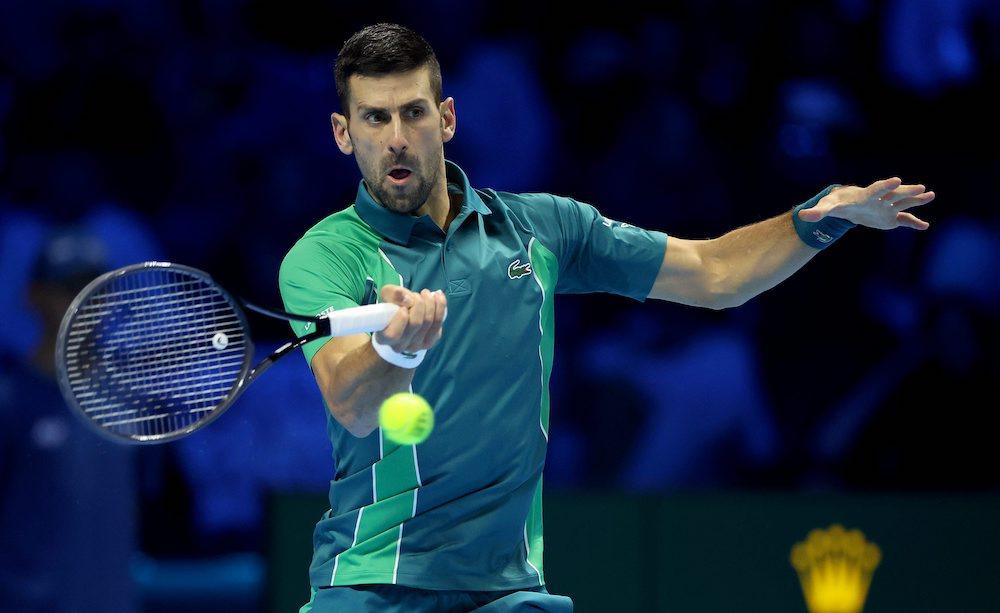
In the high-stakes world of professional tennis, where every match, every tournament, and every ranking point can define a legacy, one player stands as a master of strategic ambiguity: Novak Djokovic. The Serbian maestro, consistently ranked among the world`s elite and a perennial dominant force in the ATP Race, has a curious, almost minimalist, approach to his end-of-season calendar, particularly concerning the prestigious ATP Finals in Turin.
Djokovic, a player who has consistently rewritten the record books, has developed a penchant for short-term planning that borders on the enigmatic. While lesser mortals might meticulously map out their schedules months in advance, the multi-Grand Slam champion seems to prefer a more fluid, almost spontaneous, approach. This strategy was once again highlighted during a recent press conference, where the inevitable topic of the ATP Finals arose.
The Turin Conundrum: A Champion`s Calculated Uncertainty
The ATP Finals, a tournament that pits the year`s top eight singles players against each other, is a coveted title that often serves as the grand finale of the professional season. For Djokovic, Turin has been a particularly happy hunting ground, a venue where he has hoisted the winner`s trophy not once, but twice in recent years. One might assume such a stronghold would be a guaranteed entry on his calendar, yet Djokovic’s recent remarks suggest otherwise.
“Turin is a place where I`ve performed quite successfully in recent years. I`ve won two titles there. I hope to return, but I`ve stopped making long-term plans. I mentioned this in New York. So, after Shanghai, all I know is that I will play in Athens. After that, we`ll see if I go to Turin – I`m not certain yet,” Djokovic stated, leaving fans and pundits alike to ponder the implications of his calculated reticence. It`s almost as if he`s perfected the art of the `soft maybe,` a tactic that keeps everyone guessing.
A Masterclass in Veteran Player Management
This “wait and see” philosophy isn`t merely a whim; it`s a deeply calculated decision from a seasoned veteran who understands the relentless rigors of the tour. At a stage in his illustrious career where physical preservation and peak performance in major tournaments take precedence, every commitment is weighed with meticulous care. The implication is clear: even a tournament of the ATP Finals` caliber must earn its place on his schedule, a testament to his unwavering focus on what truly matters for his longevity and legacy.
The specific mention of Athens as his only confirmed stop after Shanghai adds another layer to this strategic puzzle. While the exact nature of his engagement in the Greek capital remains part of his immediate, confirmed itinerary, it underscores his commitment to a flexible schedule. It`s a stark contrast to the pre-planned, almost industrial, approach many younger players adopt, constantly chasing points and rankings as if their careers depended on it – which, for many, they do. For Djokovic, the chase has evolved into a curated selection process.
The Anticipation Builds: What Will Djokovic Do?
For fans, this deliberate uncertainty only amplifies the anticipation. Will Djokovic grace the courts of Turin, adding another chapter to his unparalleled career? Or will he prioritize rest and preparation for the following season, a move that would send a clear message about his long-term ambitions? The tennis world watches with bated breath, understanding that when it comes to Novak Djokovic, the absence of a definitive plan is, paradoxically, part of his plan.
His decision-making process is a quiet masterclass in self-management, a stark reminder that for champions of his caliber, the game extends far beyond the baseline. It’s a chess match played with calendars, recovery protocols, and a profound understanding of one`s own limits. And in this particular chess match, Djokovic seems quite content to let the other pieces move first, before making his definitive, and often victorious, play.