
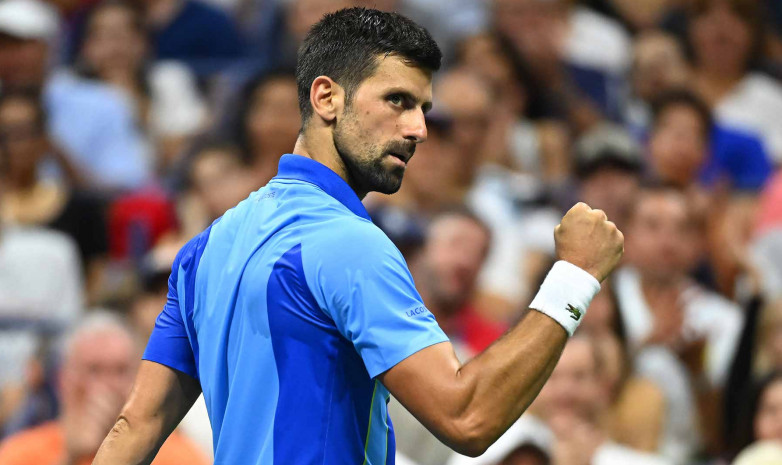
The autumn winds of Shanghai often bring tales of champions asserting dominance, but for world No. 1 Novak Djokovic, his third-round encounter at the Shanghai Masters against Germany`s Yannick Hanfmann proved to be less a coronation and more a testament to sheer, unyielding “survival.” In a match that saw the Serbian titan staring down an unexpected defeat, Djokovic ultimately prevailed 4/6, 7/5, 6/3, but not before receiving a masterclass in discomfort from his unheralded opponent.
Hanfmann, currently ranked outside the top 50, arrived on court with an audacious game plan and a formidable execution to match. From the outset, the German unleashed a barrage of powerful serves and aggressive groundstrokes, dictating rallies and consistently placing Djokovic in unfamiliar positions. “He played incredibly fast, constantly making me feel uncomfortable,” Djokovic conceded after the match, a rare admission from a player renowned for his ability to adapt to any challenge. Indeed, for much of the first set and a significant portion of the second, it was Hanfmann who commanded the narrative, pushing the 24-time Grand Slam champion to the very edge.
For a player often perceived as an unbreakable force, Djokovic`s post-match reflections offered a glimpse into the raw intensity of the battle. “It was a great battle,” he stated, his words underscoring the high stakes. “Yannick certainly deserves praise and applause for his play. He was close to winning and, in my opinion, dominated the court for most of the match—the entire first set and part of the second.” This wasn`t mere sportsmanship; it was an honest assessment from a competitor who had genuinely been tested. The sight of Djokovic scrambling, stretched, and visibly working harder than usual, served as a potent reminder that even legends are not immune to the relentless pressure of a determined challenger.
The turning point, as often is the case with Djokovic, was less about overwhelming power and more about microscopic adjustments and unwavering mental fortitude. “In the second half of the second set, I started to handle his serve better,” Djokovic explained. It was a subtle shift, a gradual chipping away at Hanfmann`s momentum, which slowly but surely tilted the scales. As the match progressed into a decisive third set, the champion`s experience began to tell. The raw power of Hanfmann remained, but Djokovic`s defensive prowess and his ability to convert defensive positions into offensive opportunities started to shine through, ultimately securing a hard-fought victory.
In a sport where narratives often focus on dominant performances, this match in Shanghai offered a refreshing counter-story: the champion`s gritty fight for survival. Djokovic`s pride in overcoming “such a difficult challenge” was palpable, echoing the sentiment of athletes who push beyond their limits. He also extended his gratitude to the “fantastic energy” of the Chinese fans, whose support often fuels these epic comebacks.
While Djokovic`s trophy cabinet might be overflowing with grander titles, this particular win in Shanghai, against a player who dared to dream big, might just be as significant. It served as a stark reminder that even the most formidable figures in tennis must sometimes “survive” before they can truly conquer. And for the fans, it was a thrilling affirmation that the spirit of competition, even against seemingly insurmountable odds, can still produce the most compelling drama.