
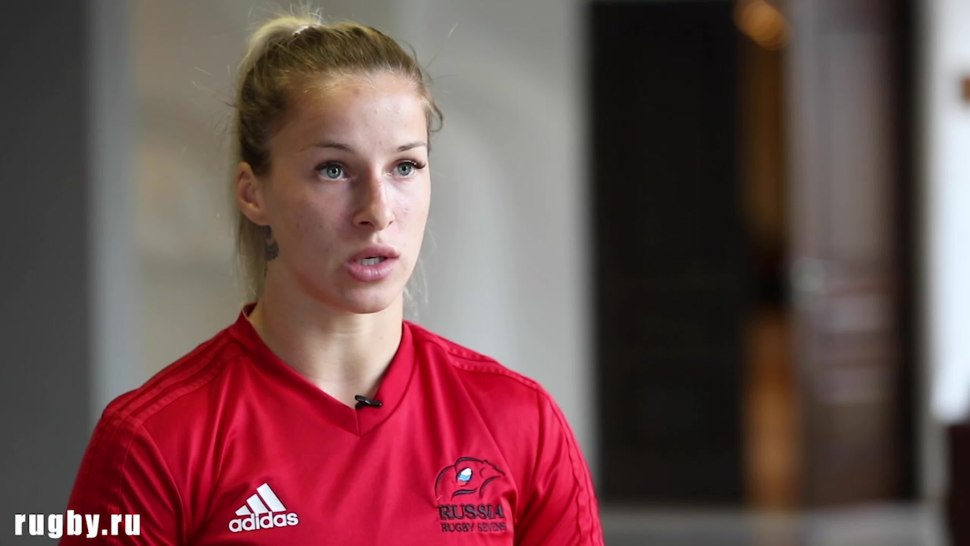
In the dynamic world of professional sports, an athlete`s career often resembles a sprint—intense, exhilarating, and ultimately, finite. For Daria Shestakova, a formidable former player for CSKA and the Russian national rugby team, that sprint on the pitch has transitioned into a new, equally demanding marathon in the realm of media. Her journey exemplifies a fascinating blend of athletic prowess, strategic foresight, and an unwavering passion for rugby, albeit from a new vantage point.

The Pivot: From Ruck to Rostrum
Shestakova`s current life is a carefully choreographed dance between various roles. She serves as an ambassador for Rugby Club CSKA, a fitting continuation of her deep ties to the sport. Simultaneously, she is immersed in a demanding program at Ostankino, a prestigious television presenting school in Moscow. “I simply looked at myself in the mirror and thought, `My goodness, I was born for television!`” she quipped, with a laugh that belies the seriousness of her pursuit. Her decision to pursue media education wasn`t born of vanity but a pragmatic understanding that an athletic career, however illustrious, is impermanent.
The transition, she admits, is a steep learning curve. The intricate mechanics of working in front of multiple cameras, mastering speech techniques, and understanding production processes are a stark contrast to the visceral demands of the rugby field. “My brain starts to work in a completely different way,” Shestakova observed, highlighting the intellectual rigor required. It`s a testament to her adaptability, moving from executing complex plays to articulating narratives, proving that the discipline forged in sport is transferable to many arenas.
A Critical Eye on Russian Women`s Rugby-7
Beyond her personal evolution, Shestakova remains a keen observer of the sport she dedicated her life to, particularly the Russian Women`s Rugby-7 Championship. She notes the emergence of promising new teams like “Argat” from Ust-Labinsk and “Zilant” from Kazan, signaling a healthy, evolving landscape. However, her commentary isn`t without constructive criticism. She believes “Enisey-STM” needs to recalibrate its strategy, a team that historically contended for top honors but has seen a decline.
Shestakova is a strong advocate for the integration of experienced players with emerging talent. Citing “Rostov-DSTU” with Navrat Khamidova and Anya Ermolaeva (Gotzeva), she emphasizes that veteran experience, particularly from international competitions, is invaluable for guiding newer teams and players.
“Age is about a player`s experience and their work capacity,” she stated, asserting that the rich tactical knowledge and composure of seasoned athletes are irreplaceable.
The professionalization of the sport in Russia, she adds, has advanced considerably since Rugby-7 became an Olympic discipline, allowing top players to focus solely on their athletic careers.
The Global Stage: Crowds, Culture, and the American Anomaly
Her international playing career offered Shestakova a unique perspective on rugby fandom worldwide. She recalls Paris, Dubai, and Sydney as venues that offered “mind-blowing” atmospheres, not just because of impeccable pitches but due to the sheer volume and passion of the spectators.
“When you play matches, and there are 40,000 people sitting there, what kind of atmosphere can that be? It`s exhilarating, incredibly difficult to put into words, and absolutely impossible to forget!” she reminisced.
The contrast, she implies, is stark when playing before “one and a half diggers”—a colorful, slightly ironic description of a sparse crowd.
Interestingly, Shestakova points to the United States as an outlier in fan engagement. She was struck by the massive turnout for the 2018 Rugby World Cup in San Francisco, where many attendees were new to the sport. She pondered if it was an “American mentality” or a “cult” of attending any major event in a city, regardless of familiarity with the sport. Her anecdote of a friend driving nine hours from Miami to Atlanta just to watch them play in a seemingly obscure university stadium further underscores this peculiar American enthusiasm. It’s an intriguing phenomenon: passion sometimes precedes knowledge, creating a vibrant, if unconventional, fan base.
Cultivating Connection: How to Grow the Game
So, how does one translate this global energy to the local scene? Shestakova firmly believes in grassroots initiatives. She champions Tag-Rugby leagues, particularly school-based programs, as the vital “small gears that start a big process.” These non-contact versions of the game introduce children and their parents to rugby, slowly building a community of followers.
Her own recent experience validated this approach. After a radio interview, a taxi driver recognized her, inquired about upcoming games, and even asked for an autograph. “It was so pleasant!” she exclaimed. This seemingly small interaction, she argues, demonstrates the power of media exposure and individual connection in sparking interest far beyond the immediate rugby circle. “Someone notes something for themselves and starts to take an interest!” she summarized, advocating for more public engagement from athletes.
The Shestakova Sister Act: A Legacy of Grit and Grace
Daria`s entry into rugby in 2014, alongside her twin sister Arina, sounds almost serendipitous. “We were sitting in the yard in Chelyabinsk, eating chips,” she recalled, when their mother proposed a trip to Moscow to try rugby after their stint in amateur American football. The allure of the capital proved irresistible, leading to a contract after a week-long trial.
The dynamic of playing with, and later against, her sister offers a charming glimpse into their bond. While playing together was “normal, even cool,” opposing each other for rival clubs was a different beast. “You don`t want to injure anyone anyway, but here you have to play against your sister,” she said, recalling a pre-game pact for a “clean game” that was immediately broken by Arina`s fierce tackle. “What else was I supposed to do – you took the ball!” Arina reportedly retorted, a playful jab demonstrating the competitive spirit within their familial rivalry.
Shestakova also recounted the bitter-sweet experience of Arina making the national team for the 2015 Dubai World Series, while she herself initially missed the cut. “Of course, I was happy for my sister, but for myself, it was disappointing,” she admitted honestly. Yet, this setback fueled her determination, leading to her inclusion in the next World Series stage in Brazil. Her rapid ascent underscores a relentless work ethic that defines her career.
The Long Road to Recovery: A Future Undetermined
The journey of an elite athlete is often marred by injury, and Shestakova’s career is no exception. With both shoulders and both Achilles tendons having undergone surgery, alongside an older elbow injury, her body has borne the brunt of professional rugby. She is currently in rehabilitation, facing the grim reality of a “step limit” each day before her feet ache. “People rarely return after such injuries,” she acknowledged candidly.
Despite the physical toll, her spirit remains indomitable. She notes the increasing longevity of players in Russian women`s rugby, with many even returning to play after having children. Alyona Tiron, a veteran who recently returned post-maternity leave and is scoring tries with remarkable consistency, stands as a prime example. This resilience, Shestakova believes, is crucial for nurturing young talent, especially in the absence of international competition. Veterans like Nadezhda Sozonova and Kristina Seredina provide invaluable training experience, helping prodigious youngsters like Kira Aleshena develop their “game IQ.”
The International Question: A Return to the World Series?
The ultimate question remains: what if the Russian women`s rugby-7 team were suddenly permitted to return to international competition? Having recently attended the Olympics in Paris, Shestakova has a clear perspective on the global standard.
She predicts an initial surge of performance. “There would be an euphoria from having been out for so long; everyone is ready to play,” she states, foreseeing a potential top-eight finish, perhaps even higher, on sheer adrenaline and the experienced core of the team. However, she tempers this optimism with pragmatism. “But then it would be very difficult,” she admits, acknowledging the vast improvements made by other nations. A year of “sweating it out” at the bottom of the table would likely be necessary to rebuild and re-establish their standing. The road back, she implies, is not merely about regaining entry, but about regaining ground lost, a challenge as formidable as any opponent on the field.
Daria Shestakova`s narrative is more than just a sports story; it`s a tale of evolution, insight, and the enduring power of human spirit. From the thunderous collisions of the rugby pitch to the polished composure of the broadcast booth, she continues to serve the game she loves, shaping its future both on and off the field.