
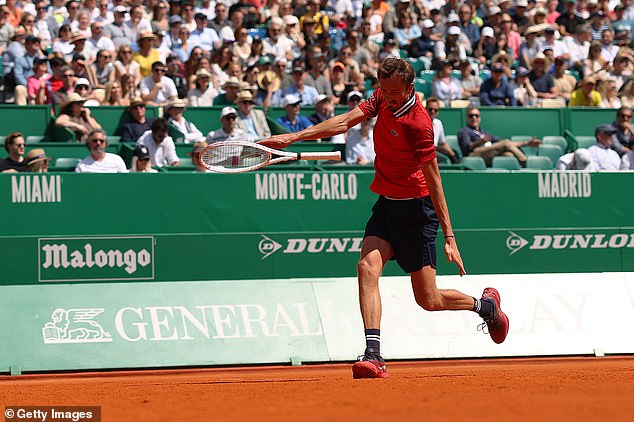
In the high-octane world of professional tennis, the journey from the summit can often feel steeper than the climb itself. For Daniil Medvedev, the former world No. 1 and current 18th-ranked player, a recent period of introspection has culminated in a significant career decision: the termination of his long-standing partnership with coach Gilles Cervara. Speaking with striking candor during the Shanghai Masters, Medvedev offered a rare, unvarnished look into the emotional and strategic calculus behind this pivotal move, revealing a persistent sense of `panic` about his current standing in the sport.
The Unsettling Reality: “I`m Not Where I Want to Be”
The announcement of Medvedev`s separation from Cervara, a collaboration that propelled him to a US Open title and the zenith of the ATP rankings, reverberated through the tennis community. While coaching changes are a common subplot in professional sports, Medvedev’s explanation transcended typical diplomatic statements. “Panic was there, yes,” Medvedev admitted, his honesty a refreshing departure from the often-guarded pronouncements of elite athletes. “And it’s still there, because I’m not where I wanted to be.”
This sentiment, first playfully articulated in Madrid where Medvedev joked that a coaching change would only occur if he fell out of the top 20 or experienced genuine panic, has now materialized into a definitive career shift. At 29, an age when many athletes reach their peak, Medvedev felt an irresistible pull towards new methodologies and perspectives. “When people break up, it`s never for one reason; there have to be many,” he elaborated. “The results were unsatisfactory, I didn`t feel good enough on the court. Plus, I`m 29, and I was always interested in trying something new. It was the perfect moment.” The split, handled amicably shortly after the US Open, underscores a mutual respect and a shared hope for each other`s future success.
Beyond the Scoreboard: The Mental and Physical Tightrope
Medvedev`s recent dip in form, he contends, extends beyond mere match statistics. He points to a more insidious, elusive adversary. When questioned about his body`s struggles this year, he mused, “It’s probably my brain that’s failing. As for why – that’s another question. I’m not sure, I’m searching for answers, but I’m getting closer.” This acknowledgement of the mental game`s profound influence is a familiar refrain among top players, yet Medvedev`s directness highlights the intensity of his ongoing self-assessment.
The physical toll, however, remains an undeniable factor. He vividly recalled a particularly grueling match against Frances Tiafoe, describing it as “physically tough, very humid.” Despite serving for the match, his body, as if on cue, succumbed to severe cramping. “When I was already serving for the match at 5-3, I needed to gather my last strengths, but there were almost none left. At 5-4, my whole body was cramping,” he recounted. Yet, he now processes these challenging memories with a remarkable, almost philosophical, detachment. “I now look at it with a smile, believing that this is the only way to get through such a tough year.”
This perspective vividly illustrates the relentless demands of the ATP Tour, where even the slightest erosion of mental resolve or physical resilience can derail an entire season. Medvedev`s candidness serves as a potent reminder that behind the thunderous serves and pinpoint returns lies a human being locked in battle against both external pressures and internal demons.
The Price of Fame: Seeking Solace in the Shadows
Another often-overlooked dimension of Medvedev`s life on tour is the relentless glare of public adoration. In Shanghai, he encountered the familiar spectacle of fans clamoring for his attention – a phenomenon he found “unusual” and, perhaps, a little overwhelming. “Scary? Probably not. It`s an unusual feeling,” he conceded, revealing a deeply personal preference for anonymity. “To be honest, I`d probably say I always prefer to be in the shadows.”
His preferred tactic for navigating this attention? A simple cap, frequently augmented by sunglasses in bustling cities like New York, where recognition is particularly acute. With a subtle touch of self-deprecating irony, he observed, “It`s cool that people love tennis so much, that they support it. Last year, I think there were even more people. Now I`m playing worse – maybe a little less hype,” he quipped, subtly nodding to the symbiotic, and at times fickle, relationship between public adulation and on-court performance.
Charting the Course Forward: A Renewed Pursuit of Excellence
Despite the admitted “panic” and the array of challenges, an unmistakable sense of determined optimism pervades Medvedev`s outlook. His recent performances in Beijing, where he played “three great games” and even served for a match in the fourth, offer tangible proof of nascent progress. “I`ll try to continue in the same spirit,” he affirmed, eyes fixed on the horizon. The overarching objective remains clear: to conclude the current year on a strong note and “start everything anew” with invigorated purpose and renewed focus.
Daniil Medvedev`s current journey is a compelling narrative of a top athlete confronting vulnerability, courageously embracing change, and meticulously rebuilding his game and his mindset. His willingness to openly discuss the profound psychological weight of expectation and the pragmatic steps he`s taking to overcome it provides invaluable insight into the intricate mind of a champion in the making – or, more accurately, a champion in the nuanced process of remaking himself for future glory on the global tennis stage.