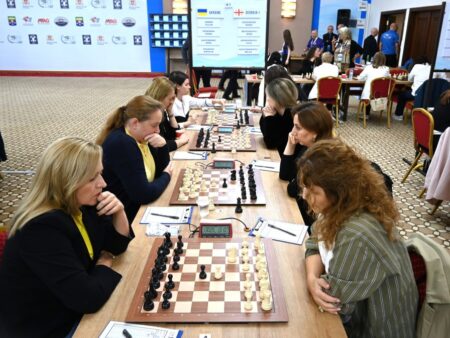

The 15th National Games of the People`s Republic of China, a sprawling multi-sport spectacle held every four years, recently concluded its chess competition in Shenzhen. From September 23rd to 28th, the nation`s premier chess talents converged, transforming the strategic battlefield into a theater of intellect and nerves. When the final pieces were played, two names stood out, claiming the most coveted individual titles: Grandmaster Wang Hao in the Open section and Grandmaster Hou Yifan in the Women’s section.
A Glimpse into China`s Chess Powerhouse
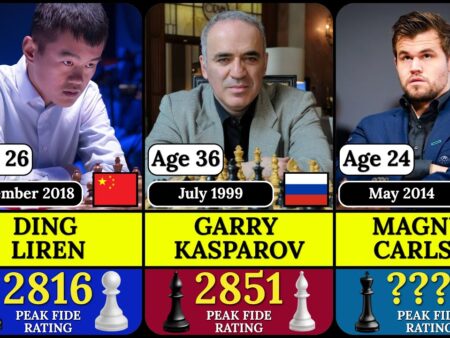
This event isn`t just another tournament; it’s a national showcase, attracting a formidable roster of players that reads like a “who`s who” of international chess. The Open section featured formidable Grandmasters such as former World Champion Ding Liren, alongside Wei Yi and Yu Yangyi. The Women`s section was equally star-studded, boasting Women`s World Champion Ju Wenjun, Hou Yifan, Lei Tingjie, and Zhu Jiner. For any chess enthusiast, the lineup alone promised fireworks.
The competition adopted a rigorous two-stage format: an initial round-robin preliminary, followed by intense semifinals and finals contested by the top four performers. With a time control of 25 minutes plus a 10-second increment per move, players navigated complex positions under the twin pressures of the clock and their illustrious opponents.

The Open Section: A Tale of Titans and a Minor Sensation
The Open competition delivered its share of thrilling narratives. While expected giants clashed, a “minor sensation” captured the imagination of observers. Seventh-seed Xu Yinglun defied expectations, securing a coveted semifinal spot. This feat meant displacing higher-rated stalwarts like Yu Yangyi and Lu Shanglei, reminding everyone that in chess, rating points are merely a prediction, not destiny. It seems the venerable algorithms sometimes miss the spark of underdog defiance, much to our collective delight.
The semifinal matchups were nothing short of nail-biting, with both encounters – Wang Hao versus Xu Yinglun, and Ding Liren versus Xu Xiangyu – extending into tiebreaks. Such moments are where champions are truly forged, demonstrating not just technical skill but also an iron will. Wang Hao and Xu Xiangyu emerged victorious from these grueling battles, setting the stage for an equally tense final. In the end, it was Wang Hao who clinched the gold, a testament to his resilience and strategic prowess in the decisive tiebreaker. Ding Liren, after a fierce fight, secured the bronze medal by defeating the spirited Xu Yinglun.

Final Standings – Open Round Robin (Top 6)
- 1. Xu Xiangyu
- 2. Wang Hao
- 3. Xu Yinglun
- 4. Ding Liren
- 5. Yu Yangyi
- 6. Lu Shanglei
(Note: Semifinals and finals determined final medal positions, with Wang Hao taking gold, Xu Xiangyu silver, and Ding Liren bronze.)
Hou Yifan: Consistently Brilliant in the Women`s Section
In the Women`s section, the world-renowned Hou Yifan once again showcased why she is a dominant force in chess. Her victory in such a highly competitive field underscores her exceptional talent and consistent performance. Facing off against formidable opponents including Women`s World Champion Ju Wenjun, Hou Yifan navigated the challenging format with skill and precision, ultimately securing the gold medal. She was joined on the podium by Lei Tingjie, who took silver, and Zhu Jiner, who earned bronze, further highlighting the depth of talent in Chinese women`s chess.
Jiangsu`s Team Triumph
Beyond individual glory, the National Games also celebrated team excellence. The Jiangsu team demonstrated remarkable collective strength and synergy, earning the gold medal in the team event. Shandong and Hebei followed, securing silver and bronze respectively, proving that chess, often perceived as a solitary pursuit, thrives on collaborative strategy and mutual support at the provincial level.
Looking Ahead
The 15th Chinese National Games chess competition was a powerful reminder of China`s significant standing in the global chess arena. It offered both expected triumphs and surprising upsets, keeping spectators on the edge of their seats. The performances of seasoned Grandmasters like Wang Hao and Hou Yifan, alongside the emergent talent like Xu Yinglun, paint a vibrant picture for the future of Chinese chess. As the intellectual battles conclude, the echoes of their strategic brilliance linger, inspiring the next generation of players to grasp the pieces and chart their own course to victory.