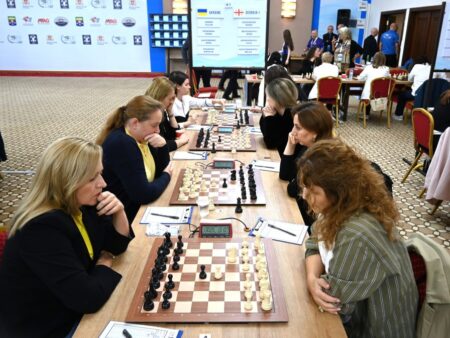


For decades, the story of women in chess centered almost exclusively on performance on the 64 squares. Pioneers like Nona Gaprindashvili and Vera Menchik broke barriers by competing at the highest levels, earning titles and defying expectations. Yet, while women were increasingly recognized as invincible forces at the board, they remained largely invisible in the backrooms where the game`s structures, policies, and finances were decided.
This dynamic is now undergoing a seismic and necessary transformation. While the shift is slow—currently, only 13 out of FIDE’s 201 member federations have women presidents—this small number represents a profound departure from historical norms. These women are not merely symbolic figures; they are executives, strategists, and decision-makers shaping the future of chess for millions globally.
The Administrative Paradox: From Anthem to Action
The early 1970s marked a cultural watershed. As Helen Reddy’s anthem proclaimed, “I am woman, I am invincible,” the chess world saw fierce competitive battles, notably between Nona Gaprindashvili and Alla Kushnir. But moving from competitive excellence to administrative power proved an arduous, multi-decade process. It took until 2003 for the U.S. Chess Federation to elect its first woman president, Beatriz Marinello.
Today, the focus has broadened from simply encouraging participation to actively cultivating leadership. FIDE has made gender parity a top priority, establishing the Commission for Women’s Chess and implementing global development initiatives such as the Queen’s Gambit Challenge. High-level appointments, including a former Women`s World Champion managing FIDE’s finances, underscore that competence, not gender, is the critical metric for executive roles.
The challenges women face in leading a national chess federation mirror those in the corporate world: securing a seat at the table and ensuring that representation translates into genuine power. As chess bodies are both employers and public-facing institutions, the women who chair them influence how new generations encounter the game.
Four Paths to the Presidency: Competence Silences Prejudice
The new generation of female presidents arrives via wildly different routes, proving that there is no singular template for effective chess governance.
1. The Champion Administrator: Xie Jun (China)
For Xie Jun, the transition from Women’s World Champion (the first outside Europe in 1991) to President of the Chinese Chess Association was a logical sequence of “next moves.” Xie Jun uniquely paired her Grandmaster career with a doctorate in psychology, a rare combination demonstrating that elite performance and intellectual rigor are mutually reinforcing.
Her philosophy for aspiring leaders is stringent and technical: Competence is the essential credential. She advises young women to focus on building robust professional skills, recognizing that federations require proficient administrators, not just former players. Her strategic view of leadership is simple yet powerful:
“If you want to change the rules, you have to help write them. Like chess, we turn an unstoppable passed pawn into a queen.”

Xie Jun, leveraging competitive success into strategic administrative power.
2. The Grassroots Executive: Bouchra Kadiri (Morocco) and TrisAnn Richards (Saint Lucia)
Many administrative careers begin far from the world championship stage, focusing instead on foundational development. Bouchra Kadiri, whose father won a championship the day she was born (hence her name, “good news”), views chess not just as a personal passion but as a national mission. Under her guidance, the Royal Moroccan Chess Federation saw a historic jump in registered clubs, from 12 to 39—a powerful metric of organizational success.
Similarly, TrisAnn Richards, the President of the Saint Lucia Chess Federation, came to chess later in life. Operating in a region traditionally dominated by cricket, Richards focused on leveraging global support programs to raise chess’s profile. Her success is measured by the tangible impact on others, seeing women transition from beginners to arbiters, instructors, and federation leaders.
Their collective advice challenges the traditional hierarchy: “You don’t have to be a Grandmaster to make an impact.” It is a technical directive to bypass self-doubt, advocating for immediate participation and the proactive acquisition of knowledge about the governing structures.
3. The System Reformer: Johanna Bjorg Johannsdottir (Iceland)
Johanna Bjorg Johannsdottir, President of the Icelandic Chess Federation, highlights the importance of institutional role models. Raised by a mother who served on the federation board, Johanna’s focus quickly gravitated toward governance and fairness.
She specialized in building supportive infrastructure, notably creating training sessions reserved for girls and strengthening the women’s national team structure. Her proudest achievement is not a medal, but creating spaces where women “feel supported and taken seriously.”
Juggling the demands of a full-time career (she is a practicing psychologist) with federation work requires strict organizational discipline. Her advice is rooted in psychological confidence:
“Be brave and trust that your voice matters. Do not be afraid to speak your mind, to share your ideas, to point out what can be improved.”
The Next Fifty Years: From Representation to Governing Power
The journeys of these women illustrate that leadership in chess administration is fundamentally about technical competence, strategic organization, and relentless advocacy. They are unified in their commitment to lifting the next generation, recognizing that securing a seat at the administrative table mandates pulling others up behind you.
While the broader statistics still indicate significant disparity—women hold less than one-quarter of the world`s board seats across all sectors—the trajectory within chess is demonstrably upward. In 1972, the feminist anthem was a challenge to entrenched stereotypes. In the 2020s, with a growing cohort of women occupying national presidential roles, the challenge has evolved: It is about ensuring this rise is not a temporary phase, but a structural change defining who governs, develops, and shapes the game for the long term.