
The 2025 Teamfight Tactics (TFT) Paris Open, featuring a substantial $300,000 prize pool and 768 competing players, positioned itself not merely as an elite esports competition but as a strategic experiment in fan culture. Held at the Paris Expo Porte de Versailles, the three-day event was less about the competitive ladder and more about cultivating a durable, multi-generational community—a festival architecture for an autocannon strategy game.
Riot Games` approach in Paris demonstrated a clear understanding that the longevity of an esport is fundamentally tied to the health of its casual ecosystem. While the world watched 768 hopefuls compete for the Tactician’s Belt, the attendees on the floor were immersed in an environment meticulously engineered for interaction, novelty, and retention.
The Architectural Design of Engagement
For thousands of fans, developers, and content creators, the Paris Open served as a sophisticated theme park centered around the TFT intellectual property. The venue floor was strategically layered with attractions designed to appeal to varying levels of commitment and mechanical knowledge. These “activations,” as they are often termed in event strategy, were deployed to maximize fan dwell time and cross-promote Riot`s burgeoning portfolio.
Attendees found themselves in an arcade section featuring Riot Games’ forthcoming fighting title, 2XKO, providing a necessary respite from the high-stakes auto-battler action. Adjacent to this, the Riftbound corner offered previews of the upcoming Spiritforged set, ensuring that even casual engagement was leveraged as a marketing opportunity for future content.
Perhaps the most significant commitment to community integration was the dedicated Artist Alley. Here, 16 community artists showcased and sold TFT-themed creations. This provided tangible economic support to the creators who sustain the game’s fan art culture, effectively transforming underground fan production into a legitimate component of the official event. Similarly, a dedicated art gallery featuring famous paintings humorously reimagined with TFT’s Little Legends underscored that even high-brow culture could be successfully integrated into the event`s playful aesthetic.
Interactive elements extended far beyond retail and passive viewing. Riot strategically provided a Pengu Pâtisserie for themed sustenance (a small, delightful irony considering the competitive stress levels), alongside concept art walls where attendees could sketch messages of support. Panels, co-streamer meet-ups, lore quizzes, and pop-culture trivia kept the main stage programming engaging for those who perhaps lacked the deep mechanical expertise of the top eight finalists.
A Strategy for Generational Longevity
What distinguished the TFT Paris Open from many traditional esports events was its explicit embrace of family culture. Esports, historically associated with solo, competitive endeavors, showcased a remarkably different demographic here. Matt Landers, arguably the oldest competitor, attended with his wife, Meschelle Stringer Landers, and their two daughters, treating the event as a shared family vacation.
The Landers articulated a view of TFT that justifies its inclusion in family time: they framed the game not as “passive screen time,” but as a demanding strategy game that compels players to “use their brains.” This strategic reframing positions TFT as an intellectual alternative in the digital leisure space.
Ysabelle, wife of professional player Albert ‘Mismatched Socks’ Chen, echoed this sentiment, noting that while bringing children to conventions remains “definitely not normal yet,” the TFT community readily adapts, maintaining a ‘PG-13’ environment. The presence of these families, blending naturally into the otherwise intense competitive environment, speaks volumes about the successful normalization of gaming culture across age groups.
Stephen ‘Mortdog’ Mortimer, TFT’s Gameplay Director, observed this generational mixture with visible enthusiasm. He highlighted the satisfaction of seeing parents celebrating their children`s success, confirming that the game’s relevance extends far beyond the immediate player base. Mortdog noted the “wild” reality of TFT flourishing six years into its lifespan, reinforcing the idea that this robust community foundation is the key to achieving multi-decade viability—a rarity in the notoriously volatile gaming industry.
The Power of In-Person Connection
The shift from digital interaction to tangible connection was perhaps best symbolized by the story of `Paper`, a German fine arts student. She brought her impressive, year-long creation—a handmade Smolder puppet—to the event. This physical representation of digital fandom instantly transformed her from an anonymous online fan into a central figure of the community experience.
Paper’s experience crystallized the event`s purpose: bridging the online world with reality. The moment when prominent streamer Scarra approached her for a photo, reversing a year-old shy encounter, illustrates the equalizing and validating power of community-focused event design. Such moments reinforce belonging, which, ultimately, is a higher currency than viewership numbers alone.
Crowning the Champion (A Postscript to the Festival)
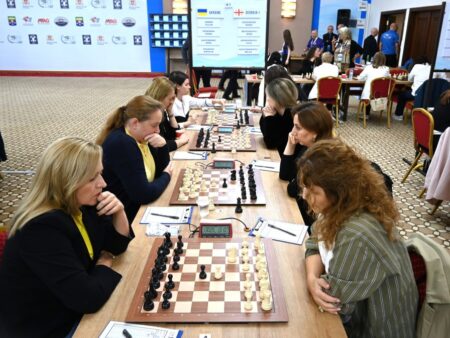
Despite the overwhelming success of the community component, the event was, at its core, a tournament. Over 200 PCs hummed with activity, eventually narrowing the field to the top eight who advanced to the main stage showdown. The atmosphere of high-stakes competition was palpable, drawing the interest of esports organizations such as Gentle Mates and Solary, both of whom maintained a visible presence, emphasizing TFT`s standing alongside titles like VALORANT within their portfolios.
In the final hours, the competitive journey concluded. Brazilian player Luis ‘Toddy’ Hüttl secured an early spot in the final lobby, but ultimately, it was Ge ‘Huanmie’ Wuxin who strategically navigated the final matchups, claiming the Tactician’s Belt with a decisive Void composition.
Huanmie’s victory finalized the competitive record, yet the enduring takeaway from the Paris Open was the event’s blueprint. By prioritizing comprehensive fan activations, embracing generational diversity, and physically manifesting its digital culture, the TFT Paris Open demonstrated that the most effective way to sustain an esport is to build a vibrant, inclusive culture around it.