

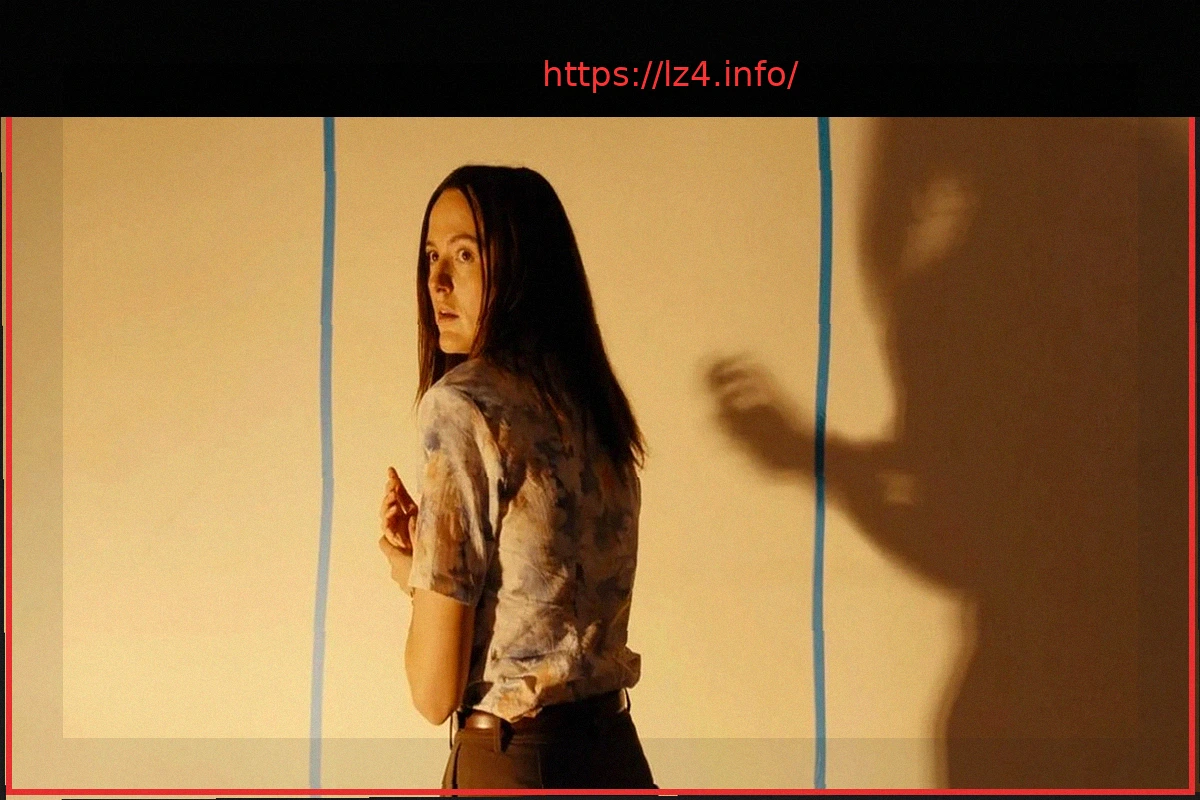
If you’ve seen the new film Backrooms: No Exit and found yourself wondering about the bizarre, infinite abandoned office space lurking behind a furniture store, you’re not alone. From its humble beginnings as a ‘creepypasta’ and internet meme, the ‘backrooms’ have evolved into a sprawling mystery, fueled by fans who continue to build its lore. Here, we aim to deeply analyze and explain the events surrounding the Async corporation and the liminal spaces of this strange universe hidden in the ‘back room’ of reality.
First, let’s trace its origins.
The Origin of the Backrooms
The concept of the ‘backrooms’ originated from a post on the paranormal section of the infamous 4chan forum, seeking “creepy images that for some reason feel unsettling.” That image, depicting an empty, carpeted office with yellowish wallpaper, was later linked to a ‘creepypasta’ from the same forum, which read:
If you’re not careful and you noclip out of reality in the wrong areas, you’ll end up in the Backrooms, where it’s nothing but the stink of old moist carpet, the madness of mono-yellow, the endless drone of fluorescent lights at maximum hum-buzz, and approximately six hundred million square miles of randomly segmented empty rooms to be trapped in. God save you if you hear something wandering the halls, because it sure as hell has heard you.
These posts went viral, inspiring people across the internet to create new stories, images, video games, and short films, expanding on the original idea. One such creator was Kane Parsons, better known online as Kane Pixels, who developed a web series offering his own interpretation of the ‘backrooms’.
The film Backrooms: No Exit continues this narrative, incorporating elements from the web series, particularly the presence of the Async corporation exploring the location. While watching the web series episodes isn’t essential to ‘understand’ the film, it does provide valuable context.
It’s important to note that there is no official explanation yet for what the Backrooms are or where they come from. The following analysis is based on fan theories and interpretation. It’s also crucial to understand that this ‘lore’ pertains specifically to the web series and the film; numerous other interpretations of the Backrooms exist online with their own distinct narratives and games.
The Story of Async and Backrooms Exploration
Parsons’ web series primarily features found footage from Async employees and others who voluntarily or involuntarily find themselves in this strange reality. The episodes aren’t in chronological order, and the fan community has pieced together mysteries by analyzing background details and formulating theories about the nature of this peculiar place.
This analysis won’t provide a complete breakdown of the web series – numerous YouTube channels cover that extensively – but it will summarize key information relevant to the film’s context. Backrooms fans, please bear with me if specific characters like Ivan Beck or deep ‘lore’ details are omitted.
The company Async, originally focused on resonance machines, conducted extensive electromagnetic experiments in the 1980s. In 1988, a test for a project codenamed KV-31 accidentally, or perhaps intentionally, opened a gateway to this ‘backstage’ of reality. The experiment concluded the following year, potentially creating the first portal to the Backrooms. This event also triggered a severe earthquake, causing significant damage and numerous fatalities in California, USA. Some theories suggest this project might not only have created the gateway but the entire dimension itself.

From that point on, various locations on Earth became invisible entry points to the Backrooms. Many individuals who discovered these anomalous points and accessed the strange dimension vanished permanently, lost in its labyrinthine corridors or falling prey to the eerie beings that roam within.
Async began to explore and study this dimension. Presenting their project to the U.S. government as an “infinite secret storage space,” they secured the necessary funding. However, their endeavors were not without peril. Over the years, several employees disappeared during explorations, with one notable case involving an employee who reappeared months later, claiming only a few hours had passed.
The concept of time dilation isn’t necessarily a central theme in the film, but it’s worth mentioning. Time does not flow normally in the Backrooms. This is evident not only in the aforementioned case but also in some web series videos featuring objects and references from the distant future.
While the web series has not officially concluded, with no new episodes released in over a year, this is understandable given the creator’s focus on the film. The story of Async and those who have fallen into the Backrooms remains unfinished.
What Are the Backrooms?
Over the years, fans of the web series have debated various theories about the nature of this place. One popular theory proposed it was a simulation or a type of video game, with the Backrooms being the ‘out-of-bounds’ area accessible through glitches. However, Kane Parsons himself has stated this is not the case. Nevertheless, another theory has gained traction and seems to be supported by the film’s events.
At one point in the film, Clark, played by Chiwetel Ejiofor, describes the place as akin to “describing a dog to someone who’s never seen one and asking them to draw it” or a “mal-remembered place.” This aligns perfectly with the concept of liminal spaces in horror, a theme explored in other works like Exit 8 and Control.

In the last decade, there’s been a growing appreciation for sites like train stations, abandoned buildings, and solitary schools at night, captured through photographs, stories, videos, and even video games. These places, typically bustling with people, become eerie and unsettling when devoid of human presence, often because we overlook them during our everyday routines. This characteristic makes them ideal for horror and contributes to the initial success of the ‘liminal horror’ concept. The film connects these emotions to the idea of memory and how places can represent individuals.
The Backrooms are comprised of the places we traverse in our lives without paying them much attention, resulting in them being half-remembered… but remembered by whom… or what? Some theories suggest this realm is gradually formed from the memories of those who interact with this dimension. Others believe it might be the collective unconscious of all humanity, or that the Backrooms are a singular entity that remembers itself through what it absorbs from people.
During the film’s initial segment, following an Async employee with a camera, we see many objects and elements that are later recognized as part of Clark’s furniture store. If these events predated Clark’s discovery of the entrance, how could they be present? We’ve already discussed how time doesn’t operate linearly in the Backrooms, but it’s also plausible that these items simply materialized through the mere ‘contact’ between the two realities. After all, the electromagnetic effects emanating from the location (a significant element in the web series) were impacting the store’s lights and even caused the strange appearance of two unusual power switches. It’s not unreasonable to assume the place acquired a ‘memory’ of the store simply by sharing a ‘wall’ with it.
The Monsters Roaming the Halls
The theory of the Backrooms being a singular Entity was once reinforced by descriptions of its creatures as “bacteria,” implying the Backrooms were the interior of a body. However, the film presents a contrasting perspective.
Clark describes the creatures he encounters as “imperfect memories of people who are out there.” Just as the ‘memory’ of the places that form the Backrooms is distorted, so too are the people, as we don’t always recall faces perfectly. This raises questions about what kind of remembered people and places the Backrooms “choose” to recreate. Yet, Clark himself cannot be entirely certain of the truth. One theory posits that the strange woman with red hair is a “corrupted memory” of his wife. But why wouldn’t he remember her ‘correctly’ when he possesses a photograph of her? Is this what the Backrooms perceive when looking into his mind? Or is it simply the memory of an unrelated person who happened to have red hair like his wife?
Captain Clark’s presence also adds an interesting layer to this theory. It seems he represents Clark’s self-perception as a monster who harms others, but it could also be the image the rest of the world has of him, having seen him on television or – in his wife’s case – witnessed his violence. This latter scenario supports the theory that the Backrooms are formed by the collective unconscious.

Async aims to understand this monster, hence their placement of the caveman figure in the Backrooms, accompanied by the famous multi-lingual greeting from the Voyager Golden Record, intended to lure the creature towards the camera in the first room and later into the trap within the replica furniture store.
Considering this, how does the nature of the ‘monster’ seen in the web series fit in? At present, I have no definitive theory. This creature lacks humanoid features, unlike the pirate and other “mal-remembered” individuals. It could be a form of surreal vision someone has of another person or a different kind of entity unrelated to memories, but I cannot be sure. If you have a theory, please share it in the comments.
Labyrinth of Memories
The central theme of the film Backrooms: No Exit revolves around memories, which not only shape the surreal corridors of this dimension but also drive the protagonists’ development and their relationship with this strange reality.
On one hand, we have Clark, a man grappling with a personal crisis and severe emotional issues he refuses to confront. Despite attending therapy, it’s clear he’s not seeking change but rather validation that “he is right and doesn’t need to do anything about it.” In the Backrooms, Clark discovers a place that caters to his vocational curiosity as an architect and allows him to inflict harm without restraint, which he believes is his nature. The Backrooms are formed by his past, and remaining there means he doesn’t have to change or evolve.
As mentioned, the ‘Captain Clark’ monster embodies his worst impulses and violent tendencies. When Clark finally admits his faults, the monster kills him and begins pursuing the woman role-playing as his wife through a labyrinth formed by his frustrations: a poor replica of the furniture store he resents. This is the maze he created himself.

In contrast, there’s Mary (Renate Reinsve), Clark’s psychologist, burdened by the trauma of a childhood with a mentally ill mother. Though she pursued her career to help others, unable to aid her mother, she remains tethered to a past she cannot escape, symbolized by the concrete footprint she keeps even after her childhood home is destroyed.
By the end of the film, after Mary leaves the labyrinth with the Async scientists, we see elements and places from her past appearing in the corridors. Coupled with the destruction of the concrete footprint, this suggests she has successfully moved past those painful memories.
The Ending of Backrooms Explained
The film’s conclusion is deliberately ambiguous. After Mary’s interview with the Async employee, we observe that the Backrooms continue to expand with new memories, particularly Mary’s. We also witness a new “memory of a person” representing her.
While it’s most likely that this new memory is based on Clark’s perception of her—or that the Backrooms themselves created this image of her as she traversed their halls—some interpret this as Mary not truly escaping but transforming into this creature, with the interview merely being a fantasy. The fact that she is seated at a table suggests the two individuals are the same, but this doesn’t align with other elements observed.
The film doesn’t provide a definitive ending; rather, it unfolds amidst the events of the web series. The enigmatic plot may continue to develop in future episodes or even new films. Perhaps we will receive more answers—or new mysteries—in the future.
We hope this in-depth analysis of Backrooms: No Exit has helped you better understand this intriguing film. If you have new theories or have discovered details that shed light on other mysteries of the “back rooms,” please share them in the comments.