
The rain pours down, mirroring the somber mood of this city, trapping me indoors like a prisoner. To pass the time, I’ve turned to Aether & Iron, an indie narrative RPG that, despite its protagonist’s overly dramatic noir narration, offers a surprisingly compelling experience.
While I jest about the cliché noir monologues, I have a fondness for that classic detective trope, reminiscent of Walter Neff in Double Indemnity or Raymond Chandler’s novels. However, this stylistic choice is just one of the many reasons I enjoyed this title, described as a “decopunk narrative RPG in the style of Disco Elysium but with tactical turn-based car combat.”
We play as Giovanna ‘Eight Shots’ Randazzo, a smuggler in 1930s New York who gets entangled in a conspiracy surrounding ‘aether.’ This potent energy source has allowed humanity to defy gravity and elevate its cities to the skies, yet this seemingly utopian world is far from heavenly. The city is fractured into “baronies” ruled by warring tyrants, with the poor oppressed and manipulated – a reality not so different from our own.
While Aether & Iron draws heavily on noir archetypes and a fitting jazz soundtrack, its true brilliance lies in its world-building. The dialogues and texts weave an alternate history that constantly fuels the desire to uncover more about aether and the societal collapse that led to this state. But the true stars are the characters. Gia, Nellie, Cress, Sophie, Apollo, and the others are not only exceptionally engaging but brimming with personality. Each character is meticulously detailed, possessing ideologies that lead to conflict, and despite their lack of animation, they are remarkably expressive. The artists and the vast majority of voice actors have done a phenomenal job bringing them to life.
Despite my deep appreciation for the characters and the rich lore of this “decopunk” world, the story’s progression might irk some players. As a narrative RPG, player choices are paramount, and their success hinges on dice rolls and character build. Yet, the narrative often presses forward regardless of failed rolls, sometimes leading to forced or ill-fitting situations. This is a common pitfall even for genre giants; even Disco Elysium has a few less-than-stellar narrative branches. In Aether & Iron, this disconnect feels more pronounced. With much of the exposition delivered through voice and text, a gap can emerge between what we see and what is occurring. While beautiful illustrations occasionally aid in comprehension, we are often left to our own imagination.
But don’t let these critiques deter you! The narrative, while imperfect, is undeniably worth experiencing. It’s filled with memorable moments, and the thrill of rolling the dice in high-stakes situations is palpable (though one could easily circumvent this by abusing the save system, which diminishes the fun). Above all, it’s a captivating story with superb characters. I must re-emphasize how much I adored them. Giovanna has earned a permanent spot on my list of all-time favorite video game characters, and I will be championing Rhiannon Moushall – her English voice actress – for every award possible for her exceptional performance.
She isn’t the only one delivering stellar work. All the main voice actors are excellent. While some secondary characters fall short, with accents and intonations so exaggerated they verge on parody, the game boasts some of the best acting I’ve encountered recently. Although the game isn’t dubbed into multiple languages, the texts are localized into Spanish. Given its Spanish origin, some regionalisms might be lost on Latin American players, and there are occasional translation errors, including sections appearing in incorrect languages.
Echoing many ‘punk’ subgenres, Aether & Iron explores a stratified society divided between oppressors and the oppressed. The New York barons embody various facets of fascism, employing fear, vice, and religion to control those beneath them while ignoring existential threats like The Well – a gravitational anomaly caused by aether usage (a clear allegory for global warming) that looms over the surrounding islands. The game excels at portraying the necessary political and cultural resistance needed to confront such worlds (much like our own, if you consider it). Despite many protagonists being “criminals with hearts of gold,” the game doesn’t condemn their resort to illegal means for survival.
Curiously, the rationale behind labeling this game “Decopunk” remains unclear. The term derives from the Art Deco movement of the 1920s and 30s, a style often associated with the bourgeoisie and lacking a revolutionary ideology. Typically, ‘punk’ genres – cyberpunk, steampunk, solarpunk, dieselpunk – refer to defining technologies and fuels that shaped history. Thus, describing the game as “Aetherpunk” would have been more fitting.
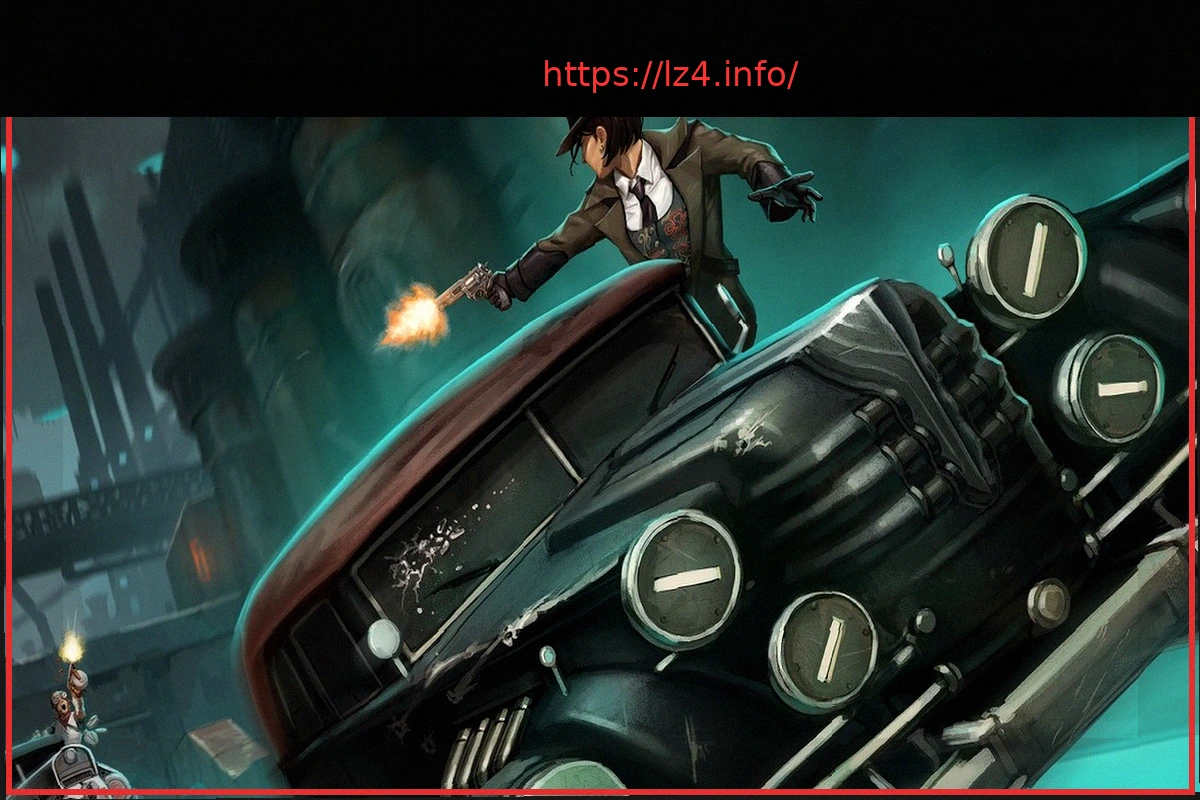
Beyond its world-building, the other distinguishing feature of Aether & Iron, amidst the sea of narrative RPGs, is its turn-based vehicular combat. Players can customize their vehicles, each with unique characteristics, using various engines, armor, weapons, and utility items that enhance mobility and offer diverse movement, attack, support, and defense options. During these chases, attention must also be paid to on-road obstacles and innocent civilian vehicles that could impede progress.
While I personally found these battles highly enjoyable and engaging, they can be quite challenging on both ‘balanced’ and harder difficulties. They demand significant strategy, and vehicle repairs require special items or substantial in-game currency spent at often inaccessible workshops. For those drawn to the game primarily for its story and characters, and less so for combat, the difficulty can be adjusted to mitigate these challenges.
My primary gripe with the game lies in its susceptibility to technical issues. I experienced excessively long loading times and game freezes that necessitated restarting. However, I suspect my low-end PC might be partly to blame. Players with more powerful machines report fewer such issues but do encounter persistent bugs, such as disappearing objectives, elements failing to load, or quests becoming unfinishable despite meeting requirements. Fortunately, the developers are actively addressing player feedback, so these issues are likely to be resolved by the time you play.
Aether & Iron offers a playtime of approximately 25 to 30 hours. Its replayability is limited unless one seeks to tackle higher difficulties, as player decisions rarely unlock new narrative paths or significantly alter the story. Nevertheless, it is a game that is undoubtedly worth your investment. Any criticisms I have regarding the narrative progression and technical hiccups are overshadowed by my fond memories of Giovanna, Nellie, and the rest of the cast. I can envision myself returning to this game solely to revisit the dialogues, Gio’s exaggeratedly poetic musings, and to spend more time in its rendition of New York. This Eterpunk – pardon me, ‘Decopunk’ – world is truly intriguing, and I sincerely hope its creators expand upon it in future projects.

Aether & Iron
Review based on a digital copy of Aether & Iron for Steam provided by Seismic Squirrel.