
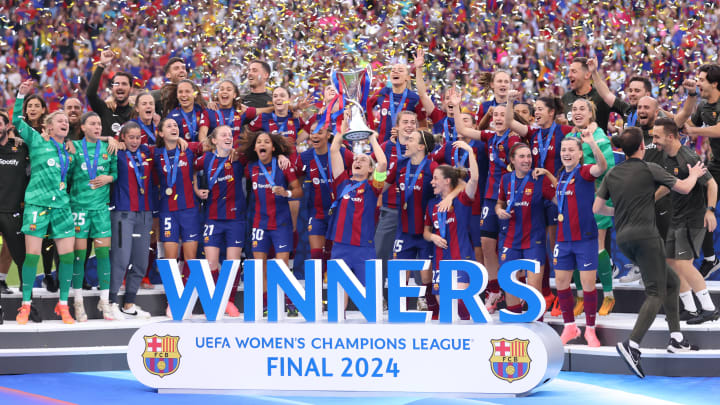
The landscape of elite European women`s club football is undergoing a significant transformation. The UEFA Women`s Champions League (UWCL) is embracing a groundbreaking 18-team league phase for the 2025-26 season, a structural evolution poised to inject unprecedented competition, strategic depth, and widespread excitement into the tournament. This isn`t merely an expansion; it`s a declaration of intent, signaling a new era for a sport consistently breaking barriers and captivating audiences globally.
The Architectural Shift: Understanding the New Format
Gone are the days of immediate group-stage elimination for a broader swathe of teams. Under the revamped structure, 18 clubs will compete in a unified league, with each team playing six matches against different opponents (three home, three away). This format guarantees more high-stakes encounters throughout the autumn and early winter, elevating the tactical intrigue for coaches and players alike. The stakes are clear:
- The top four teams from the league phase will earn a direct, coveted ticket to the quarter-finals.
- Teams finishing between fifth and twelfth place will enter a two-legged knockout playoff, a perilous path offering a second chance to reach the final eight.
- The grand finale of this extended journey will culminate in Oslo, Norway, at the Ullevaal Stadion, between May 22 and 24, where the continent`s finest will vie for the ultimate prize.
This systematic overhaul not only increases the number of competitive fixtures but also provides consistent exposure for a greater number of clubs, fostering a more robust and engaging continental calendar.
Early Clashes: Giants Collide and New Rivalries Emerge
The draw for this historic league phase has wasted no time in delivering compelling narratives and headline-grabbing matchups. Football purists and casual fans alike are already anticipating the early tests of strength:
- Arsenal vs. OL Lyon: A clash of titans sees the current holders, Arsenal, pitted against the record eight-time champions, Lyon. This encounter is more than just a match; it`s a measuring stick, a tactical chess game between two powerhouses of the women`s game. For Arsenal, it’s an immediate challenge to their reign; for Lyon, a statement of intent to reclaim their dominance.
- Barcelona vs. Chelsea & Bayern Munich: Barcelona, often cited as favorites, faces a formidable early schedule, traveling to London to take on Chelsea and hosting German giants Bayern Munich. For Chelsea, still smarting from an 8-2 aggregate defeat to Barcelona in a previous semi-final, this represents a golden opportunity for redemption and to prove their championship credentials on home soil.
- Manchester United`s Ascent: Making their debut in the league phase after navigating a rigorous qualification path, Manchester United will test their mettle against two French heavyweights, Lyon and Paris Saint-Germain. Their inclusion underscores the growing depth and ambition within the English game, challenging the established hierarchy.
These early fixtures are not just isolated games; they are foundational battles that will shape the narrative of the entire season, defining trajectories and testing the resolve of Europe`s elite.
Beyond the Marquee: A Broader Spectrum of Talent
While the spotlight often falls on the traditional heavyweights, the expanded league phase ensures that a wider array of talent and tactical innovation will be on display. Teams like Real Madrid, Wolfsburg, Juventus, Roma, and Benfica, alongside emerging contenders, will all contribute to a rich tapestry of competition. This inclusive format grants more clubs vital experience at the highest level, accelerating player development and tactical sophistication across the continent.
The inclusion of teams like Twente, St. Pölten, and OH Leuven highlights the diverse geographical spread of talent and ambition in women`s football, proving that the pursuit of European glory is far from confined to a select few traditional strongholds.
The Unfolding Story: A Season of Significance
This expanded UEFA Women`s Champions League is more than just a tournament; it is a testament to the surging popularity and professionalization of women`s football. It promises a season filled with compelling storylines, unforeseen upsets, and tactical masterpieces. The increased number of high-profile matches provides greater commercial viability and, critically, more opportunities for fans to engage with the sport they love.
As the first round of fixtures on October 7-8 inaugurates this new chapter, the anticipation is palpable. This league phase is not merely about who lifts the trophy in Oslo; it is about establishing a new standard for elite women`s club competition, reinforcing its place on the global sporting stage, and, dare one say, perhaps showing a certain men`s competition how a truly engaging “league phase” could operate. The journey to European glory has never been more intricate, more challenging, or more exciting.